Archery poses unique challenges for strength & conditioning coaches due to its unconventional physical demands. Traditional strength diagnostics often fall short in assessing the specific capacities that underpin performance in this niche sport.
The physical requirements of archery can seem low for someone who has never competed in the sport. However, when you start to scratch beneath the surface, you begin to realise how athletic it can be.
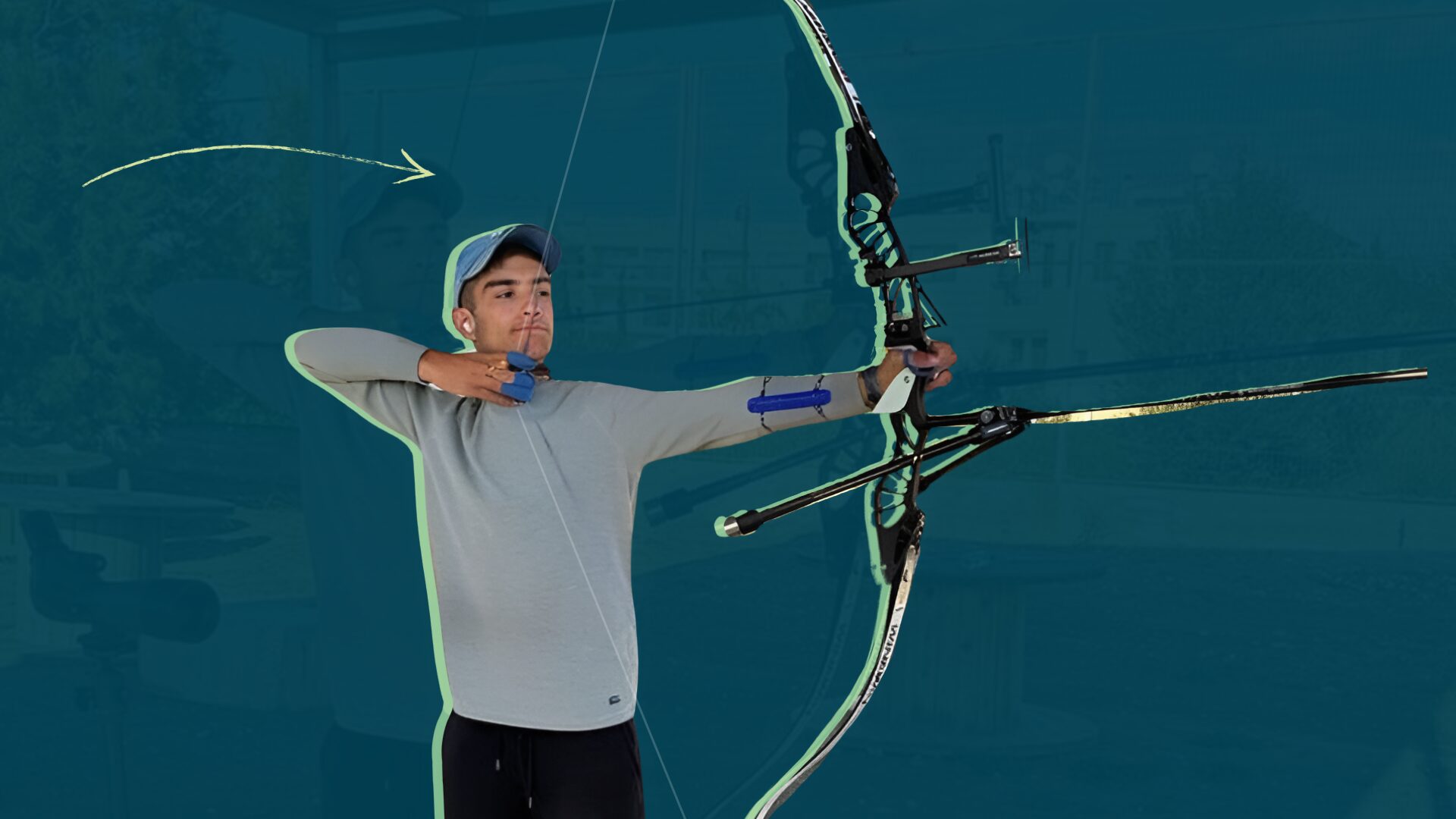
An archer will shoot with their hips and knees fully extended and locked out, both shoulders in external rotation, with bow tension up to 27 kg. In the full draw position (see image below), the bow is at its maximum tension. Archers hold this position at full draw for 1-2s before shooting. Athletes self-select their bow tension: the higher the tension, the faster the arrows move through the air, and the straighter the arrow shoots. This is advantageous when there are adverse weather conditions.
Completing this action over 2,000 times a week, which induces a repetitive physical stress, requires both general and specific capacities.
Tweet ThisArchery poses unique challenges for strength & conditioning coaches due to its unconventional physical demands. Traditional strength diagnostics often fall short in assessing the specific capacities that underpin performance in this niche sport
Liam Quinn
Traditional strength and power diagnostics such as countermovement jumps, isometric mid-thigh pulls, and dynamic rep maximal lower body lifts are less relevant to understanding the physical characteristics of the best archers. We need to be more specific with our testing battery.
Archers horizontally push with their lead arm and horizontally pull with their back arm. Logically, tracking upper body horizontal pushing and pulling through 3RM bench pull and bench press makes sense to gain insight into their general pulling and pushing strength capabilities. Similarly, peak isometric force assessments of shoulder internal / external rotation and athletic shoulder (ASH) tests – popularised by Ben Ashworth – will provide an idea of global shoulder and rotator cuff health.
However, we wanted to understand if improving physical capacities has a positive impact on performance. Interpreting general physical capacities was not telling us the full story. We needed to understand how we could assess and target specific capacities to help facilitate better world class performances in archery.
Although there are important tactical and technical components behind the ability to shoot with an increased bow tension, having the capacity to pull a greater tension is advantageous.
Anecdotally, tension is a barrier to entry at the elite level. Coaches working in the sport suggest that males have to shoot with at least 23 kg, and females with a minimum of 20 kg, to win medals in international tournaments.
A study into elite level archers (i.e., competing in World Cups) showed that a higher bow tension was correlated with improved scoring outcomes. In this study, which pooled male and female athletes, mean bow tension was 24.55 kg. This study made clear the need to quantify strength in this specific position. If strength & conditioning coaches can increase athletes’ maximum force capacity in this position, it could directly impact the athletes’ ability to pull a higher bow tension, thereby potentially improving scoring outcomes.
Developing a strength diagnostic test in this position can add true insight and value into future programming decisions.
Tweet ThisTraditional diagnostics such as countermovement jumps, isometric mid-thigh pull, and dynamic maximal lower body lifts are less relevant to understanding the physical characteristics of the best archers. We need to be more specific with our testing
Liam Quinn
Creating a unique performance test: Full Draw Iso Test
The Full Draw Iso Test (FDIT) is a maximal isometric pull test designed to replicate the full draw position. Athletes build into a max effort pull for 3-5s, performed 3 times with 2 mins rest in between. We used 2 ropes and a strain gauge (g strength) to test the athletes in this position. Draw Length (distance between each wrist) was measured during current ongoing biomechanical testing and used to determine individual draw length for each athlete’s set up position. Unfortunately, with archery, there is very little normative data on what the “optimal” draw length or joint angles should be in this position. So individualizing angles to the archer is an important piece of the puzzle.
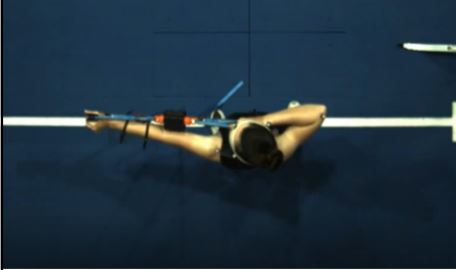
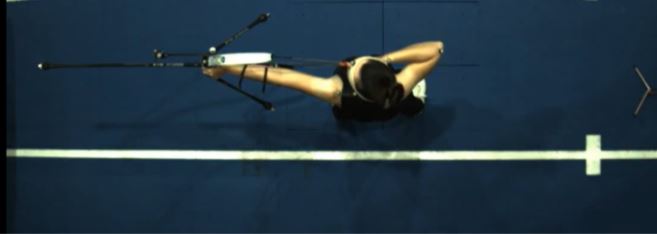
The test has evolved over time as we’ve ironed out some kinks through pilot testing and athlete feedback.
For example, initially the athlete would hold the rope with their lead hand. This position could cause some discomfort as they pull on the rope, which may have resulted in them (subconsciously) holding back, precluding a true maximal effort. To overcome this, we took a stock grip from the front of the bow and wrapped it around the rope to eliminate discomfort and ensure genuine maximal effort.
When developing new tests, every coach will ask the same questions: Is it valid and is it reliable?
To help answer the validity question, I leaned on the expertise of NSWIS Senior Biomechanist, Damien O’Meara. When looking at Draw length while shooting the 12 arrows, and the 3 maximal draw tests have showed archers maintained the same position during the maximal draw test and a normal shot
For reliability, we tested and retested 7 days apart. When running initial analysis, the typical error of measurement was 0.28. The Coefficient of variation was 2.45 %.
Initially the data looks promising with high validity and reliability, Although we have to interpret results with caution as our sample size is small (n=4). Future directions will include ongoing validation with a larger sample size.
Raising the ceiling: Robin Hood Reserve
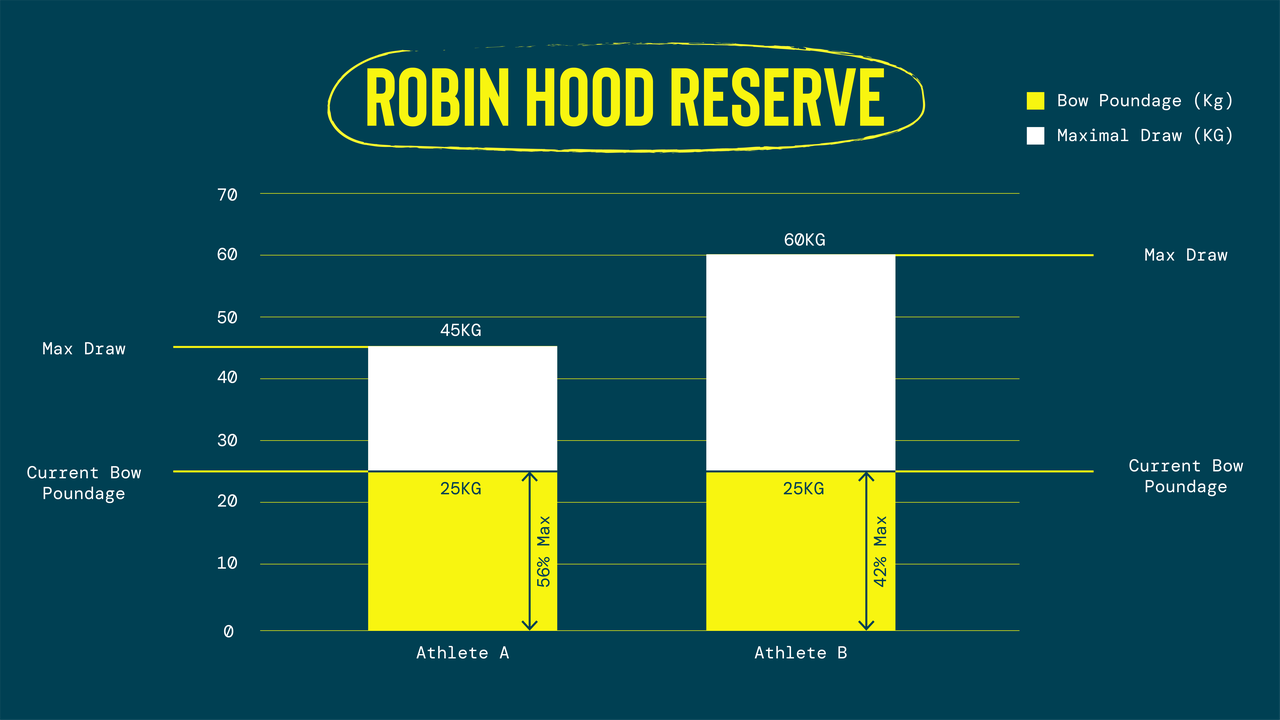
Taking key principles from models like the anaerobic speed reserve, we’ve coined the Robin Hood Reserve: the athlete’s current bow tension, expressed as a percentage of their maximal FDIT
The athlete and coach determine the tension that correlates with consistently high scores in training and competition. If an athlete can shoot accurately with a higher bow tension, they can shoot better in windy conditions.
For example, Athlete A and Athlete B can both shoot with 25 kg of bow tension. However, if Athlete A is weaker in their full draw isometric test, then they are shooting at a higher percent of their maximal draw than Athlete B. The demand of shooting over 200 arrows is completely different for these two athletes, despite the same bow tension.
This can help coaches understand how to progressively overload each athlete’s arrow volume. Similarly, if the athlete improves their maximal output, then, theoretically, they can shoot better quality arrows under less fatigue.
Tweet ThisTaking key principles from models like the anaerobic speed reserve, we’ve coined the Robin Hood Reserve: the athlete’s current bow tension, expressed as a percentage of their maximal FDIT
Liam Quinn
The FDIT is an overcoming isometric action, or PIMA, which could improve an archer’s Robin Hood Reserve if programmed into their training. Holding isometrics that isolate key positions of the archer’s full draw may improve an athlete’s Robin Hood Reserve. Similarly, training the trunk could help with force transfer through the upper and lower body.
For example, one gym session includes a maximal draw test (2 x 3 x 5s), a lead arm holding isometric actions (3 x 10s), and Pallof press (3 x 8). The second session also starts with the FDIT (2 x 3 x 5s), followed by a draw arm only holding isometric (3 x 10s), and cable shop (3 x 8).
Tweet ThisThe FDIT is an overcoming isometric action, which could improve an archer’s Robin Hood Reserve if programmed into their training. Holding isometrics that isolate key positions of the full draw may improve an athlete’s Robin Hood Reserve
Liam Quinn
Looking ahead, this test could help demarcate training intensity. I hope to classify the training intensity of 100, 150, 200, 250, or 300 arrows on the athlete. Currently the response to these arrow loads is subjective. If we can add an objective layer to better understand the demands of training, it can inform training decisions. By establishing a baseline for each athlete’s full draw isometric test, then retesting in the days post-training, we can better understand their recovery responses.
Having a better idea of how long it takes athletes to recover to baseline can help support their training with a robust strength & conditioning program. Similarly, we can help an athlete increase their bow tension in an informed way. If they are shooting at 20-30% of their max and their tension isn’t high enough, we have a roadmap to progress their bow tension.
Expanding the sample size will be a great step towards better understanding the influence of this specific strength quality on performance. Having a representative sample that includes emerging athletes all the way up to medal winners could surface potential trends in performance.
Understanding how training at different intensities of maximal draw could also impact the Robin Hood Reserve. Is there value in training at low capacities, e.g., approximately 20% of max? Or is there more benefit to training at 70-80% loading? Can we apply some of the key principles of run specific isometric training to archery specific joint angles? How would we then periodise around those principles? These are questions I’m eager to explore.
A specific strength diagnostics test like the FDIT can unlock many possibilities in a skill based sport like archery. Its sport specificity gives added depth and knowledge to an S&C program, and helps us better understand the demands of the sport – a valuable, positive feedback loop.
Ultimately, a new test in an under explored sport like archery underlines the value of testing your curiosity, and of leaning on the expertise of colleagues within an interdisciplinary team to develop a concept that could have positive impacts on performance.
As much as the FDIT and the Robin Hood Reserve will benefit from a larger sample size, for now, working within the constraints of smaller sports, it’s a solid innovation to help support future elite archers in their quest to becoming world class.
Tweet ThisSpecific strength diagnostics tests like the FDIT can unlock many possibilities in skill-based sports like archery. Its specificity adds depth and knowledge to an S&C program, and helps us better understand the demands of the sport
Liam Quinn