Steve Short
Rehab professionals can push themselves and stay ahead of the curve by doing three things:
1. Don’t get bored with the fundamentals. Find ways to challenge yourself, from clinical examination to intervention, and ensure that you have mastered the foundations of care. When performing an evaluation or treating an injury that you have seen over and over for years and years, we may take for granted how beneficial a sound subjective and objective examination is, and how beneficial basic exercise programming (e.g., properly loaded squatting and hinging with double and single leg variations) can be.
It is easy to lose attention to detail, jump to assumptions on evaluation, and implement a new, exotic, specialized intervention you’ve just seen on social media, just because you’ve become bored with the basics.
Just because it’s your 1000th case, it’s the first for the person in front of you. Don’t take that opportunity lightly.
2. Implement a feedback loop that works for you to engage in reflective practice. With the exam and intervention just noted, do you test and re-test your methods, with resultant critical appraisal to improve your outcomes? Are you outperforming natural history?
Filming yourself in action and watching game film on your clinical care is something I’ve found great value in over my career.
3. Within your ongoing reflection opportunities, create a system that includes lifelong mentorship, reading, and active learning. Develop and engage in a network of colleagues to review cases and bounce ideas. Access a select group of journals (BJSM, JOSPT, Sports Medicine etc) and authors so you can find yourself actively reading and learning consistently. Identify a weak spot in your practice and take a course to intervene. Push your boundaries to put these thoughts into practice.
Tweet ThisJust because it’s your 1000th case doesn’t mean it’s not the first for the person in front of you. Never take that opportunity lightly
@steveshortdpt
Nicol van Dyk
The areas of practice that will help practitioners in the future are the same that have helped them in the past: focusing on developing real skills. Not soft skills, but real skills. Essential skills, like the ability to communicate clearly, listen intently, and turn data and knowledge into wisdom and insights. These skills are real, essential, and learnable. They will differentiate you from the rest, if you take the time to learn them.
First, it remains important that you master your craft. Investing in developing your skillset for delivering top quality research is essential. Platforms like Sportsmith make that easier to do, so please continue to invest in this.
Then comes the “yes, and” (not the “either / or”). While you are getting better at exercise prescription, rehab planning, and training load integrated with rehab techniques, you can also invest in the essential skills.
Seth Godin discusses the top five:
- Self control. Once you’ve decided that something is important, are you able to persist in doing it, without letting distractions or bad habits get in the way? Do things for the long run that you might not feel like doing in the short run.
- Productivity. Are you skilled with your instrument? Are you able to use your insights and your commitment to actually move things forward? Get non-vocational tasks done.
- Wisdom. Have you learned things that are difficult to glean from a textbook or a manual? Experience is how we become adults.
- Perception. Do you have the experience and the practice to see the world clearly? See things before others have to point them out.
- Influence. Have you developed the skills necessary to persuade others to take action? Charisma is just one form of this skill.
At the heart of all these skills are our willingness and trust in ourselves and others to really listen to each other, to be vulnerable, and to be generative in our listening and how we communicate. Real skills will amplify your ability to deliver optimal outcomes and amplify the things you’re already doing.
Tweet ThisMaster essential skills like clear communication, listening intently, and turning data into insights. These skills differentiate you from the rest and amplify your ability to deliver optimal outcomes
@NicolvanDyk
Maggie Bryant
Getting ahead of the curve as a rehab professional requires a deep level of curiosity, adaptability, and critical thinking. The future of rehabilitation includes advancements in technology, artificial intelligence, and data utilization.
Technology in the rehabilitation setting continues to become more prevalent. One specific subset that has grown tremendously is the use of different player tracking technologies. This allows you to better understand what athletes do in their competitive environment. If you can understand these demands on an athlete, you can better ensure they are exposed to the loads throughout the rehabilitation process. With proper load exposure being key, you can optimally prepare the athlete for what’s ahead and, in turn, mitigate some of the re-injury risk.
Artificial intelligence is becoming more available in the rehabilitation setting, as well. AI assesses large data sets, helps to predict outcomes, and aids in decision making.
Using AI provides various points of view, as it aggregates information from many data sources to create predictions or to analyze a process. It may also help communication with key stakeholders by translating the data into actionable material. Having a basic knowledge of how to use and integrate AI into your clinical practice will help set you apart.
Having a curiosity to evaluate and answer the “why” behind what you are doing or assessing is key. Appraising your practice with robust feedback loops is important to refining optimal methods. While creating these feedback loops is important, it requires objective tracking over time to ensure you are on the right path.
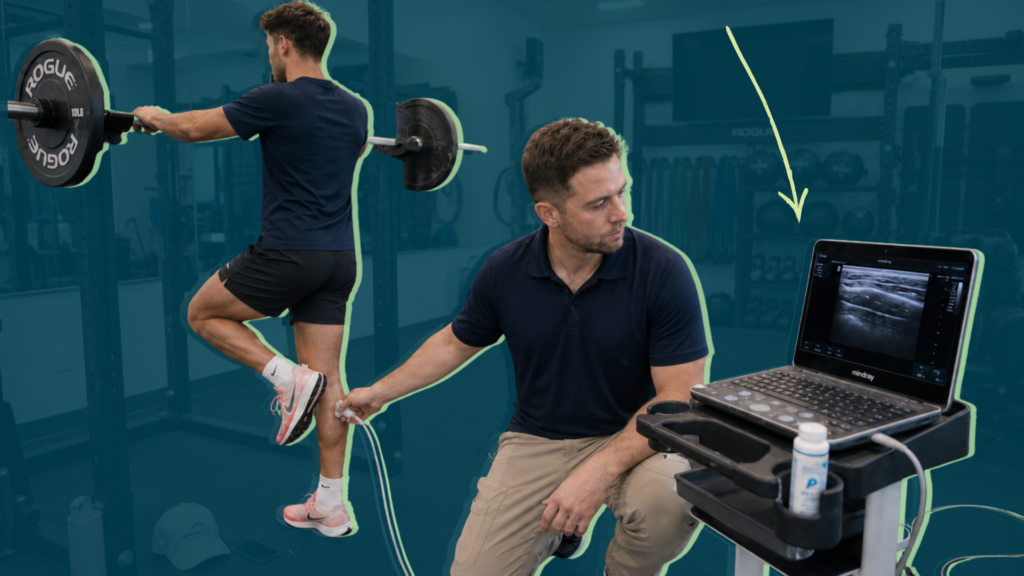
Diagnostic technologies have also improved significantly: the acuity of MRI machines, serial imaging using high definition ultrasound, ultrasound guided orthobiologic injections, etc. Understanding these advancements requires strong domain knowledge on how to use the information and when to integrate into your rehabilitation. This will also promote strong collaboration with other disciplines and ensure all stakeholders are aligned in the process.
The only constant in medicine is change. As the future continues to evolve, so should you!
Tweet ThisStay curious and adaptable. Embrace advancements in technology, AI, and data utilization. Understanding and integrating these tools into your practice can set you apart and improve athlete outcomes
@bryant5maggie
Simon Harries
With technology moving so fast and becoming more accessible, rehab professionals are now expected to be experts in many facets of physical performance. We’re almost like a hybrid S&C coach, biomechanist, physiologist, and general sport scientist, not to mention a clinician or therapist for those with medical training.
Plus, with the availability of information and technologies, such as ChatGPT, coaches and athletes are more informed than ever before.
These changes are putting pressure on rehab practitioners to be fully adept with force plates, motion capture, GPS technology, motor control development, strength and power development, speed development, running kinematics, deceleration, and change of direction ability, among others.
Of course, a diverse skill set is essential for providing more comprehensive and optimised rehab. As we can more readily assess human movement, the core skill for the future will be integrating more lab based assessments, such as force plate technologies, with on field assessments like motion capture, and combining these with the coaches’ observational skills. Practitioners would be wise to develop further in these areas.
But let’s not forget that practitioners also need to balance the availability of data with the unquantifiable nature of the environmental context, the individual athlete’s personal context, and the pressures inherent in professional sport.
Staying ahead of the curve will require more than just acquiring knowledge in these areas. The true differentiator will be the ability to assimilate the increasing volume of objective information with the subjective context and bring it together to deliver a coherent strategy.
This means the major challenge for the practitioner will be their ability to retain useful information, discard the noise, and arrive at solutions that make sense for each individual athlete. All while trying to not be paralysed by the wealth of information and end up tying themselves in knots!
Tweet ThisRehab professionals are now hybrid experts in physical performance, from biomechanics to strength development. The key is integrating lab-based assessments with on-field observations to deliver coherent strategies
@harries_simon
Alan Murdoch
I deem rehab the art and science of enhancing healing and recovery, mechanical function, biomechanical efficiency, sporting skill, and tolerance to appropriate work that permits an athlete to return to sport better than when they left.
Clearly, within that definition there are multiple areas of expertise and job roles. But to really excel and be truly holistic, you need at least fundamental knowledge across all of them.
A rounded practitioner ahead of the curve needs knowledge at a medical level from a healing and adaptation perspective. That entails understanding scans, surgical notes, and diagnoses, and having a general appreciation of timelines for different diagnoses and recovery of varying tissue involvement.
Then there’s the S&C side of things. A strong understanding of strength & conditioning principles from a stimulus adaptation perspective alongside training layout and periodisation strategies is key to developing strong and robust athletes over time.
Biomechanics is the least recognised and under appreciated of the attributes I listed above, yet I consider it the most important. My philosophy very much centres around a speed based approach and my fast > fit continuum. Understanding movement relative to high intensity actions and being able to identify and influence movement patterns is absolutely critical.
Over the last 10 years, the knowledge around S&C has generally been pretty good, but an understanding of how a person moves, and what that means in terms of current and future risk, need more focus.
When I consider rehab, and why someone is injured in the first place, there are usually three big factors at play.
Force: Was the athlete’s tissue just too weak somewhere that it, or a compensatory site, eventually broke down? Knowing how to assess this is key, and will play a big role in solving problems and profiling athletes to individualise their recovery programmes.
Load: Was there variable or spiking load prior to injury, resulting in the athlete’s nervous system or specific tissues being under- or overloaded relative to the task or scenario in which they got injured?
Movement: The biomechanical side of things. This has been my biggest area of development over the last five years, with various mentors playing a huge role in helping me appreciate what bandwidths are acceptable for movement, what to look for, and how to fix them from both a physical therapy and training perspective.
Movement gets less attention because it can be messy. It’s equally subjective and objective, and relies heavily on an experienced coach’s eye to deem whether something needs changing or should be left alone.
Often, rehabbing an athlete back to play isn’t too difficult (excluding complications).
But rehabbing an athlete back in better condition than when they left is extremely challenging. That requires a practitioner with a well rounded appreciation of the variables I’ve outlined and a keen coach’s eye that leads them to ask better questions and, ultimately, provide better answers.
Tweet ThisRehab is the art and science of enhancing healing and recovery. Understanding biomechanics, strength & conditioning, and medical knowledge is crucial to return athletes to sport better than when they left
@Elevate_Rehab_
Colin Griffin
Carve out your niche
Seth Godin’s Linchpin: Are You Indispensable? resonated with me in the early stages of my clinical career. Of course, no one is truly indispensable, but you can still make a unique impact. This motivated me to focus on my interest in calf and Achilles injuries, aiming to contribute meaningfully within my department at the Sports Surgery Clinic and achieve the best outcomes for the athletes and patients I work with. I was inspired by some amazing colleagues and mentors who are experts in their fields.
Over the years, I attended conferences, built a strong network of professionals in the field whom I bounce ideas off regularly, learned from my early experiences and mistakes, and eventually pursued a Ph.D. From that, other opportunities arose, such as conference presentations and delivering workshops. The behaviours and attitudes that brought me this far are crucial for continuing to move forward.
Breadth and depth
Being an expert in your field is great, but having some knowledge across other domains is also crucial. Working in a private hospital and regularly interacting with radiologists, sports medicine doctors, surgeons, research assistants and biomechanists has taught me a lot. It enables better conversations across disciplines to solve issues, and ensures we don’t miss any important diagnostics or investigations for specific injuries.
A good rehabilitation practitioner needs diverse skills and the ability to adapt quickly to new technology, like the use of force plates over the last decade. With so many tools available, it’s easy to feel overwhelmed, so developing efficient systems is key. For me, it’s being able to develop basic programming skills with R, MATLAB and Python to help with deeper analyses and program design.
Don’t forget the human connection
Artificial intelligence will play a bigger role in diagnostics and individualising rehabilitation programs, and may even threaten the role of practitioners in some employment settings. That said, we are dealing with humans who suffer various stresses and anxieties stemming from their injuries. Building a strong connection and trust with the athlete is irreplaceable, and is something I place a lot of value on.
Tweet ThisCarve out your niche and make a unique impact. Engage with colleagues across disciplines, adapt to new technologies, and build strong human connections. These behaviors are crucial for moving forward and achieving the best outcomes
@Colingriffin