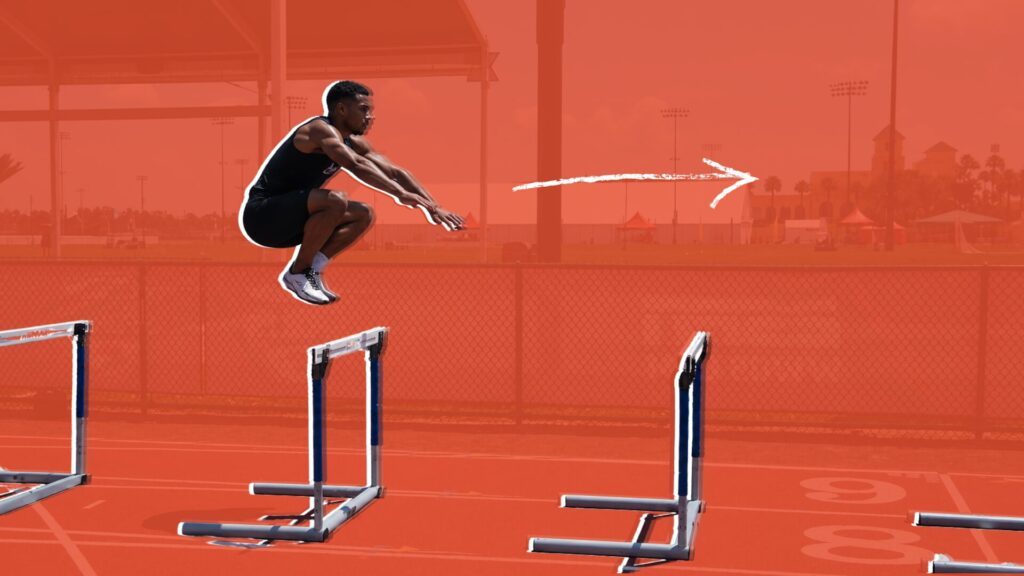
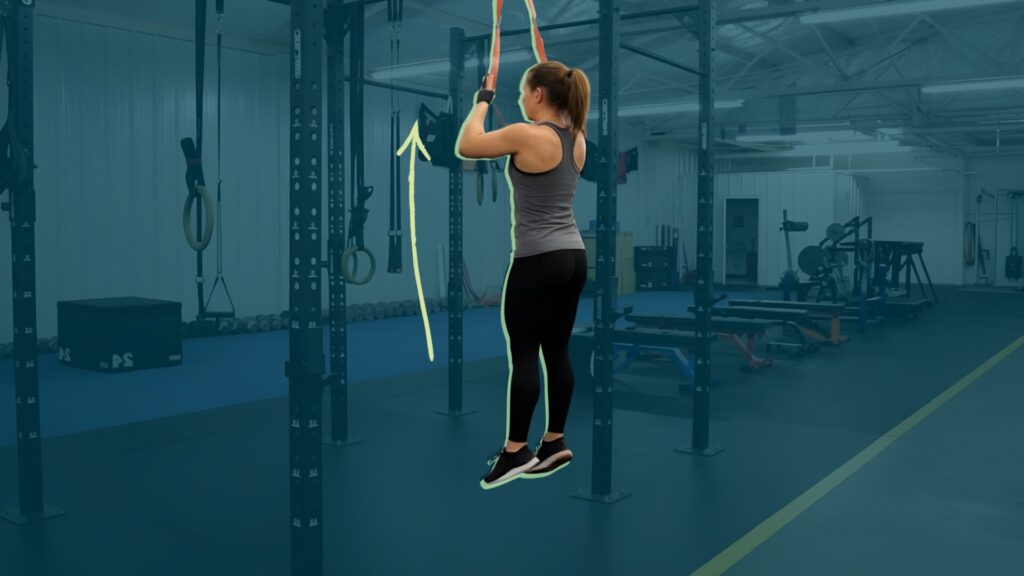
Low amplitude plyometric training, or extensive plyometrics, are variations of jumps that require low force output, and therefore elicit a low amplitude jump height. These variations are typically associated with extensive or high volume prescriptions, and will usually demonstrate reasonably quick contact times due to the easy yielding they present the athlete. Low amplitude plyometrics typically utilise less range of motion at both the knee and hip. That correlates to a lower jump height, speeding up contact times while reducing acute landing load.
When coaches hear the term “low amplitude plyometrics,” typically the first thing they think of are pogo options. That’s also usually the end of their thinking, overlooking the full gamut of low amplitude options. This article will add to coaches’ toolboxes when prescribing low amplitude plyometrics to their athletes.

Why should coaches even use low amplitude plyometrics?
The strength and conditioning industry has been flooded with the concept of microdosing speed exposure to athletes, particularly team sport athletes. We don’t see this concept nearly as much with regard to programming athletes’ stretch shortening cycles.
High amplitude plyometric options, albeit very effective for improving key sporting abilities, aren’t always viable when an athlete already has a heavily loaded training week, especially when they have a short turnaround time between competitions. When I was in the AFL with the GWS Giants, the players were running machines, often clocking up large volumes of high speed running along with significant change of direction loads. Players who were performing modified training due to minor injuries could quite easily miss out on valuable loading during a week. The worst thing for them would be to miss all loading. Here lies one of the powers of low amplitude plyometrics.
Instead of removing all of an athlete’s plyo work in order to allow him to recover before the next game, which would ultimately eliminate all velocity-based tendon load for that week, we would simply transition him to low amplitude options to sustain that capacity. Something is better than nothing.
Lower amplitude options exploit quick contact times to initiate a stretch shortening cycle at such a low force, and therefore deformation, that the residual fatigue from the exercises does not have a follow-on effect on the rest of the training program. This can be very effective in an athlete’s overall training plan, but what can you use to complement pogo options over a long term athletic training plan with your athletes?
Tweet ThisHigh amplitude plyometric options, albeit very effective for improving key sporting abilities, aren’t always viable when an athlete already has a heavily loaded week
@lachlan_wilmot
Low amplitude plyometric exercise flow
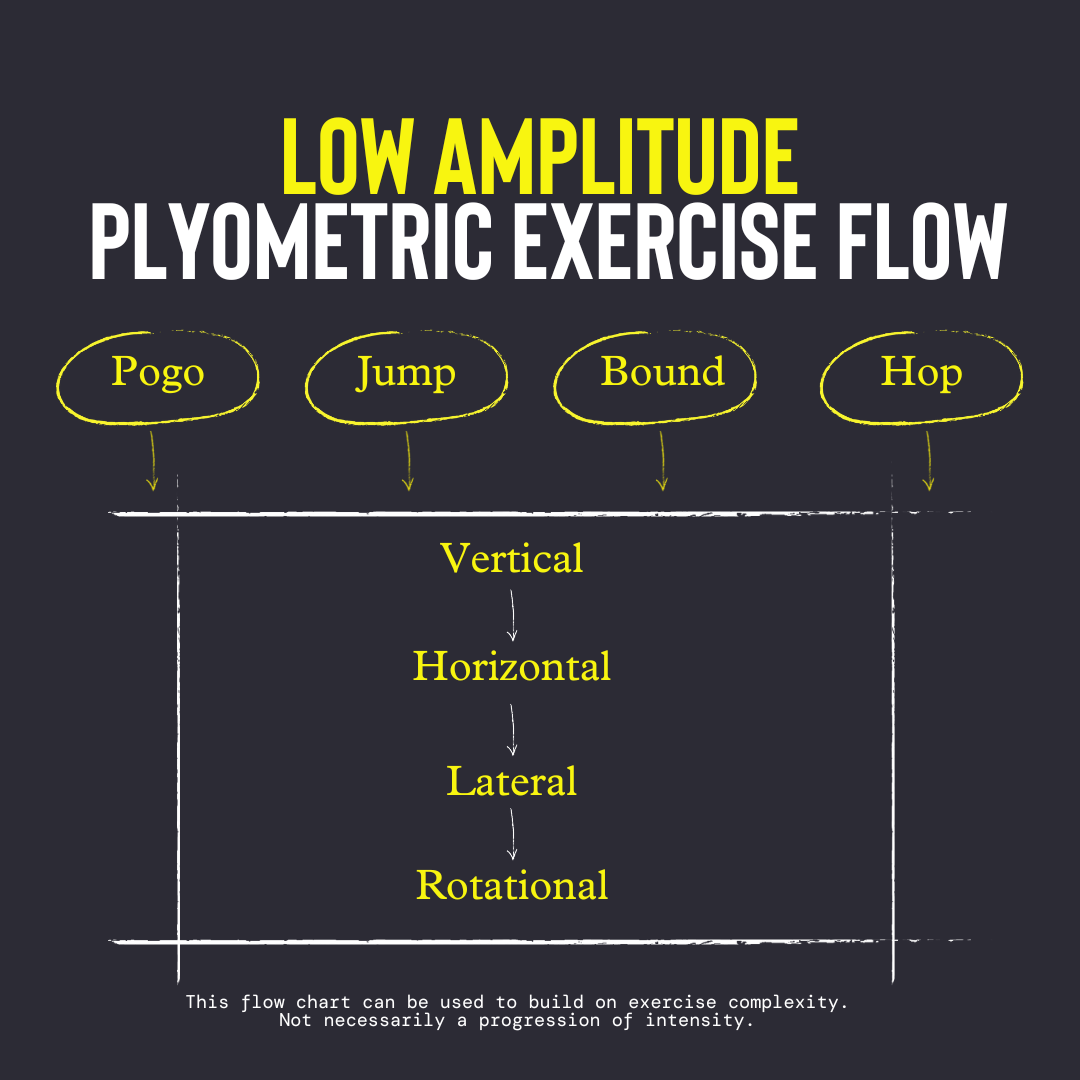
The following are some great low amplitude options across four key movement categories: pogo, jump, bound and hop variations, each within vertical, horizontal, lateral and rotational contexts. Figure 1 is a simple visual representation of the categories of low amplitude plyometrics. Typically, moving from a pogo variant across to a hop variant will increase complexity, but within each variant there are a range of vectors that we can individualize for each athlete. These parameters don’t always dictate difficulty, but often are a great way to vary the movement pattern, allowing athletes to train against all angles of force that they may encounter during a competition.
Pogo variants
The driving premise behind the use of pogo variations is to isolate the ankle as best as we can. This can be the goal either to overload the Achilles and musculature of the shank, or to subtract the contribution of the knee or hip joint if the athlete has sustained an injury in the area or in associated soft tissue. Pogo cues should focus on dorsiflexion as the athlete leaves the ground, as this will promote ankle isolation.
Vertical
Key cues / coaching points: Pull the toes towards the shin, nice pop off the ground
Linear
Key cues / coaching points: Toes coming towards the shin with a little movement forward or back
Lateral
Key cues / coaching points: Toes pulling up towards the shins, low controlled lateral movement; pop off the inside of the foot for the single leg
Rotational
Key cues / coaching points: Toes pulling up towards the shins, stiff through the ankle
Jump variants
Jump variations integrate the hips, knees and ankles while sustaining the low amplitude we want to encourage by cueing a small range of motion at each joint. We want to focus on short contact time along with quick contractions. Keeping the hands on the hips will remove the additional momentum that could create a higher than necessary jump.
Vertical
Key cues / coaching points: Focus on speed off the ground by keeping the amplitude (height) low; strive for stable footing, particularly on U- and D-Box; bit more from the front foot on split stance vertical
Linear
Key cues / coaching points: Watch how ankles and knees adapt and contribute to the different box shapes; athlete jumps back and down on the the D-Box to maintain a heel raise
Lateral
Rotational
Key cues / coaching points: Keep chest relatively straight as hips and feet rotate under
Bound variants
Bound variations allow us to start bringing in some more unilateral orientated options. Since the athlete is still alternating legs, bound variations allow the athlete to not have to focus heavily on leg recovery in preparation for landing.
Linear
Key cues / coaching points: Maintain a quick contact time, especially through the changing angles of the V-Box and U-Box
Lateral
Key cues / coaching points: Not looking for distance, just quick contact times, aim for lower heights and shorter horizontal travel in order to keep contact times low; “quick tap on the ground”
Hop variants
Hop variations are our true unilateral options, allowing us to coach our athletes in a far more common position for what they will encounter in their sport. Hop variations will commonly be the most intense options, and therefore coaches need to monitor them the most for residual fatigue. Even with their low amplitude, athletes can still pull up sore and fatigued from movements in this category.
Vertical
Key cues / coaching points: Slightly more height and greater knee action will increase contact time slightly, but we still want to target quick contacts
Linear
Key cues / coaching points: Observe the ankle change on the V-, U- and D-Box to see how the athlete reacts and adapts to the different angles
Lateral
Key cues / coaching points: Knee contributes a little bit, but not at expense of contact time; come through the inside edge of the foot on box jumps
Rotational
Key cues / coaching points: Chest faces forward, just the hips and feet rotate through
Surface selection
Surface selection is based on what you want to give or take away from your athletes’ force application. Some surfaces subtract force from jump expression (sand, grass, turf), some have a moderate return (rubber, track, court), while others even give back force (AirTrak, trampoline).
Softer surfaces rely more heavily on a muscular contraction to achieve displacement. This usually increases the range which joints like the ankle will need to go through, thereby reducing total system stiffness. Surfaces such as rubber gym flooring through track and court surfaces usually create the best distribution of tendon and muscle involvement. With these, we see a surface that is hard enough to allow the athlete to create good system stiffness, utilising a very small range through key joints such as the ankle, and allowing a large contribution from the key tendons involved.
With spring-like surfaces such as trampolines or AirTraks, we create response analogous to overspeed for the athlete. The “give” is similar to a soft surface, and thus requires more muscular contraction; however, the rapid recoil forces both the tendon and muscles involved to work more quickly.
Tweet ThisSofter surfaces rely more heavily on a muscular contraction to achieve displacement. This usually increases the range which joints like the ankle will need to go through reducing total system stiffness
@lachlan_wilmot
Volume and loading
The ideal loading volume is always a hard question to answer across all levels of plyometric training. When we combine the variability of different athletes with their current acute training load, we can see a large range of prescriptions that could be effective.
Another benefit of using low amplitude based plyometric options is that athletes will typically pull up in a better condition if they and the coach overshoot the “ideal” target loading, especially compared to a comparable volume of high amplitude plyometrics. Consequently, low amplitude options are a tremendous way to introduce athletes to the concept of plyometric training.
Figure 2 is general guide for coaches to use when outlining the loading for low amplitude drills for the first time.

With pogo and jump options, we can add a little more volume based on the bilateral landing. When using bound and hop variations, we want to be a little more conservative with volume to minimise the chance of over exposure to unilateral options.
Tweet ThisFor those competent in plyometrics, for low amplitude bounds and hops we aim for 3-4 exposures per week, 1-2 drill options per block and 15-25 reps per drill
@lachlan_wilmot
With so many individual circumstances, is there really an objective measure we can all use to determine when an athlete is “competent” in a given sequence and loading of plyometrics? Perhaps the best marker is when the athlete has performed the introduction loading for five weeks in conjunction with their sporting load. This standard will allow the coach to be confident that the athlete can tolerate the total weekly load.