
Apart from current doping scandals and the controversial handling of such detrimental actions, there’s no hotter topic these days in the athletic development world than load monitoring. While load monitoring should be all-encompassing, certain advancements in technology have made some variables far easier to monitor, while others either fall by the wayside or are put in the too hard basket. I feel that plyometrics are a form of training that fall into the latter category and greater care needs to be taken regarding planning plyometrics, and the application, progression and monitoring of plyometric training load in athletic populations.
There is a large body of evidence supporting the use of plyometric exercise to enhance athletic performance (1-5). Positive changes in muscular performance and stiffness have been noted leading to increases in lower body power, jump height, plyometric strength, agility, sprinting capacity and running economy with a large performance transfer in many sports (1-5).
However, given the extreme lack of evidence-based practical guidelines for plyometric training (we are yet to discover the best and most practical way to measure and manipulate plyometric load on a session-by-session basis) the best we can currently do as practitioners is to have a thorough understanding of the physiological and mechanical characteristics of the exercises we prescribe while having a logical progression model to work from.
Even between individuals on the same exercise, there can be large variation in the kinetics, kinematics and subsequently loading patterns on the same exercise. Therefore, all coaches (not just S&C) need to have a good understanding of how their athletes individually differ in terms of their force production and reduction strategies.
Without going into the history of the word plyometrics or trying to justify who “coined” the term, plyometric training exercises are explosive exercises aimed at overloading the musculotendinous complex (MTC) via utilization of the stretch-shortening cycle (SSC). Pre-activated musculature is rapidly stretched (eccentric portion), and providing adequate pre-activation and system stiffness, an enhanced concentric contraction follows.
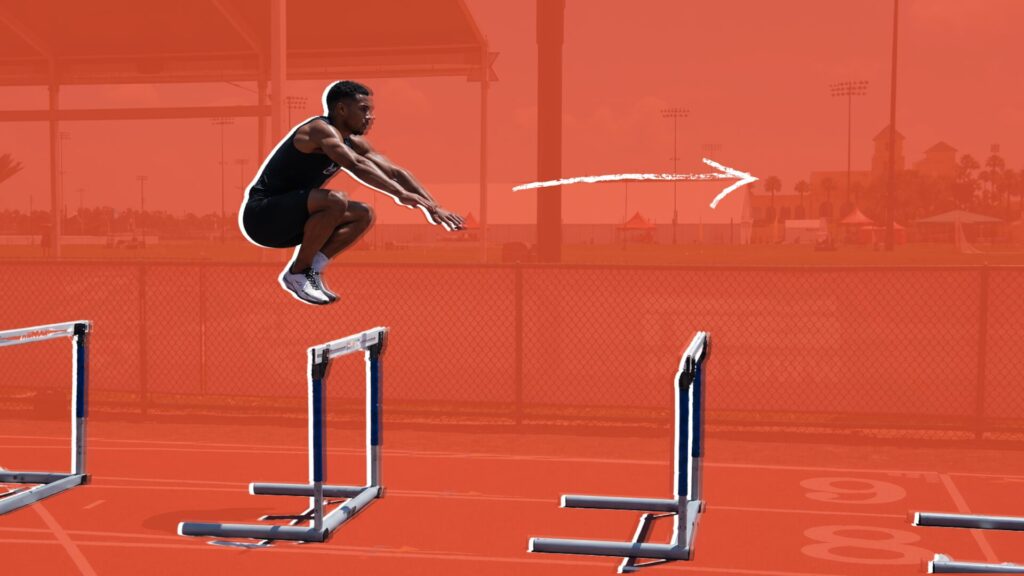
A key factor in overloading the MTC in plyometric activities is the rapid nature of the stretch and short duration between eccentric and concentric portions of the movement (amortization). In other words, short ground contact times and intent. Given this definition, and while still very important, many exercises that are termed “plyometric” such as box jumps, squat jumps and landing focused exercises simply are not.
A key driver in the development of my plyometric training progression model was to highlight and distinguish between different (but all relevant) exercises along the plyometric continuum. In my progression model, I categorise exercises into 4 different streams, all leading towards the goal stream ‘true or reactive plyometrics” characterized by control, stiffness, short contact times and absolute intent.
Phase 1 – Movement/coordination
| Examples | Focus | Characteristics |
| General play | Self-directed | Low impact |
| Skipping | Unstructured | Challenge neuromuscular system |
| Jumping | Coordination | Repitition |
| Jump rope | Fun |
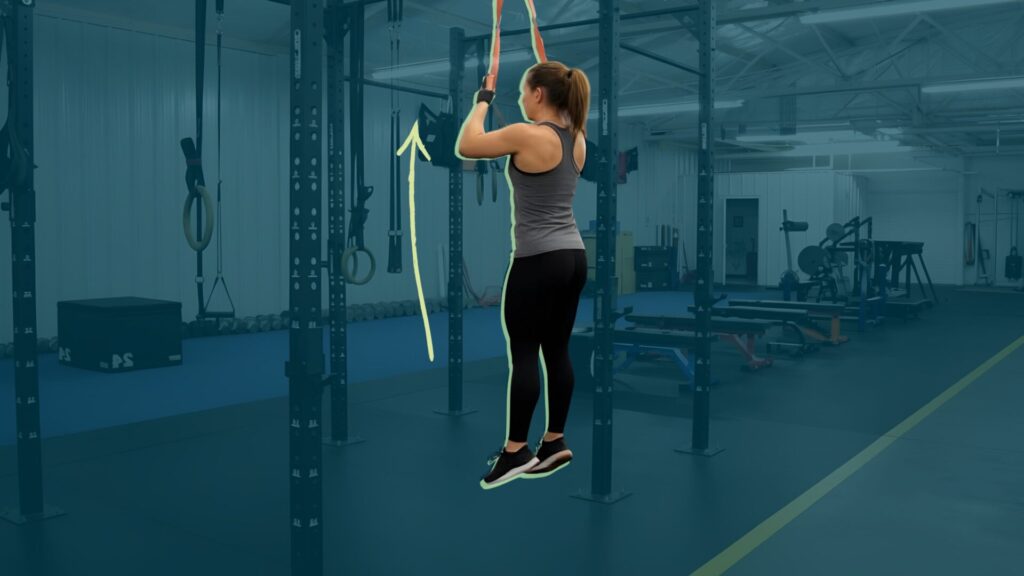
In this phase, I am referring to the load exposure and movement coordination that comes with general play in youth populations. The foundation movements like running, jumping, landing, climbing, changing direction, skipping and anything else young children should be exposed to in their day to day lives act as an introduction to the kinds of loads the body will be exposed to in more structured training.
Tweet ThisFoundation movements like running, jumping, landing and anything else children should be exposed to in their daily lives act as an introduction to the kinds of loads the body will be exposed to in more structured training
@jake_jennings1
The reality is though (for whatever reason), children aren’t being exposed to the level of physical activity that they used to and this first phase seems to be more an essential requirement in most structured physical preparation programmes nowadays. Ultimately the goal of this phase is to let the athlete experience what the neuromuscular system is capable of through movement exploration and repetition.
Phase 2 – Landing and force absorption
| Examples | Focus | Characteristics |
| Box Jump | Structure | Low and slow |
| Depth drop/altitude landing | Landing technique | Low level eccentric |
| Squat jump | Force absorption | Slow eccentrics |
| CMJ | Neuromuscular efficiency | Slower contraction times |
| Broad jump | Rate of force development | Slower RFD |
| Hop and stick | Repitition | Sub-maximal |
| Dynamics calf raise | Large range of motion |
This phase is what most would consider the essential foundation stage critical to engage in before programming plyometric training or the more reactive of exercises. Here the goal is teaching correct landing mechanics. Exercises will typically take the form of jump and stick variations or altitude landings with a real focus on quality and control, generally at the expense of intensity. Moderate ranges of motion should be encouraged with the goal of exposing the neuromuscular system to forceful eccentric contraction over an increased joint range.
In this phase, athletes should be exposed to both bilateral and unilateral landings with the intention of gradually over time decreasing the joint range over which the force is absorbed upon landing. While the proposed diagram is a progression plan, these more basic exercises can still have a place within an advanced plyometric athletes’ programme. Whether they are cycled in at certain stages of the yearly plan or done in conjunction with more complex exercises, landing mechanics are hugely important.
Phase 3 – Plyometric strength
| Examples | Focus | Characteristics |
| Squat jumps | Stucture | High force |
| Continuous jumps | Technique | High range of motion stretch shortening cycle |
| Hops | Force generation | Low rate stretch shortening cycle |
| Small hurdle jumps | Stretch shortening cycle | Quicker rate of force development |
| Bench drives | Rate of force development | Shorter contact times |
| Alternating split jumps | Neuromuscular efficiency | Close to maximal effort |
| Pogos | Quality | Moderate to large range of motion |
Once landing mechanics have been introduced and progressed, it is time to begin focusing on developing forceful concentric contractions through utilisation of the SSC and contractile elements of the muscle. On top of your maximal force generating exercises such as vertical jumps and single leg bench drives, we can begin to introduce more continuous repetition exercises with longer, force generating contraction times and longer ground contact times.
German sports scientist Dr Schmidtbleicher, and more recently Eamonn Flanagan in his RSI work refer to these as slow SSC exercises with larger angular displacements. Other examples in this category can be continuous pogo hops, small hurdle jumps, alternating split jumps and repeat squat jumps. This phase is about promoting neuromuscular efficiency and beginning to introduce over time, the concept of short contact times and system stiffness as we progress.
As mentioned in the previous phase, for the advanced plyometric athlete, these slower SSC exercises still have their place within the program and a great way to re-introduce some of these exercises is to pair them with a plyometric strength or “potentiation” based exercise.
Phase 4 – Plyometric training power
| Examples | Focus | Characteristics |
| Structure | High eccentric force | |
| High hurdle jumps | Stiffness | Low range of motion stretch shortening cycle |
| Rebound jumps | Rate of force development | High rate stretch shortening cycle |
| Bounding | Quick ground contact | Sport specific range of motion |
| Distance hops | Quality | Rapid contact times |
| Pogos | Intensity | Maximal efford |
| High stiffness | ||
| Quick rate of force development |
This fourth phase in the plyometric continuum is targeted at developing plyometric power and incorporates what can be considered ‘true’ plyometric (by nature of the word) exercises. In this phase the goal is maximal rate of force development (RFD) with short contact times that over time are getting close to or even shorter than observed in the sport. If the exercises in phase 3 can be referred to as slow SSC exercises, these can be considered fast SSC. From a kinetic perspective the fast SSC should aid in enhancing the RFD and magnitude of force applied through the utilisation of stored elastic energy, enhanced motor unit recruitment and muscle spindle reflex. The kinematics of these Plyometric Power exercises are highly reactive, small ROM movements with a degree of system stiffness and short contraction transition times. From a programming plyometrics perspective, these exercises can progress from bilateral to unilateral and in place to continuous.
Progression/intensity relationship
As with all physical parameters, when prescribing training one of the primary goals is to progressively overload specific movements while also considering the volume/intensity relationship. Plyometrics should be no different. In general terms, as the athlete progresses through a plyometric progression, intensity should increase as well as the characteristics and goals of the exercise.
Tweet ThisAs with all physical parameters, when prescribing training one of the primary goals is to progressively overload specific movements while also considering the volume/intensity relationship. Plyometrics should be no different.
@jake_jennings1
I am of the opinion that as an athlete progresses, they should move from single rep exercises to more continuous in nature, from sub-maximal efforts to maximal efforts, from slow SSC to fast SSC, from slow ground contacts to fast and from large ROM to small ROM. Keep in mind however that there may still be some interplay between less intense and more intense exercises being prescribed at the same time if you are taking a conjugate type approach.
With intensity of plyometric exercises currently being quite difficult to measure (especially in the field) there are a number of general considerations that should be taken into account when planning plyometrics and their progression. William Ebben has done a vast amount of research in the area and provides some very good practical guidelines for plyometric intensity (6-9). Mike Young also recently wrote a post for Elitetrack providing his thoughts on a mechanical model for plyometric progression where he highlights some very good points.
Firstly, he states that it is a major mistake to think all plyometrics are equal and that issues can arise when we try and categorise plyometric training activities into intensity streams. I completely agree with these comments, and this is precisely why when I categorise my plyometrics it is by characteristics, which in my mind dictate intensity. He then goes on to mention 3 main considerations: Impact velocity, collision time and distribution of load on impact.
Impact velocity is highly important and can be influenced by movement in both the vertical and horizontal planes. Therefore, height from which impact is made significantly impacts exercise intensity, and generally speaking drop height or the peak height reached before each contact should increase through your progression. Also, if a system falls from the same vertical distance with horizontal momentum as well, that exercise is going to more intense than one with movement in only the vertical plane.
Collision time or contact time is essentially the time it takes the system to absorb and produce force and is highly influenced by stiffness. If impact velocity is constant, an exercise performed with a shorter contact time is more intense than the same exercise with long contact time. The third point made by Mike Young related to distribution of load at impact and refers to bilateral or unilateral loading. An exercise with a bilateral landing is less intense than an exercise with a unilateral landing because there is greater distribution of load across the two limbs compared with one. This can be accounted for roughly in your load monitoring (contacts x multiplication factor) with a multiplication factor of 1 for bilateral landings and 2 for a single unilateral landing. One last crucial point mentioned by Ebben is the misconception that drop jumps are an intense exercise. This is highly individual and only true if the drop height is greater than that of the athlete’s vertical jump ability.
Volume/progression relationship
There is little to no literature investigating optimum volume prescription for different plyometric exercises and this is an area that needs to be investigated further. I am of the opinion that depending on the nature of the sport, there are certain plyometric exercises that should be done in high volumes and some that should be done in smaller doses. For example, I currently work in Fencing where there can be hundreds of small amplitude bouncing movements within a match, therefore it would be logical for my athletes to have a reasonable level of plyometric endurance around the ankle/calf complex. For higher intensity movements where I am looking to significantly overload the system such as in drop lunge bounds, a smaller volume of work is prescribed.
In my opinion, most coaches have a clear grasp on progressing both volume and intensity in the first 3 categories I have presented (movement/coordination, landing and force absorption and plyometric strength). However, I believe there can be confusion about how to progress true, higher intensity reactive plyometrics and often intensity begins quite high at the expense of quality.
We need to prepare the body progressively for exposure to the high internal and external loads associated with intense reactive plyometric training.
Below I also present a basic outline of my current plyometric training progression with one group of youth fencers I work with. Please note, this is just my plan relevant to the environment I work in. There are many different ways to skin a cat.
| General preparatory period (working down) | Specific preparatory period (working down) | ||||
| Block | Exercise | Sets x reps | Block | Exercise | Sets x reps |
| Block 1 (3 weeks) | Altitude landings | 3 x 5 | Block 5 (4 weeks) | Depth to hurdle jumps | 2-3 x 4-5 |
| Pogo jumps | 3 x 20-30 | Single leg depth to broad jumps | 2-3 x 4-5 | ||
| Block 2 (3 weeks) | Single leg altitude landing | 3 x 5-7 | Block 6 (4 weeks) | Depth to hurdle jumps | 3 x 5-6 |
| Pogo jumps | 3 x 35-45 | Single leg to broad jumps | 3 x 5-6 | ||
| Block 3 (5 weeks) | Depth jumps | 3 x 5-8 | Block 7 (4 weeks) | Depth to hurdle jumps | 2 x 5 |
| Single leg pogo jumps | 3 x 20-35 | Bounding | 2 x 5 | ||
| Depth lunge bounds | 2 x 2-3 | ||||
| Block 4 (5 weeks) | Depth jumps | 3 x 5-8 | Block 8 (4 weeks) | Depth to hurdle jumps | 3 x 4 |
| Single leg depth jumps | 3 x 8-10 | Bounding | 3 x 5 | ||
| Depth lunge bounds | 3 x 2-3 | ||||
Within this article, I have tried to provide some context and add more detail to these and provide practical examples where possible. I believe the greatest challenge comes in prescribing true reactive plyometric training in a logical and progressive manner. I also state that this is not the only way and that there are many other ways to tackle this subject.
If you know your athletes individually, have a solid understanding of the demands of different exercises and put a logical progression plan in place allowing for a progressive overload of the MTC, you are probably doing a pretty good job. Until research progresses to identify a practical day-to-day method of quantifying plyometric-based exercise, this is the best we can do.