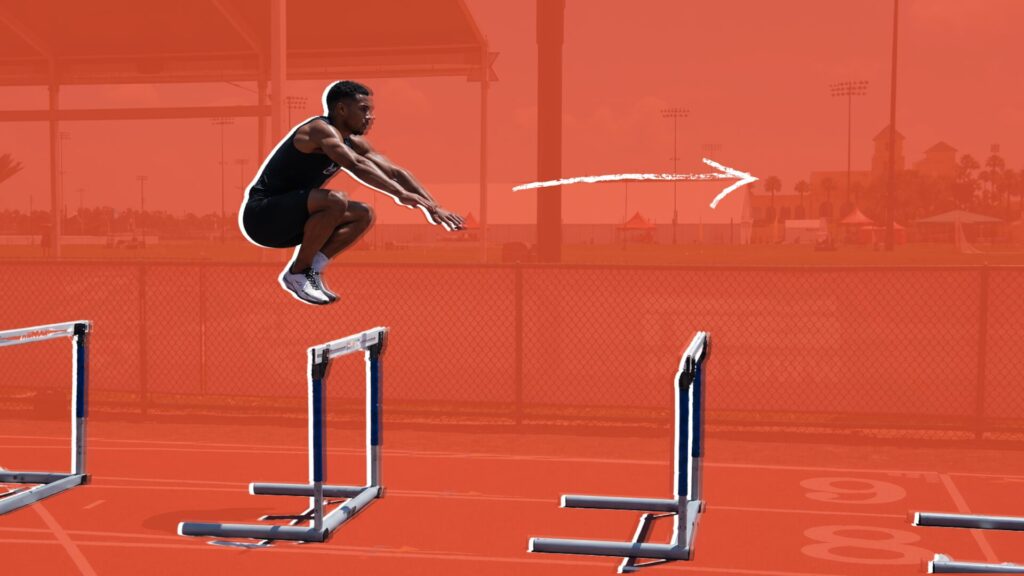

The ability to generate a high amount of force rapidly is a critical determinant of performance in many sports. Plyometric exercises involving rapid ballistic movements are often part of sport performance training to enhance athletes’ force generation capabilities.
The countermovement jump (CMJ) is a ballistic exercise that involves performing a rapid squat before pushing off the ground vertically. The CMJ is a common part of both training and testing the lower limbs’ force generation capabilities. The kinetic and kinematic measures obtained from the CMJ are significantly correlated to the performance of a wide array of sports skills such as sprinting, weightlifting, kayaking, and the badminton smash.
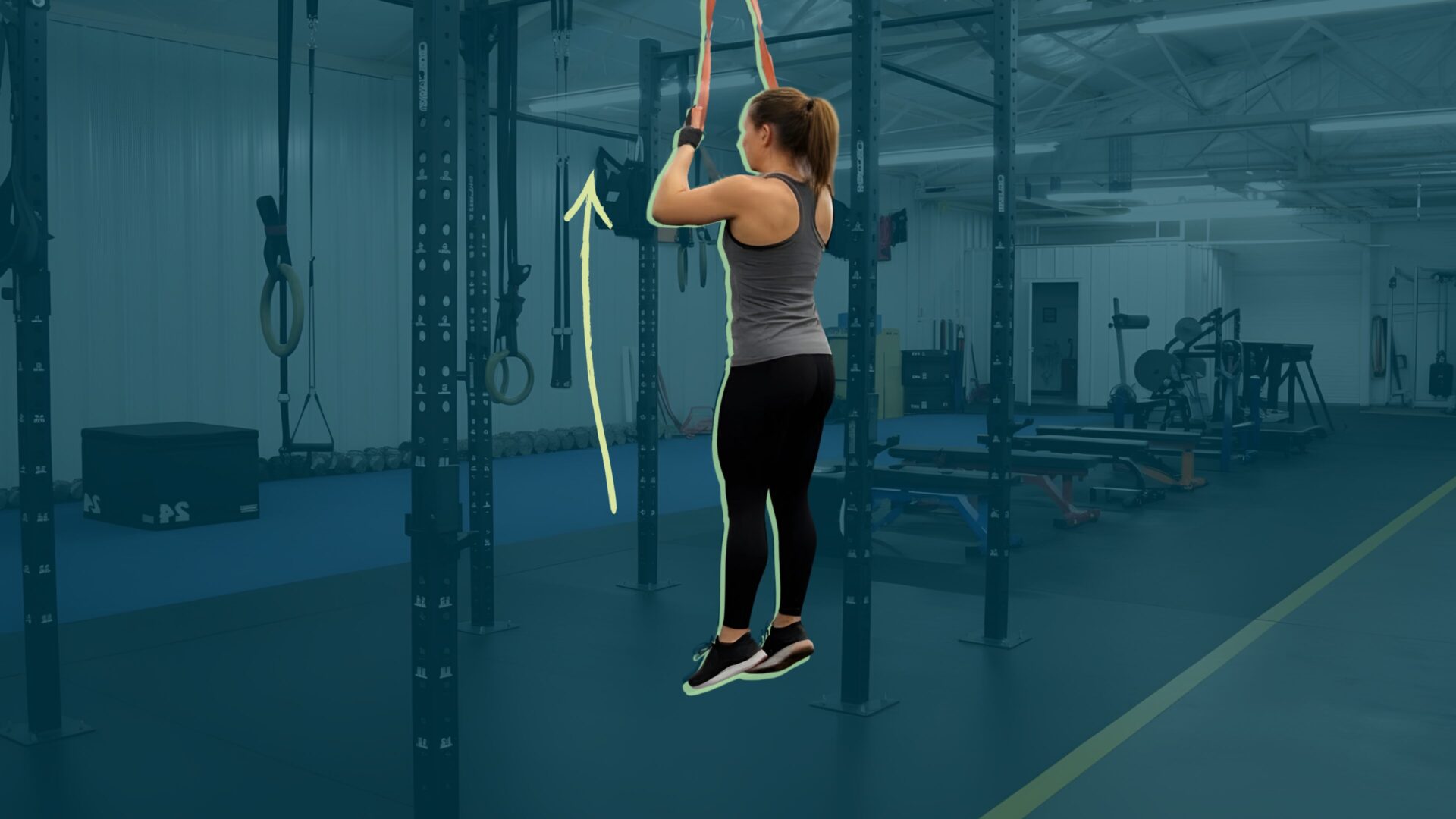
The assisted CMJ (ACMJ) involves using a resistance band or bungee system to reduce the athlete’s body weight when performing the jump. The ACMJ is an emerging training method for athletes who need the ability to jump high or sprint fast.
Tweet ThisThe assisted CMJ (ACMJ) involves using a resistance band or bungee system to reduce the athlete’s body weight when performing the jump. The ACMJ is an emerging training method for athletes who need the ability to jump high or sprint fast.
@dannylum82
Adaptations to the assisted countermovement jump
Multiple studies have compared the effects of the assisted jump to resisted and traditional jump training. But only three studies have specifically examined the CMJ variations.[1,4,5]
Argus et al.[1] conducted a four-week intervention for professional rugby athletes comparing ACMJ, resisted CMJ (RCMJ), and CMJ training. The results showed an average of 6.7%, 4.0%, and 1.3% improvement in jump height for the ACMJ, RCMJ, and CMJ groups, respectively.
This observation was similar to that of another group that reported jump height improved by an average of 8.6%, 3.4%, and 0.6% for the ACMJ, RCMJ, and CMJ groups, respectively. This study, however, used physical education students after seven weeks of training, as opposed to elite athletes.
The ACMJ was also an effective method in improving jump performance in a younger group of junior volleyball players who performed either ACMJ or CMJ training for five weeks. The ACMJ group improved vertical jump and spike jump height by an average of 2.7 cm and 4.6 cm, respectively. By contrast, the CMJ group improved less than 1 cm in both jump heights.
These three studies indicate that ACMJ may be an effective training method for improving jump performance in both elite athletes and recreationally trained individuals across age groups.

Breaking down the ACMJ’s time to take off
Due to the unweighting effect induced by the resistance band or bungee system, there are important differences in the kinetics and kinematics of the ACMJ and CMJ.[1,3,4,7–9,11] These differences likely underlie the enhanced neuromuscular adaptations from ACMJ training compared to CMJ.
Several studies suggested that the time to take off (TTO) was significantly shorter during ACMJ than CMJ, with the reduction in TTO tracking with increasing levels of assistance.[1,3,4,7–9]
Over the time course of chronic adaptations, the reduced TTO seems to be the main reason for the enhanced jump performance following ACMJ training compared to CMJ training.[1,4,5] The reduction in TTO provides an over-speed stimulus, which allowed the individuals performing ACMJ to contract the muscles and develop force at a higher rate. This stimulus then led to enhanced rate of force development over time.
Although the results from previous studies have reported reduced TTO when performing ACMJ, we observed a conflicting finding in our recent study.[11] Our results showed no significant difference in TTO between ACMJ at various levels of assistance with CMJ.
Instead, we observed that the propulsion duration was significantly reduced after ACMJ training, but the unweighting phase duration was significantly increased. Greater assistance resulted in a greater increase of this specific time span. That would explain the lack of significant difference in TTO.
During the unweighting phase, the individual has to overcome the resistance imposed by the resistance bands in order to perform the countermovement, thus increasing the unweighting phase duration.
This difference in findings was likely due to how each group defined time to take off. Previous authors did not specifically state whether they included the unweighting phase or just the propulsion phase.
Nevertheless, our findings indicated that the over-speed stimulus only occurred during the propulsive phase, but not the unweighting phase. But this does not mean that ACMJ only benefits the propulsion phase of the jump.
Tweet ThisThe reduction in TTO provides an over-speed stimulus, which allowed the individuals performing ACMJ to contract the muscles and develop force at a higher rate. This stimulus then led to enhanced rate of force development over time.
@dannylum82
Stiff vs. soft landings on an ACMJ
Both mean and peak force during the propulsion phase were lower during the ACMJ than CMJ, with greater assistance resulting in lower force metrics.[1,7]
However, the findings on the peak landing impact force (PLIF) were conflicting.[1,3,4,6,8,9] Some researchers reported that greater assistance resulted in lower PLIF, while others found the opposite.[1,3,6,8,9] Differences in the resistance bands used and the method used to attach the bands to the individuals could explain these differences in output.
In addition, our recent study found that the athlete’s landing strategy affected whether the ACMJ results in greater PLIF.[11]
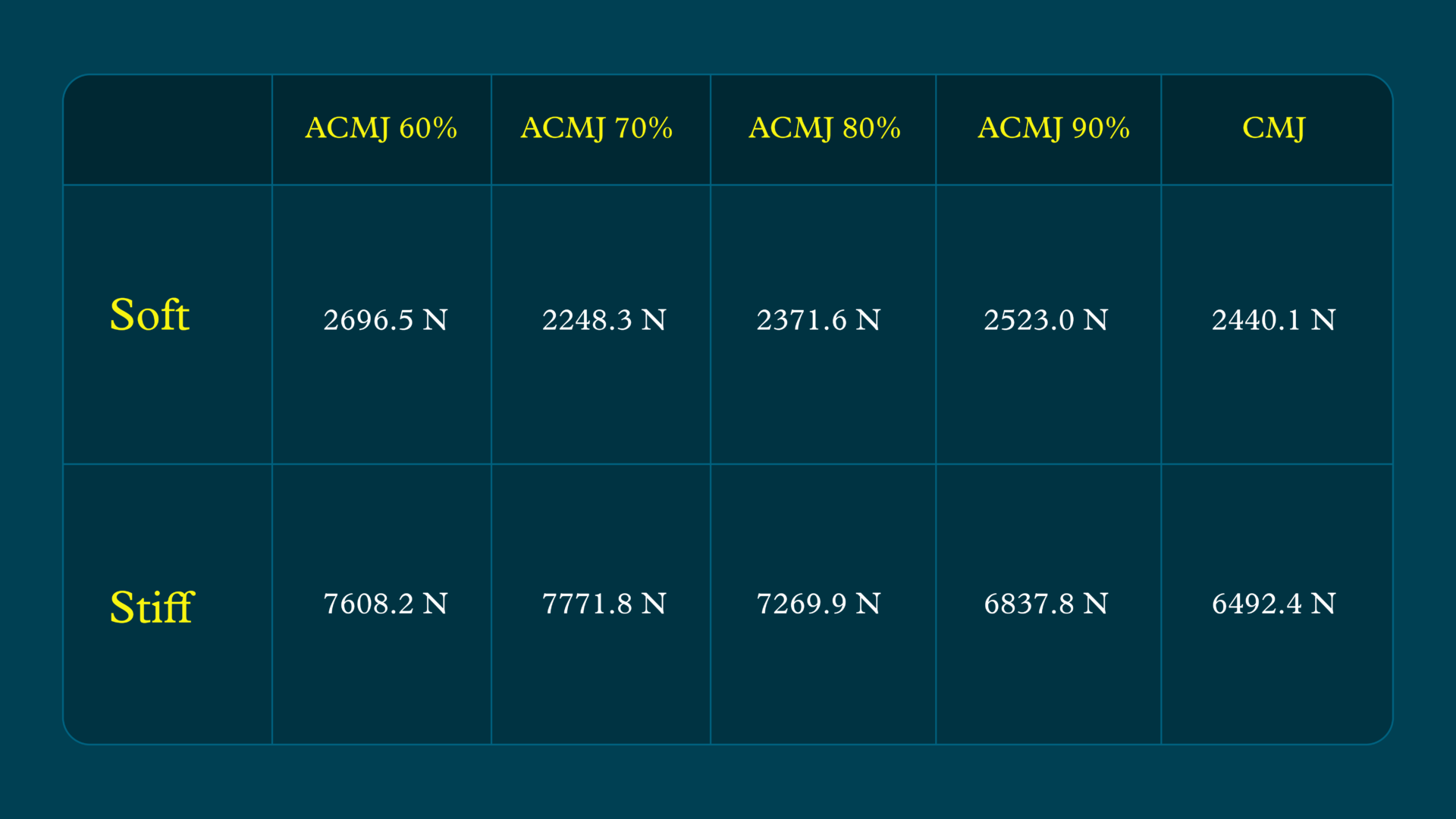
The participants in our study performed the CMJ and ACMJ at 60%, 70%, 80%, and 90% of body weight. They performed three jumps at each intensity with either a soft or stiff landing. Soft landings entailed a knee angle less than 90o (Video 1), and stiff landings maintained a knee angle greater than 90o (Video 2), during ground contact.
During soft landings, the PLIF did not differ significantly between intensities. However, with stiff landings, the PLIF increased with greater assistance (Table 1). As greater assistance led to greater jump height, this would have resulted in higher downward velocity during the landing phase, which further increased PLIF.
Although PLIF only increased with greater assistance during a stiff landing, this does not mean that individuals incur less stress to the musculotendinous system if they adopt soft landings when performing ACMJ for a given assistance level.
Tweet ThisBecause the PLIF during stiff landing can be as high as 10 times bodyweight, athletes must first develop sufficient strength levels and the ability to execute proper landing techniques.
@dannylum82
The energy that has to be dissipated when landing from a given height does not change whether an individual adopts a soft or stiff landing. During stiff landing, the individual develops sufficient force rapidly to counter the landing impact force. However, during soft landing, the individual will take a longer time by going through a greater range of movement to dissipate the energy imparted by the impact. Hence, while stiff landing requires the individual to perform a high rate of force development, the soft landing requires the individual to perform a greater amount of work (force * distance).
This also means that while PLIF did not differ significantly during ACMJ with different levels of assistance, the internal load on the musculotendinous system would most likely have been greater as assistance level increased.
Muscle activities and work distributions at various joints differ during soft and stiff landings due to different joint kinematics.[2,10] The contribution to the muscular work parameters from the hip, knee, and ankle joint were 25%, 37%, and 37%, respectively during soft landing; and 20%, 31%, and 50%, respectively, during stiff landing.[2]
Based on what we know of the kinematics and kinetics of soft and stiff landing, individuals might incur distinct neuromuscular adaptations when performing different landing strategies during training.
Tweet ThisHence, while stiff landing requires the individual to perform a high rate of force development, the soft landing requires the individual to perform a greater amount of work (force * distance).
@dannylum82
Comparing stiff and soft landings in two athletes
While a randomized controlled study has not been conducted to compare the training effects of ACMJ with soft and stiff landing, I have the pre- and post-training CMJ data of two youth athletes of the same sport who adopted either soft or stiff landings during ACMJ.
Both athletes were performing the same strength training program during the specific strength phase. During the six-week training period, we gave them no specific instruction on which landing strategy to adopt. It just so happened that Athlete A adopted soft landing while Athlete B adopted stiff landing.
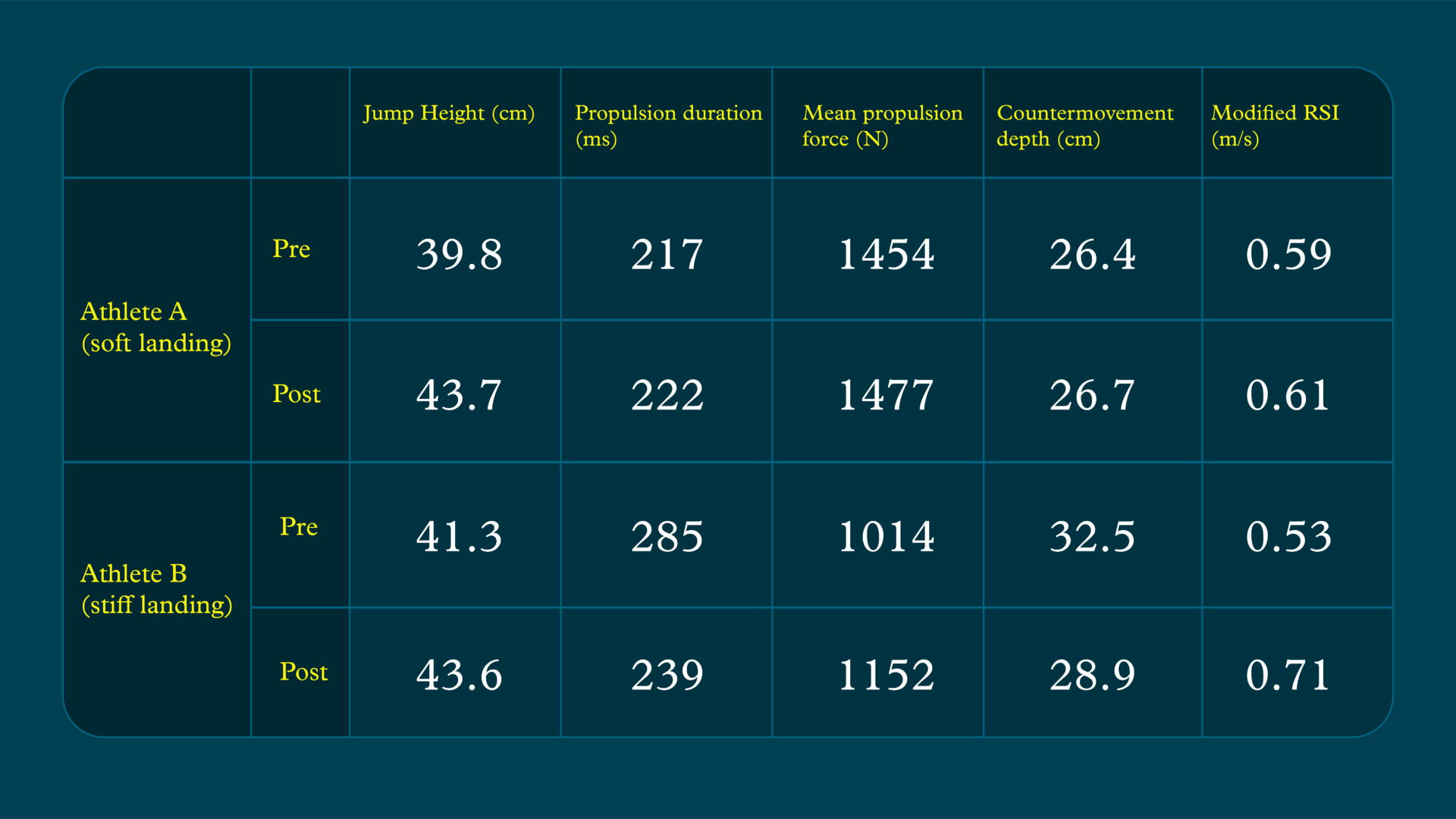
Table 2 shows that both athletes improved their jump height, but the mechanism for the improved jump height differed.
Athlete A, who used the soft landing method, experienced no drastic change in the other outputs we measured. He likely improved his jump height through the increase in total impulse generated. Athlete B, who used the stiff landing method, exhibited a decrease in propulsion duration and countermovement depth, and an increase in mean propulsion force and modified RSI.
Generally, we would see a greater jump height when athletes adopt deeper countermovement depth, as this would allow for more time to generate the propulsive impulse.
Athlete B’s improvement in jump height, despite the lower countermovement depth, suggests that he likely improved his rate of force development, which allowed him to produce a higher propulsive impulse within a shorter period of time. The result also suggests that adopting a stiff landing method may alter an athlete’s jumping strategy (i.e., more shallow countermovement).
This observation provides some insights on the adaptations we can expect from performing the different landing methods during ACMJ.
Tweet ThisAthlete B, who used the stiff landing method, exhibited a decrease in propulsion duration and countermovement depth, and an increase in mean propulsion force and modified RSI.
@dannylum82
Implications and recommendations for applying ACMJ
We can infer some considerations for applying the current knowledge on ACMJ and different landing strategies.
The reduced propulsion time when performing ACMJ suggests that this training method may provide an over-speed stimulus. Including ACMJ in training programs may result in adaptations related to over-speed training, such as improved rate of muscular contraction and time to peak velocity.
Due to the greater jump height achieved during ACMJ compared to CMJ, the lower limb has to perform a greater amount of work during landing due to the greater landing impact force. Adaptations to this greater impact force may differ depending on the landing strategy adopted.
When stiff landing during an ACMJ, the PLIF would increase with greater assistance due to the increasing jump height. Individuals have to develop more force within a short period of time in order to dissipate the high amount of energy from the impact. Chronic exposure to such stimulus may enhance the lower limb’s rate of force development ability.
Additionally, adopting a stiff landing strategy may provide greater stimulus to develop the force generation capability of muscles around the ankle joint (e.g., soleus and gastrocnemius), as the ankle joint’s contribution to the work parameters would increase.
Compared to stiff landing, a soft landing may increase the total amount of work done, as the lower limb dissipates the energy during impact over a greater range of movement. As ACMJ imposes greater impact force than CMJ, the soft landing requires a greater amount of work. This may provide the stimulus to enhance maximal strength and hypertrophy.
The hip and knee joints provide greater contribution to the work parameter during soft landing than stiff landing. Adopting soft landing strategies may provide a better stimulus to enhance the force generation capabilities of muscles around the hip and knee joint.
Because performing ACMJ would expose the musculotendinous system to high impact force, training volume should stay low: 3-4 sets and 3-5 repetitions per set. Similarly, because the PLIF during stiff landing can be as high as 10 times bodyweight, athletes must first develop sufficient strength levels and the ability to execute proper landing techniques prior to adopting stiff landings during ACMJ to reduce injury risk.
Tweet ThisBecause performing ACMJ would expose the musculotendinous system to high impact force, training volume should stay low: 3-4 sets and 3-5 repetitions per set.
@dannylum82