


What is RED-S, and why is it still so commonly misunderstood? (Pippa Woolven)
RED-S occurs when an athlete doesn’t consume enough energy to meet both the demands of training and their body’s basic functions. This energy shortfall can be intentional (e.g. disordered eating) or unintentional—often caused by high training loads, insufficient recovery, or simply underestimating the energy demands of our activities.
Over time, this energy gap can affect everything from performance, recovery, mood, and bone health to menstrual or erectile function, immunity, and fertility.
Despite growing awareness, RED-S is still widely under-recognised and misunderstood. One reason for this is that athletes with RED-S often appear healthy or may continue performing well for a while, even though their internal systems are struggling. Symptoms are subtle, varied, and don’t always appear straight away. This can make the early warning signs such as fatigue, hormonal dysfunction, and changes in weight easy to dismiss until they escalate.
A common misconception is that RED-S only affects elite, female, or underweight athletes. In reality, it can affect anyone, regardless of sex, body type, or level of competition. Another barrier to diagnosis concerns the lack of education around RED-S. Many coaches, parents, and even healthcare providers don’t know what RED-S looks like or how to respond, meaning athletes can go years without recognising they’re under-fueled.
That’s why education and early intervention are critical. At Project RED-S, we’re challenging outdated beliefs, equipping support teams, and helping athletes learn how to fuel in a way that supports both performance and long-term health.
Tweet ThisRED-S occurs when an athlete doesn’t consume enough energy to meet both the demands of training and their body’s basic functions. This energy shortfall can be intentional (e.g. disordered eating) or unintentional.
@Pippa Woolven
What are some common early signs of RED-S that coaches should watch for? (Ellie Maybury)
Recognizing RED-S is less about spotting one big red flag and more about piecing together a puzzle of subtle signs. As coaches and practitioners, we’re often in the best position to spot those early signs, but only if we know what to look for.
The updated 2023 IOC RED-S Clinical Assessment Tool (CAT2) highlights several key domains affected by RED-S.
From a performance perspective, reduced endurance capacity, diminished strength, coordination issues, and slower recovery times are all signs that something might be off. These performance drops often show up before any clinical symptoms, making them a valuable early warning.
Physiologically, RED-S can affect multiple bodily systems. The endocrine system is especially sensitive to low energy availability, which can lead to menstrual dysfunction in females (such as irregular or missing periods) and low testosterone in males. Recurrent injuries, especially stress fractures or soft tissue strains, are also common. Although athletes may experience gastrointestinal discomfort, poor sleep, and a higher frequency of illness, these are often dismissed as unrelated issues. But when they cluster, they often point to a bigger issue.
Psychological signs are just as important. You might notice an athlete becoming more anxious or withdrawn, overly focused on food or training, or just more rigid in their routines. Sometimes it’s a shift in mood, increased irritability, or a drop in engagement with teammates. These things can be easy to overlook—especially when performance dips could be blamed on other factors. But context is everything. These psychosocial shifts can be both a cause and a consequence of RED-S, contributing to a cycle that’s difficult to break without intervention.
For practitioners, the key is to look beyond just body composition or appearance. Many athletes experiencing RED-S are still performing well—until they aren’t. Tools like the IOC RED-S CAT2 are now validated and can help guide conversations and assessments. But the real insights often start with the people closest to the athlete, such as coaches, strength & conditioning staff, and athletic trainers, who are usually the first to notice when something just doesn’t feel right.
Importantly, RED-S doesn’t have a “look” or single specific symptom. It’s a collection of physical, psychological, and performance-related clues.
The goal is to stay alert to patterns such as performance changes, physical complaints, menstrual or hormonal fluctuations, mood changes, and alterations in training or eating habits. Typically, the earlier we notice and react, the better the outcome for the athlete.
Tweet ThisPhysiologically, RED-S can affect multiple bodily systems. The endocrine system is especially sensitive to low energy availability, which can lead to menstrual dysfunction in females and low testosterone in males.
@EllieMUK
Why does RED-S matter long-term, both for performance and health? (Tansey Hensley)
RED-S has serious long term consequences for both performance and health, which is why early recognition and intervention are so important.
From a performance standpoint, it’s important to acknowledge that athletes may initially experience a perceived boost in performance, often (but not always) due to weight loss, but this is usually short lived. While in the early stages of RED-S, athletes may be able to train and compete. Over time, though, low energy availability can lead to mounting fatigue, injuries, and illness. Without the ability to train consistently, performance inevitably declines. In more severe cases, athletes may become so depleted that even basic sessions feel impossible. Whatever the individual symptoms, when training becomes irregular or unsustainable, performance inevitably suffers.
When it comes to physical health, RED-S can affect nearly every system in the body. Alongside fatigue and increased illness and injury, the consequences can become serious and far-reaching. Bone health is particularly vulnerable, with increased risk of stress fractures and potentially irreversible bone loss. Hormonal dysfunction is also common, including disrupted menstrual cycles in females and reduced testosterone in males, which can further impact mood, metabolism, and recovery. RED-S can compromise cardiovascular health, fertility, and immune function, too.
From a psychological standpoint, many athletes report increased anxiety, depression, and a loss of identity when they’re no longer able to train or compete.
In combination, these issues can significantly reduce an athlete’s capacity to train, compete, and stay healthy, even years after their sporting career ends.
While each case of RED-S is unique, athletes often struggle with a combination of the symptoms above. Educating athletes and athlete supporters such as coaches and parents can help them recognize the early performance and health warning signs, and prevent athletes from slipping further into RED-S.
Tweet ThisFrom a psychological standpoint, many athletes report increased anxiety, depression, and a loss of identity when they’re no longer able to train or compete, even years after their sporting career ends.
@TanseyHensley
What are the cultural or systemic factors that make RED-S more likely to occur in certain environments? (Pippa Woolven)
RED-S doesn’t just come down to individual choices. A RED-S situation is often shaped by the culture of the sport and the system around the athlete. Many performance environments still equate leanness with success, especially in sports like distance running, gymnastics, rowing, dance, and others where appearance or weight can feel linked to selection or performance.
This can create pressure to change or control body composition, even when it’s not in the athlete’s best interest. Sometimes that pressure is subtle, like praise for weight loss or being called “disciplined”; and sometimes it’s more direct, like weigh-ins or comments about body shape. Either way, the message is clear, and that mindset can push athletes toward under-fueling, sometimes without even realising it.
Coaching culture also plays a big role. If the focus is always on short-term outcomes, like hitting a certain time or winning a competition, it can create an environment where rest and recovery are viewed as optional. Athletes might feel like they can’t speak up about fatigue, injuries, or hormonal changes (such as missing or irregular menstrual cycles), especially if those symptoms are brushed off or misunderstood.
In college sport, the pressure can be even more intense. Athletes usually have a short window of eligibility, so there’s a real sense of urgency to perform at their best. Coaches, teammates, and even athletes themselves often push for results or overlook early warning signs, while issues like low energy availability continue to grow.
There’s also a systemic gap in education around female physiology. Many training programs are still modeled on male physiology, missing key signs like menstrual dysfunction or hormonal fluctuations.
All of this points to the need for a cultural shift where fueling, recovery, and long-term health are seen as part of performance, where open conversations are encouraged, and where athletes are supported in fueling properly so they can thrive both in sport and beyond.
Tweet ThisAll of this points to the need for a cultural shift where fueling, recovery, and long-term health are seen as part of performance, where open conversations are encouraged, and where athletes are supported in fueling properly.
@Pippa Woolven
How can coaches and support staff help prevent and respond to RED-S? (Tansey Hensley)
Coaches and support staff play a crucial role in both preventing RED-S and supporting athletes in recovery. Athletes need to feel like they have an adult in their support system that hears and sees them. Here are a few do’s and don’ts to help coaches and athletic support staff play a positive role in RED-S prevention and recovery:
Do…
- Create an environment with open communication. When athletes feel that their coaches and athletic staff have their best interests in mind, they’re more willing to communicate if they feel like they’re having an issue.
- Keep athletes included while they’re recovering from RED-S. Recovery from RED-S looks different for everyone. If an athlete steps back from training or competition, find meaningful ways to involve them in team life, as long as the athlete is interested in participating.
- Promote fueling and recovery. Normalize conversations about proper fueling, rest, and overall wellness. Reinforce that eating enough is essential, not optional, for performance and longevity in sport.
Don’t:
- Comment on athletes’ bodies. Even comments that seem positive, like “you look fit right now,” can unintentionally fuel body image issues. It’s safer to focus praise on effort, attitude, or teamwork instead.
- Assume RED-S is a female athlete problem. RED-S can affect anyone, of any sex, ability level, or sport. This is a very real human issue, not a localized one.
- Feel like you need to be the expert on RED-S. Coaches and support staff shouldn’t feel they need all the answers. What matters most is being able to create a support system that includes access to qualified professionals (like psychologists, dietitians, and medical staff) that can provide the help they need.
For practical guidance on how to approach these conversations and support athletes through the recovery process, take a look at the Project RED-S resources on starting healthy conversations and handling a RED-S case step-by-step. These tools are designed specifically for coaches and support staff looking to create safer, more supportive environments.
Tweet ThisCoaches must create an environment with open communication, keep athletes included while they’re recovering from RED-S and promote fueling and recovery.
@Tansey Hensley
What’s one practical step every coach or practitioner can take today to create a more RED-S-aware environment? (Ellie Maybury)
Start talking about fueling as part of performance. That might sound simple, but it is one of the most powerful culture shifts we can create, and it begins with the language we use every day.
When we talk about performance, the focus is often on strength, speed, tactics, or mindset. But we rarely speak openly about energy availability or the fueling that makes all of those things possible. If food and fueling are not part of regular performance conversations, athletes may not realise just how important they are to consistency, resilience, and the ability to train and compete at their best.
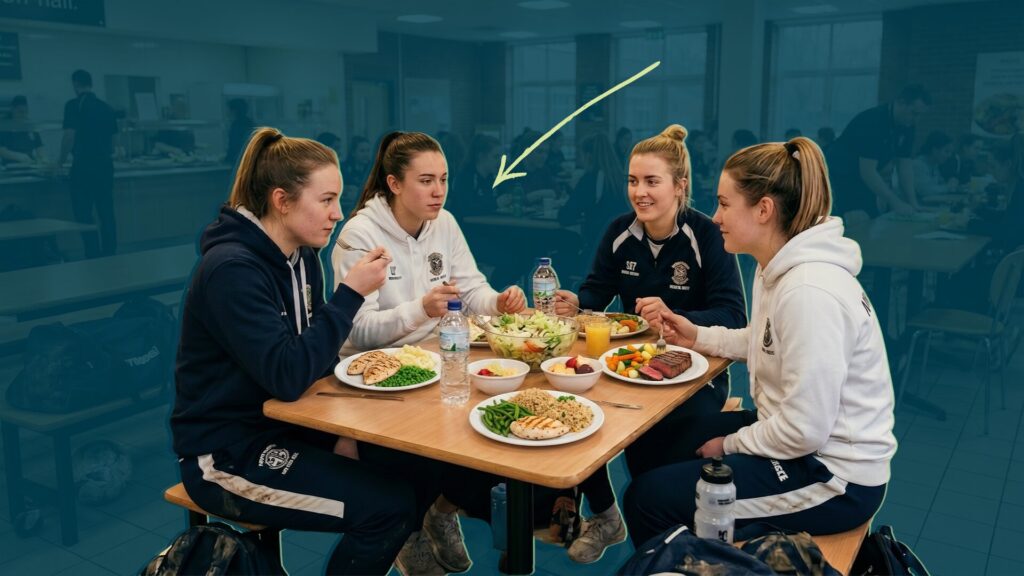
One meaningful step coaches and practitioners can take today is to start weaving fueling and recovery into everyday conversations about performance, just like you would with periodisation or technical execution. It doesn’t require a formal session or specialist input, just consistent messaging that positions fueling as a fundamental part of the process. That might include encouraging athletes to bring recovery snacks, acknowledging when someone has managed their energy well across a demanding week, or reinforcing that regular, balanced nutrition is part of being ready to train and compete. These small, everyday cues help shift the culture.
When nutrition is framed in the context of energy, performance, and long-term development, it becomes something athletes are more likely to value and prioritise. You don’t need to be a nutrition expert or overhaul entire systems overnight. It is about making small, intentional shifts in language and behaviour that normalise eating as part of high performance.
The more we bring fueling into everyday conversation, the more we support athletes in taking ownership of their energy needs and in speaking up if something feels off. It also helps reduce the pressure some may feel around eating, especially in high performance spaces where silent struggles can go unnoticed.
If you are looking for ideas on how to get started, the Project RED-S resource on Fueling Without Fear offers practical strategies to support healthy messaging and build more supportive environments.
Tweet ThisOne meaningful step coaches and practitioners can take today is to start weaving fueling and recovery into everyday conversations. It doesn’t require a formal session, just consistent messaging that positions fueling as fundamental.
@EllieMUK
Want to learn more?
For practical tools, guidance, and resources to support both athletes and their support teams, visit the Project RED-S Toolkit. Whether you’re a coach, athlete, or practitioner, the toolkit is designed to help you better understand RED-S and build environments that prioritise health, performance, and long-term development.