We are inundated with information on physical fatigue, what it is, how we measure it and how we can recover. But what about mental fatigue and how we recover from that? We are starting to understand the impact that mental fatigue can have on physical performance but how can we manage it? How can we recover from it to maximise performance in a subsequent match or training session? We spoke to Suzy Russell, a researcher at Australian Catholic University and asked her 6 important questions on this.
Do we know the impact that mental fatigue can have on elite sporting performance?
Over the last few years, we have seen a growing body of evidence that builds upon foundational work examining the impact of mental fatigue on physical performance [1]. Recent investigations have begun to inform us about the impacts on technical, tactical, psychomotor and psychological aspects of performance.
Physically, we see decreased time to exhaustion, reduced power output and cadence during cycling time trial performance; increased completion time for 3 km and 5 km running trials, and across swimming distances [1]. An average of 16 ± 5% less distance covered on the field-based Yo-Yo IRT1 test provides a relatable example of the impact mental fatigue can have [2]. We have also seen increased session rating of perceived exertion (RPE) and lower self-selected volume completed during resistance training.
Generally, the physical research demonstrates a negative impact on endurance tasks. The impact on a short isolated maximal anaerobic effort appears to be negligible.
Impairments in technical skills include number of errors, number of tackles and percentage of successful tackles in soccer [3]; free throws, three point shots and turnovers in basketball [4]; and decision making in volleyball [5]. These critical skill examples are supplemented by a negative impact on sport specific psychomotor performance including decision making, reaction time and accuracy [6].
The body of evidence informing potential changes in tactical performance is yet to emerge. However, available information indicates impairments in tactical behaviours and compensatory physical demands during small sided games [7].
Having said that, we have only just scratched the surface. There is plenty more to explore, quantify and understand.
How can practitioners measure mental fatigue so they can monitor and manage it?
Appropriate measurement is key to understanding athlete mental fatigue and recovery. By definition, a state of mental fatigue is determined by subjective, behavioural or neurophysiological changes. Ideally, we could observe an indication of change across all three domains. However, neurophysiological markers, such as functional magnetic resonance imaging (fMRI) or electroencephalography (EEG), are expensive and currently impractical for multi-athlete settings. Still, rapid advances in technology are enabling the development of more practical tools to investigate potential neurophysiological indicators, so watch this space (while being very wary of wild claims vs. purchasing evidence-informed technologies).
The good news is behavioural and subjective markers are suitable approaches to indicate mental fatigue.
A 100 mm visual analogue scale (VAS) is a recommended subjective tool [9]. The athlete rates their “current feelings of mental fatigue” on a 100mm line anchored from 0 (“none at all’) to 100 (“maximal”). The VAS format is more sensitive than the Likert or other categorical type scales using descriptive wording.
As with any subjective marker, athletes must know what mental fatigue is so they understand exactly what they are self-reporting. I tend to highlight to practitioners that, traditionally, athletes have been taught to associate the word “fatigue” with physical changes or impairments, so providing context to allow the athlete to identify both their physical and mental fatigue may aid in accurate reporting.
Behavioural indicators are a useful addition to provide objective information. For example, an increase in response time on a short cognitive task, such as a 3-minute psychomotor vigilance task.
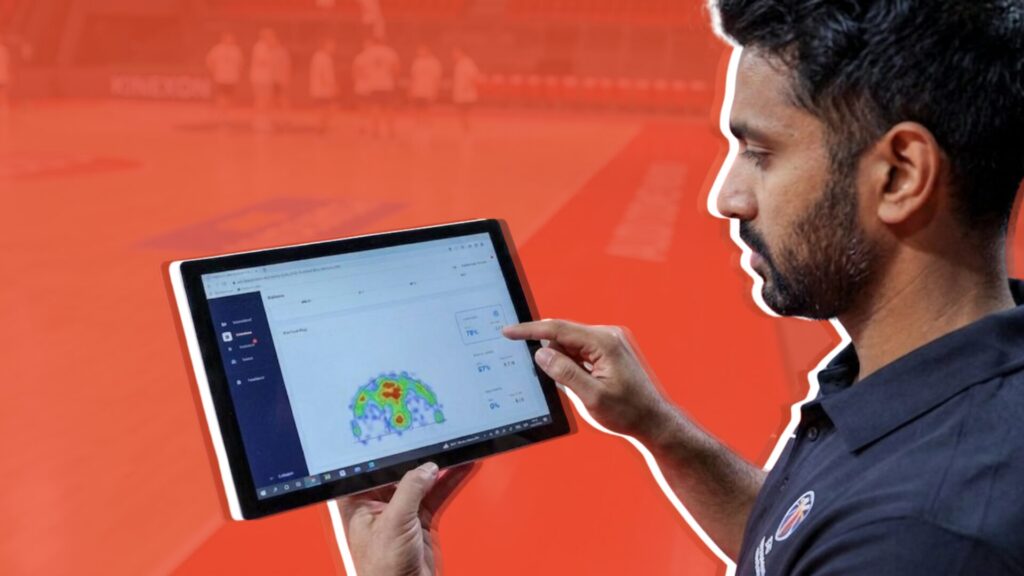
The most suitable test will likely depend on the sport and its primary cognitive domains. Practically, the test could be on a tablet or smart phone [10].
Of course, practitioners will have to interpret this information in the context of other factors such as physical load, sleep quality and quantity etc. Mental fatigue is one piece of the very big athlete performance puzzle.
Tweet ThisBehavioural indicators are a useful addition to provide objective information on mental fatigue. For example, an increase in response time on a short cognitive task, such as a 3-minute psychomotor vigilance task
@suzanna_russell
Do we know how mental fatigue affects players at different times of the season?
Not much published research has observed athletes across different times of the season. Recent data indicates that a large percentage of practitioners working in high performance sport don’t assess mental fatigue or mental recovery, largely due to a lack of knowledge and confidence in applying their knowledge.
The larger league-wide data we do have indicates that individual athlete mental fatigue fluctuates across a season.
Interestingly, self-reported mental fatigue increases towards the end of a 14 round season [11]. This season contained minimal fixture congestion and is substantially shorter than many other professional competitions.
Preseason is notorious for being an intense period designed to prepare athletes physically, technically and tactically for competition. Athletes reported fluctuations in mental fatigue across a relatively condensed 16 week preseason, with particular elevations in mental fatigue towards the later weeks [12]. These coincided with factors that the athletes and staff have previously associated with mental fatigue, including a preseason tournament with selection and outcome pressures, travel for a preseason double header, increased media demands and opposition analysis [13]. At this stage, it is challenging to tease out if the elevations are temporal, due to increased cognitive demands or, most likely, a combination of both.
What interventions can practitioners employ if faced with an athlete who is showing signs of both acute and chronic (if we can even say that) mental fatigue?
The time course of athlete mental fatigue, acutely or with repeated exposure and inadequate recovery, is an underexplored area. Most of the evidence has focused on acute mitigation, but we are seeing an increase in the sustained approaches to managing mental fatigue.
Practitioners should approach managing mental fatigue with the understanding that fatigue is a normal and desired part of the training process. This means that like physical fatigue, practitioners should aim to strike the correctly timed balance of deliberately inducing mental fatigue to encourage adaptation and enhance mental recovery to maximise performance.
The evidence base is building around approaches to induce mental fatigue to allow athletes to train and potentially develop tolerance to performing under mental fatigue [14]. The translation to improvements in sport specific performance tasks is emerging, with evidence to inform coaches and practitioners of effective strategies and impacts.
There are a broad range of approaches to address an athlete experiencing mental fatigue at a time when you want to minimise fatigue [15]. Strategies include listening to binaural beats, systematic breathing, mindfulness, power naps, and providing performance feedback during tasks. Spending time or immersing oneself in restorative open spaces such as beaches and mountainous areas may also help. Exposure to a warm environment by sitting near a pellet stove has also been demonstrated to improve mental recovery and cognitive performance.
Given the mental fatigue and subsequent performance impairments following use of social media, practitioners may advise athletes avoid social media prior to training or competition. Athletes don’t always love this suggestion, and, of course, there are some ethical considerations here given the potential financial gains from media engagement. However, guidance on intentional use, or scheduling or utilising external media managers, may minimise this implication while reducing the risk of performance impairment.
What works best may vary for each individual athlete and may change over time. Discussing the situational context around the causes of mental fatigue and what the athlete is open to adopting may aid in finding an effective method to enhance their usual training and competition routine.
Tweet ThisThere are a broad range of approaches to address an athlete experiencing mental fatigue. Strategies include listening to binaural beats, systematic breathing, mindfulness, power naps, and providing performance feedback during tasks
@suzanna_russell
Is there anything from a nutritional point of view that could help?
Yes, in fact, many of the evidence based strategies involve nutritional intervention, which may be due to their effectiveness, but also likely because of their practical application.
Reaching for a cup of coffee when feeling mentally fatigued may be quite familiar to many practitioners working in high performance sport. Caffeine is the most explored nutritional intervention to mitigate mental fatigue and improve subsequent performance. Numerous studies indicate that ~5 mg/kg of caffeine consumed acutely prior can improve cognitive and endurance performance. Even a mouth rinse of caffeine-maltodextrin or a caffeine only solution is effective in mitigating subjective and behavioural impacts of mental fatigue, likely through activating relevant areas of the brain.
Creatine supplementation, while not necessarily known for use as a cognitive enhancer, is another nutritional strategy with supporting evidence. A loading phase dose of 20 g/day over seven days and 8 g/day over five days combats the negative effects of mental fatigue.
Other, more alternative strategies that show promise include exposure to odours including citrial, green and menthol.
The individual effectiveness, broader implications and associated impacts – such as caffeine consumption on sleep, or creatine supplementation on power-weight ratio – should be considered when recommending nutritional strategies.
Tweet ThisCreatine supplementation is a cognitive enhancer with good supporting evidence. A loading phase dose of 20 g/day over seven days and 8 g/day over five days combats the negative effects of mental fatigue
@suzanna_russell
What are the biggest mistakes you see young practitioners/clinicians make and what advice would you give them to help?
First, I think it’s important to note that we should all be willing to make mistakes. The ability to embrace mistakes counteracts the fear of failure that accompanies the futile pursuit of perfectionism, which can be an attribute at any age. Ultimately, a mistake should add to your knowledge and better equip you to handle future scenarios. If you’re hesitant to make a mistake, you are likely balanced towards being risk adverse, which may limit your innovative contributions and self-development.
A common mistake I have observed, likely due to the competitive supply vs. demand for practitioners in the elite sporting industry, is the decision to compromise on personal values to get or keep a job. It is important that you are able to be flexible and adapt within a multidisciplinary team to effectively work together towards achieving a common goal. However, in the right place, flexibility and adjustment do not mean forgoing your values in terms of the impact you want to have, the person you pride yourself on being, or the progress you want to make. There is no doubt our industry is all about producing results, but I believe that being a good human with strong morals, developing solid professional relationships, and staying true to your values is a sustainable way to achieve that success.
Organisations that truly want to progress will see an individual who brings diversity, critical thinking, and healthy debate as an asset.
As a young practitioner, you are constantly reminded you have an opportunity to absorb information and learn from others. However, this does not mean that the way it has always been done is the most effective way. Often, young practitioners will accept organisational processes at face value, rather than working to form their own opinions and utilising their skill set to make positive contributions. If you have an idea, have read some recent evidence, or up-skilled yourself in a way that can contribute more broadly, raise this and demonstrate it to others. Find mentors who truly want to provide opportunities for you to develop as a practitioner and person, rather than those aiming to produce a mini clone (ultimately to make their job easier for them). Having the support of genuine mentors will benefit you immensely.