

The entire multi-disciplinary team (MDT) is essential in the 72 hours after an injury to capture relevant information around the athlete and injury before setting out a plan. Once they set up a return to play plan, the MDT should identify any potential barriers or constraints that may crop up during the process and, just as importantly, after the athlete has returned to competition. This “pre-mortem” meeting allows the MDT to head off problems through a lens of “if this rehab was to fail…’.
From an S&C perspective, I ask myself the same key five questions to structure my thoughts when starting any rehab planning, which have been influenced and shaped by experienced practitioners in our field, particularly Strength and Conditioning Academy and 292 Performance:
- Is there clarity around what successful performance looks like, and is this coherent across the MDT?
- What are the athlete’s current physical constraints?
- What physiological adaptations are required?
- How does the training intervention align to successful performance?
- How will I know if it worked?
These questions are not exhaustive, but provide higher level planning opportunities that can generate questions specific to the current context.
Top 100 tennis players will typically play up to 90 matches a year, travelling across multiple time zones, playing matches of unpredictable durations, with frequency changing on a week-to-week basis – a recipe for an inevitable injury.
This case study is from a 19 year old tennis player who had just turned professional and was diagnosed with bilateral stress responses on both tibias. The key members of the MDT were the tennis coach, performance analyst, doctor, lead physiotherapist, strength & conditioning coach, nutritionist, and sport psychologist. Following initial meetings, the MDT agreed that there was no time pressure to return the player to competition based on the recurrent nature of the injury and the age of the athlete.
Tweet ThisThe MDT should identify any barriers that may crop up during the rehab process and, just as importantly, after the return to competition. This “pre-mortem” meeting allows the MDT to head off problems through a lens of “if this rehab was to fail..”
@cfaulkner1993
Is there clarity around what successful performance looks like, and is this coherent across the MDT?
Starting at the top of the performance pyramid, it is important for each discipline in the MDT to approach success from differing perspectives to capture essential information to drive the successful return to performance. Each member of the MDT must align their discipline-specific strategy to the coach’s model of performance in order to integrate support and provide the athlete with the best possible service to return to competition, remain injury free, and climb the rankings [18].
Injury aside, the tennis coach and performance analyst had clear performance objectives for the player:
- Increase forehand options: success inside out (88% in and 53% won) and line (82% in and 56% won).
- Technical work on the back hand side when stretched wide, with implications for player’s movement.
- Increase second serve points won from 78% to over 82%.
These specific performance outcomes were interlinked with the context of returning the player from injury, allowing other members of the MDT to support this. For example, the nutritionist conducted a comprehensive assessment of the athlete’s resting metabolic rate and daily calorie intake through a food diary that then allowed him to align to the metabolic demands of rehab in both the early and late stages, as well as filtering into competition strategy and support around fuelling and energy balance.
My specific S&C strategy sits within the next four questions.
Tweet ThisEach member of the MDT must align their discipline-specific strategy to the coach’s model of performance in order to integrate support and provide the athlete with the best possible service to return to competition performance and remain injury free
@cfaulkner1993
What are the athlete’s current physical constraints?
We were able to conduct a comprehensive profiling and diagnostic battery that provided insight around the injury and the player’s physical capabilities relative to the demands of the game. We selected these tests based on access to equipment, and their reliability and validity given the most recent published literature. All tests were part of the national testing battery.
| Profiling Pillar | Test | Equipment | Metrics | Reliability |
| Acceleration | 10m acceleration | Timing gates | Time (s), step velocities (m/s) | [9] |
| Change of direction | Modified 505 + Cutting movement assessment score (CMAS) | Timing gates | Time (s), step velocity in (m/s), step velocity out (m/s), braking distance (m), step count | [1] [6] |
| Optojump, | ||||
| iPad | ||||
| Endurance | 30:15 | Laptop / app | Level reached | [3] |
| Single leg force | Triple hop and stick | Tape measure | Distance (m) | [13] |
| Single leg countermovement jump | VALD ForceDecks | Peak power/bm | [15] | |
| Lower body RFD | Countermovement jump | VALD ForceDecks | Peak power/bm | [15] |
| Local hip vector profile | Adduction and abduction isometric force | VALD ForceFrame | Peak force (N) | Internal research |
| Reactive strength | 10-5 RSI | VALD ForceDecks | RSI, contact time (s), flight time (s) | [8] |
| Metabolic capacity | Heel raises | Metronome | Total reps | [19] |
| Hamstring bridges | Metronome | Total reps | [11] | |
| Trunk quadrant holds | Timer, box, plinth | Time (s) | British Rowing |

There is often debate around the efficacy of heel raises and bridges within a profiling battery. However, we had a clear purpose for their inclusion in this rehab process. Both tissue structures have large compositions of Type 1 muscle fibres. We wanted to understand the specific elements within the contractile muscles that were key to producing high ground reaction forces and movements that would be pivotal in returning to performance. Heel raises and bridges helped us understand the specific metabolic capabilities of the calf and hamstring complex to support the ability to repeat higher intensity tennis movements.
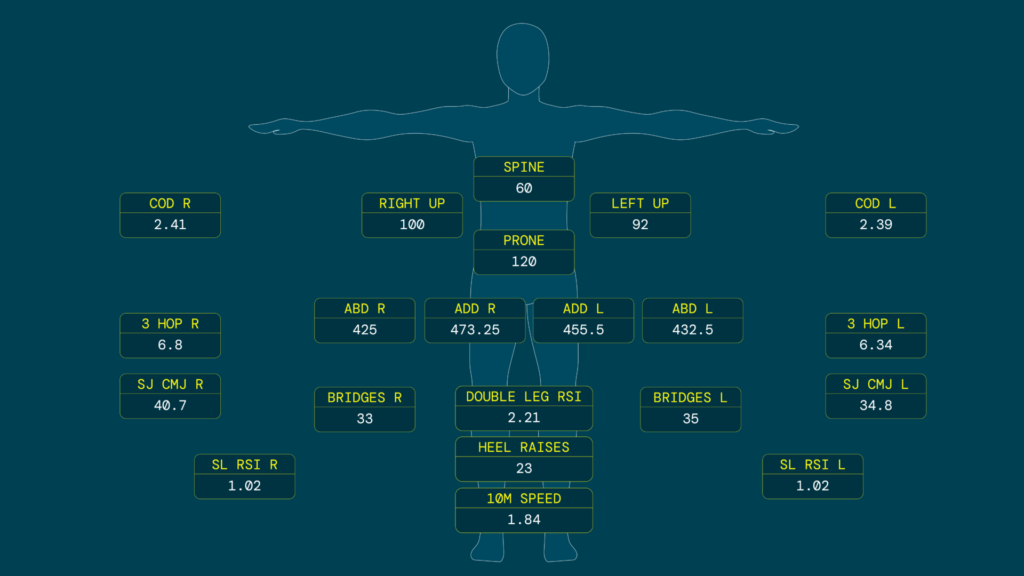
Once we captured this information, in conjunction with medical and physio input, we formulated two working hypotheses around the possible causes of the injury.
The first is poor capacity and elasticity of triceps surae within active and passive structures of the foot-ankle complex to transfer and dissipate energy through the lower limb. Subsequently, the bony structures had to absorb energy during ground contact.
This hypothesis was based on poor metabolic capabilities during the single leg heel raises (23 reps max, combined with severe DOMS post testing) and poor single and double leg RSI scores. Change of direction analysis (modified 505 and CMAS) within the last three months suggested poor braking capabilities due to increased hip and knee flexion angles during final foot contact. This might stem from the poor reactive qualities around the foot and ankle, where the knee and hip were required to compensate by using more mechanical energy.
Our second hypothesis was a poor load management strategy resulting in diminished capabilities around the foot-ankle complex.
This was based on the athlete’s injury history of frequent medial tibial stress syndrome, and specialising late into tennis from a swimming background where the majority of training was in water. Due to the sporadic nature of tournaments and no training log, this proved to be a key area in exposing the underlying issues. It’s important to highlight here that a problem solving approach factors in the underlying mechanisms to injury. It doesn’t start post-injury, carry through the injured site healing, and then the athlete returning to competition. Those stages lie between the underlying causes and mitigating the risk of re-injury. This better aligns with the specific sport performance goals. While this may seem obvious, the deliberate action of plan-do-review allows for increased certainty about the intentions of the programme.
| Block objectives | ||||
| Decrease ground contact time | ||||
| Increase plantar flexion maximal force expression | ||||
| Increase knee extension maximal force expression | ||||
| Increase lateral trunk stiffness | ||||
| Block goals | ||||
| Outcome | Diagnostic | Current | Goal | Post |
| Foot-ankle stiffness | RSI (double leg and single leg) | 2.21/ 1.08 | 2.75-3/1.3-1.5 | |
| Plantar flexion Fmax | Soleus calf raises | 27x @ 100kg | 4×20 @ 2x BW (160kg) | |
| Knee extension Fmax | Single leg leg press | 8x @ 100kg | 5x @ 2x BW (160kg) | |
| Lateral trunk stiffness | Trunk quadrant holds | Left: 92s | 120s | |
| Right: 100s | ||||
When setting the specific goals, it is important to understand the required change in the context of what is realistic within the desired time frame. Using statistics such as the smallest worthwhile change and magnitude based inferences allowed us to make these decisions with confidence [10][21]. This allowed the initial phase of rehab (when the athlete is limited in actual on court training) to be more aggressive in loading, driving physiological adaptations that may be more difficult when the player is back on court and there is a higher metabolic demand.
The calf and knee were important focus areas for the initial six weeks of the rehab because of their key function in generating vertical ground reaction forces when accelerating up to 5 m/s [5][20]. Regaining appropriate function of the calf and knee extensors early in the first six weeks gave the MDT confidence the player had the physical requirements to progress on-court tennis movements through increased speed and distances covered, thereby increasing the ground reaction forces and the stress on the injured areas.
Tweet ThisTweet This @cfaulkner1993When setting the specific goals, it’s important to understand the required changes within the desired time frame. Statistics such as the smallest worthwhile change and magnitude based inferences allow us to make these decisions with confidence
What physiological adaptations are required?
After setting the block outcomes, the next step was to identify what adaptations were required to achieve these outcomes, which directly informs exercise selection.
| Outcome | Adaptation | Exercise selection Frequency | Frequency |
| Decrease ground contact time | Achilles tendon CSA/ ankle stiffness | Tension circuit | 3x per week |
| Isometric high force calf holds | |||
| Quick foot change calf raises | |||
| Skipping | |||
| Cocky walks | |||
| Increase plantar flexion maximal force expression | Medial gastrocnemius and soleus physiological cross-sectional area | Seated calf raises | 3x per week |
| Plie calf raises | |||
| Single leg heel raises | |||
| Isometric high force calf holds | |||
| Increase knee extension maximal force expression | Knee extensors physiological cross sectional area | Narrow ¼ squats | 3x per week |
| Single leg leg press | |||
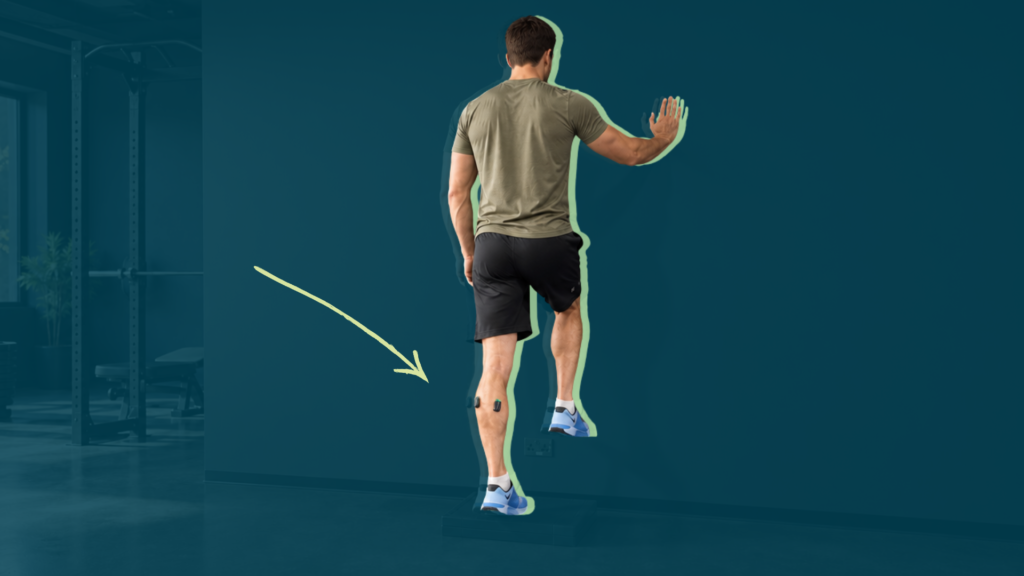
| Single leg step ups | |||
| Increase lateral trunk stiffness | Internal / external oblique CSA | Sorrenson side flexions | Build to daily |
| Alekna variations | |||
| Lateral holds |
Click here to view all the exercises included in the program.
The adaptations were predominantly structural in the initial phase of the rehab, given that exercises with high ground reaction forces (e.g., plyometrics) would aggravate the injury. The adaptations were specific to the outcomes, and the exercises aimed to remove any rate limiters.
Three key principles sit behind exercise selection.
First, muscle architecture and fibre type composition. Train muscles in line with their function, which is governed by their architecture [14]. As an example, the soleus is the highest force producing muscle in the body and is constituted of predominantly Type I muscle fibres. Therfore, seated calf raises with high load (160 kg) for high reps and sets (4 x 20).
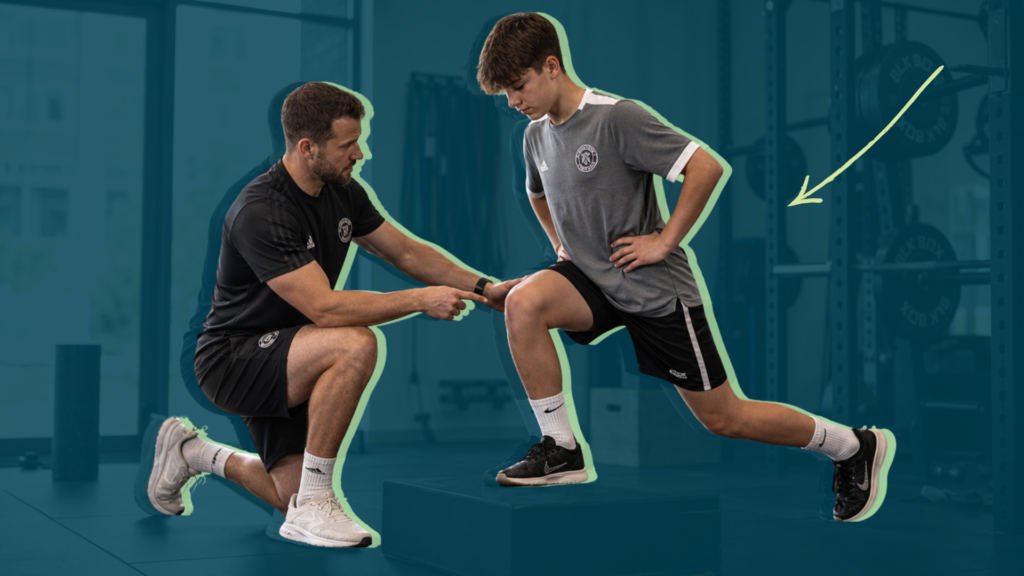
Second, the basic principles of the force-length relationship tell us that maximal isometric force occurs during mid-range. If we are training tissues for maximal force expression, the appropriate ranges will allow maximal motor unit recruitment and mechanical tension [4]. Examples include ¼ squats and single leg step ups. The optimal force-length relationship of the knee extensors is around 70°°of knee flexion, so we want to set up exercises in a way that biases the contribution of the knee extensors to produce maximal force[17]. Obviously, range of motion is limited, but this provides the optimal position to maximally recruit the knee extensors and is aligned to the outcome of achieving maximal knee extension force production.
Third, we chose exercises that optimised the moment arms, allowing the targeted tissues the best opportunity to reach mechanical failure without the assistance of contributing muscle groups. Plie calf raises, where the feet are externally rotated 45,° biases for the medial gastrocnemius [16]. The medial gastrocnemius is the larger compartment of the calf complex and has higher potential for force production, so it best satisfied several of our goals [14].
Tweet ThisThree key principles sit behind exercise selection. First, muscle architecture and fibre type composition. Second, the basic principles of the force-length relationship. Third, optimising the moment arms to target specific tissue
@cfaulkner1993
How does the training intervention align to successful performance?
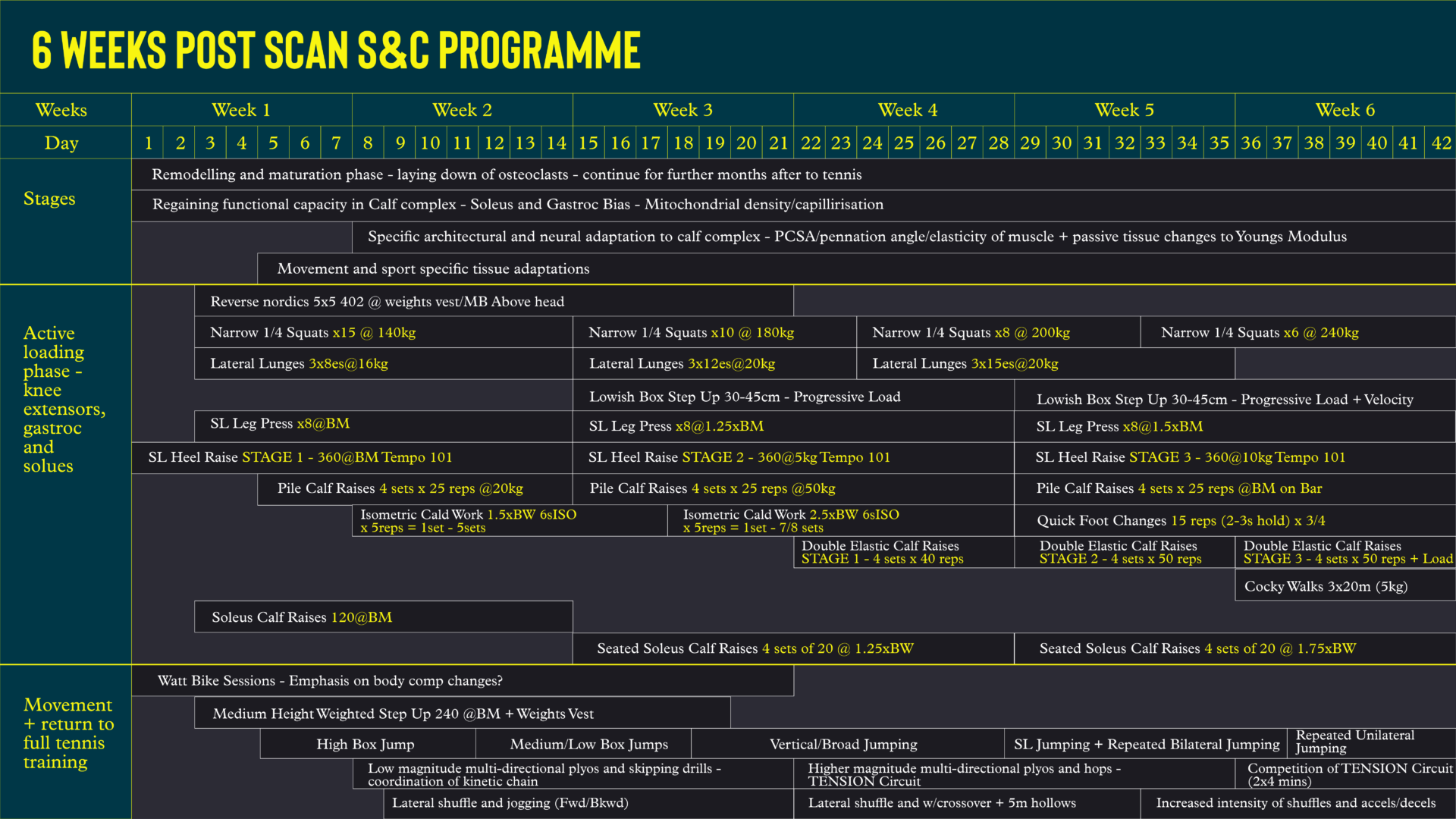
After selecting the exercises, we next prescribe the appropriate dosing and loading in line with the overall periodisation plan. Due to the aggressive nature of loading the foot-ankle complex, we opted for a Kongsgaard [12] loading progression. This consisted of heavy resistance training with 48 hours between each loading cycle to ensure appropriate collagen resynthesis and recovery [4]. Using the ¼ squats as an example, at the beginning of the loading cycle we started with higher volumes of 4-5 sets of 12-15 repetitions before gradually increasing the intensity while decreasing the volume. By week 8, we were loading with four sets of six repetitions three times per week.
Any exercise prescription starts with what the athlete can currently do. This may come from a percentage of a 1RM. However, I like the athlete to guide their loading in the first session. On the last set of an exercise, I ask the athlete to complete as many reps as they can while maintaining good technique. This provides a more accurate idea of where the athlete currently is for that exercise. Using the soleus raises as an example, at the end of the last set the athlete lifted 100kg for 27 reps. This tells us that the subsequent sets at 20 reps were under the required dosage to stimulate the intended adaptations. I could then estimate a 1RM and adjust the loading for the following session.
After understanding the athlete’s current capability, I then need to plot out the programming details that will make me confident I have created a physical change. Using the same example above, for the soleus calf raise the target goal for the exercise was 160 kg (2x body weight) for four sets of 20 reps.
With both the start (100 kg for 27 reps) and end points (four sets of 20 reps at 160 kg) laid out, I then plot the loading progression over each set and session in order to achieve the exercise goal within the specified time frame.
Review and reflection: How will I know if it worked?
From my specific S&C lens, I want to be able to answer: have I made a physical change that has contributed to performance?
It’s important to review the block outcomes to assess the effectiveness of the training programme and learn about what is working and what may need modifying. Re-testing on the ForceDecks and within the weight room made it evident the athlete developed significant physical changes. The aggressive approach in the early phases allowed us to deliver a second six week training block of two phases.
| Block goals | ||||
| Outcome | Diagnostic | Current | Goal | Post |
| Foot-ankle stiffness | RSI (double leg and single leg) | 2.21/ 1.08 | 2.75-3/1.3-1.5 | 2.81 / 1.3 |
| Plantar flexion Fmax | Soleus calf raises | 27x @ 100kg | 4×20 @ 2x BW (160kg) | 4×20 @ 160 kg |
| Knee extension Fmax | Single leg leg press | 8x @ 100kg | 5x @ 2x BW (160kg) | 5x @ 165 kg |
| Lateral trunk stiffness | Trunk quadrant holds | Left: 92s | 120s | Left: 115s Right: 128s |
| Right: 100s | ||||
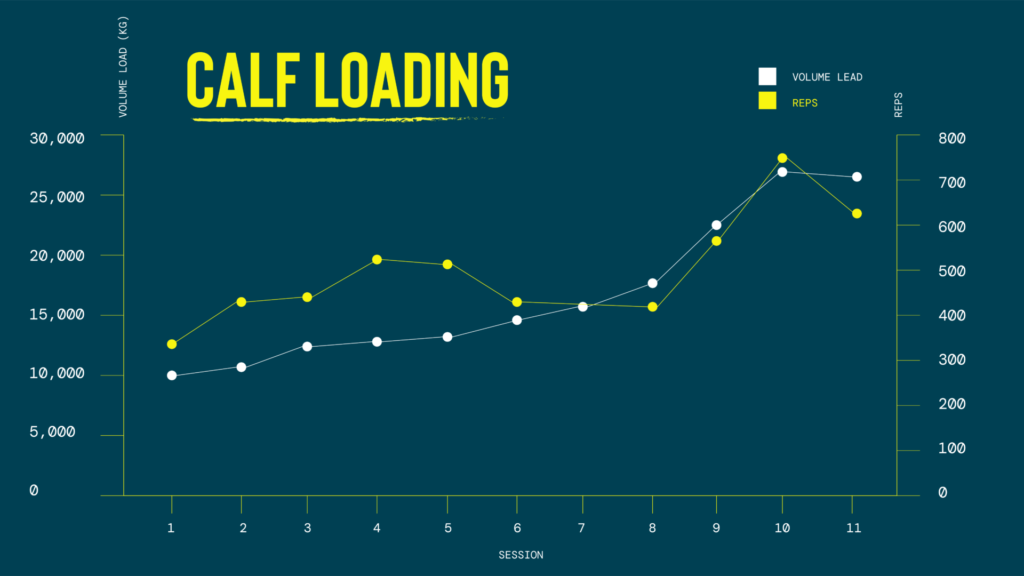
The volume load was a key driver to the required metabolic demands of the calf complex. By session 10, the athlete accumulated 760 reps of calf raises across different exercises. By restoring the metabolic capabilities early on, it allowed us to spend more time using plyometrics and high ground reaction force based activities to stimulate the nervous system later in the rehab. The athlete experienced significant changes in reactive strength index, increasing from 2.21 to 2.8.
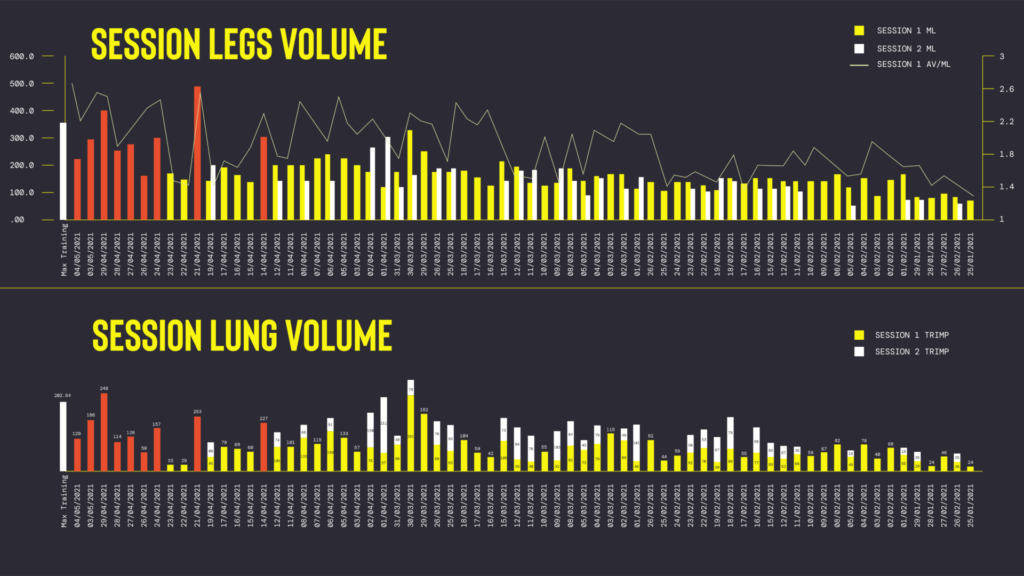
Our second hypothesis was around the athlete’s specific load management during training and competition. As soon as he returned to on court training, heart rate monitoring provided objective outputs from both intrinsic (heart rate) and extrinsic (movement) loads.
Tweet ThisVolume load was a key driver in meeting the metabolic demands of the calf complex. Early restoration of metabolic capabilities allowed us to spend more time using plyo’s and high-GRF-based activities later in rehab to stimulate the nervous system
@cfaulkner1993
The athlete’s steady progress continued after return to competition. This was only possible because I had built a strong working relationship with the tennis coach throughout the rehab. Spending time in his environment on the tennis court and inviting him into my world in the gym allowed us both to see how our roles aligned for performance. Due to the chaotic nature of tournament and match demands, we strived to give the player the physical capabilities to cope with spikes in load that would no doubt occur both on a day to day and week to week basis. Having the load management strategy locked in allowed us to navigate appropriate changes to training programs and schedules.
The nature of tennis competition sees players constantly jetting around the world to venues that more often than not lack basic training equipment. This results in an obvious potential for detraining during these periods. Regular check ins with the player were essential and, on return to the training centre, we retested CMJ and RSI to monitor his physical state. Throughout the year there were positive trends in both CMJ (peak power/bm and eccentric deceleration impulse) and RSI.
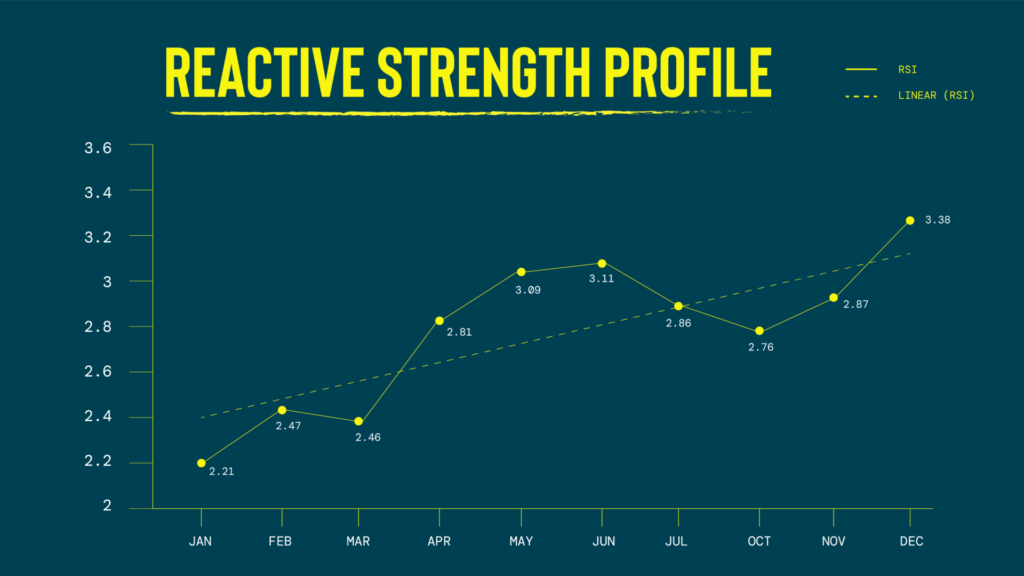
During dense competition periods, there is an evident drop in training loads and volume, but the sport provides enough of a stimulus to further push on these specific metrics.
The athlete returned to full competition within 12 weeks and cut his ranking in half, playing 52 matches for the remainder of the season on his way to three consecutive finals to finish the year. More importantly, due to the ongoing support and management, he had no days lost or modified for the remainder of the season.
Tweet ThisThe athlete’s progress post-return to competition was possible due to the strong working relationship built with the tennis coach. With a solid load management strategy in place, we effectively navigated changes to training programs and schedules
@cfaulkner1993