
Are force vectors something that coaches should incorporate into their thinking when devising a programme for their athletes?
Yes, but while I definitely believe that coaches should consider force vectors and force vector specificity when prescribing training for their athletes, I also want to emphasize that I don’t believe there is anything special or magical about force vector specific training.
Force vectors themselves are not of any substantial importance. However, considering force vectors in training is a good basis for transferring the work athletes do in training into real life performance contexts. Using force vectors increases the likelihood of training exercises / drills activating and therefore stimulating the “correct” neural pathways and muscle groups, potentially even in relevant joint angles and muscle lengths for whatever performance measure one is seeking to improve.
Another factor to consider besides the “hard core” physiological adaptation to training is simple motor learning and familiarization. Movement patterns from training are more likely to carry over to real life performance contexts if they are similar in nature, with the overall direction of force application (force vector) likely a part of this equation.
Considering the force vectors of exercises and prescribing exercises with different force vectors – vertical, horizontal in sagittal plane, and horizontal in the frontal plane, for example – are likely to build athletes who are strong and resilient in a multitude of directions, resulting in diverse performance improvements and reduced injury risk.
Tweet ThisI definitely believe that coaches should consider force vectors. I don’t believe there is anything special or magical about force vector specific training
@NicklasJunge
When the aim is to improve vertical or horizontal jumping, based on your meta-analysis, where should practitioners be focusing their athletes’ resistance training?
Just to sum up, our meta-analysis revealed a 0.09 standardized mean difference (SMD) in favor of vertically oriented resistance training over horizontal training for vertical jumping ability. Usually, SMDs below 0.2 are considered to be negligible, so this is not a very convincing result for vertically oriented training compared to horizontal training. While the meta-analysis was originally meant to cover a broader range of vertically- and horizontally oriented resistance training exercises, the available literature was rather homogeneous, limiting the analysis to mainly squat-hip thrust comparisons (with one deadlift-hip thrust comparison).
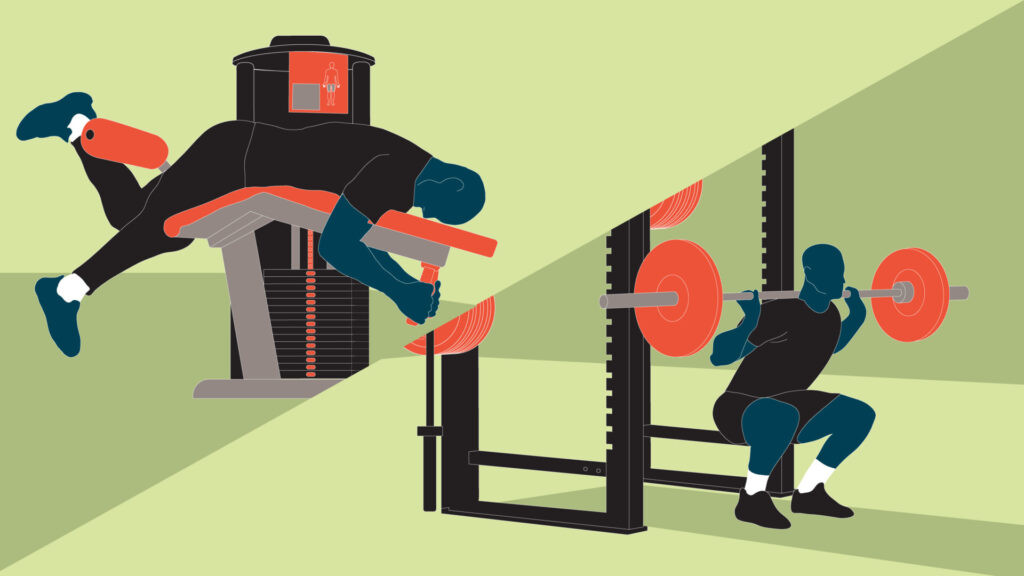
The squat is usually regarded as one of the best exercises for improving vertical jumping ability, if not the best. When I entered the data into the meta-analysis software and realized that there was virtually no difference between squatting and hip thrusting for vertical jumping, I was definitely surprised. However, if squat and hip thrust are roughly equal at augmenting vertical jumping, this could be considered a positive result, as it allows coaches and athletes to select their preferred exercise.
That said, I am convinced that performing both of these exercises – either concurrently or alternating over the course of training blocks – optimally develops vertical jumping, along with other key performance measures.
Whether the effects of the squat and hip thrust are additive or not is a matter of whether their respective performance improvements are due to similar underlying physiological adaptations. My guess is that the squat improves vertical jumping mainly through an increase in knee extensor capacity, whereas the hip thrust mainly improves hip extensor capacity.
Bottom line: the choice between the squat and hip thrust is of little importance in the specific context of vertical jumping.
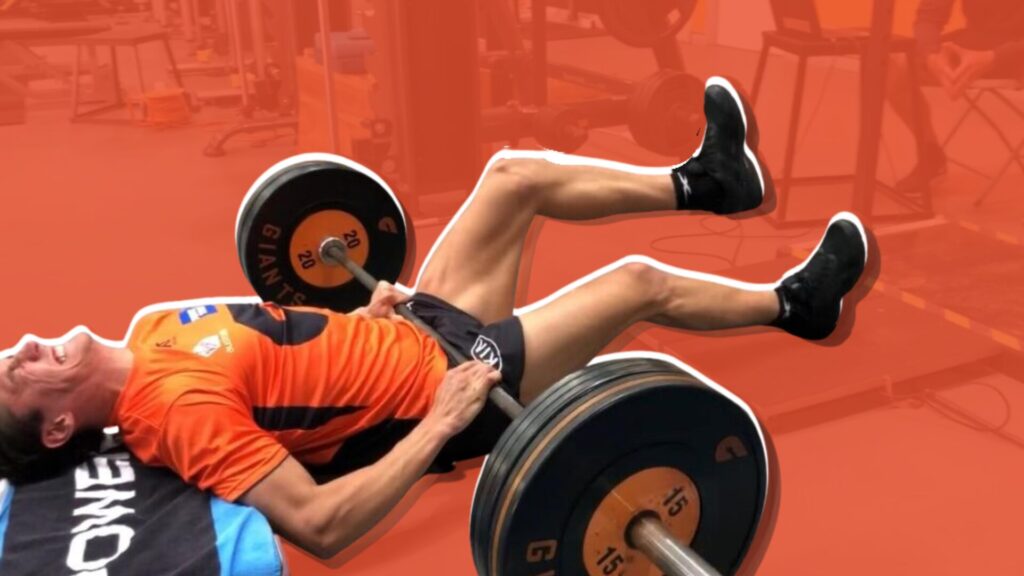
By contrast, the meta-analysis revealed a small difference between these two exercises for horizontal jumping, with a 0.24 SMD in favor of the hip thrust, although this was not statistically significant (p = 0.24). This suggests the hip thrust is a better alternative than the squat for horizontal jumping ability. The difference is quite limited, though, as is the frequency of horizontal jumping in most sporting codes.
Tweet ThisUsing force vectors increases the likelihood of stimulating the “correct” neural pathways and muscle groups
@NicklasJunge
Does that change when we begin to look at jump training?
Once again, just to sum up the results, our meta-analysis revealed a negligible effect (SMD 0.02) in favor of vertically oriented jump / plyometric training for vertical jumping, and a small effect (SMD 0.26) in favor of horizontally oriented jump / plyometric training for horizontal jumping ability. Neither close to being statistically significant.
I think it is quite remarkable how similar these results are to the resistance training analysis, which suggests that the concept of force vector specificity behaves quite similarly between jump / plyometric training and resistance training.
Overall, the results suggest that when aiming to improve vertical jumping ability, choosing between vertically oriented jump / plyometric training and its horizontal counterpart could be based on personal preference, without any major implications for vertical jumping ability. Horizontally oriented training, on the other hand, appears to be the better alternative when the goal is to optimize horizontal jumping ability, although the difference appears to be quite small.
However, as was also the case for resistance training, jump / plyometric training should be performed in a multitude of force vectors to ensure the greatest and most well rounded performance improvements, as I suspect that they may improve performance via somewhat disparate adaptations, which should allow for some degree of additivity.
Tweet ThisThe squat is usually regarded as one of the best exercises for improving vertical jumping ability, but there is virtually no difference between squatting and hip thrusting
@NicklasJunge
If the aim is to improve acceleration, what kind of jumping and resistance training activities should coaches be looking to in relation to the force vector chosen?
For both vertical and horizontal jumping ability, we can only expect minor performance differences between horizontal and vertical resistance and plyometric training. But when looking at sprint acceleration capacity, which we define as sprint distances ≤10 m, this no longer seems to be the case.
Our meta-analysis revealed an apparent superiority of horizontal training for both resistance and plyometric training, both with moderate effect sizes of 0.71 for resistance training and 0.78 for plyometric training. The usual threshold for a large effect size is 0.80, so these results indicate that a quite substantial difference likely exists between horizontally and vertically oriented training for the development of short distance sprint capacity. Indeed, when looking at the results in relative terms, horizontal training caused a roughly fourfold increase in sprint acceleration capacity compared to vertical training (4.0% vs. 0.9% improvement).
This result was only statistically significant when we analyzed resistance and plyometric training studies together, given the limited number of studies (four for each kind of training).
Nevertheless, we should remember that the 0.05 threshold for statistical significance is somewhat arbitrary, and it is important to always examine the full set of results and not just gauge whether the result is significant.
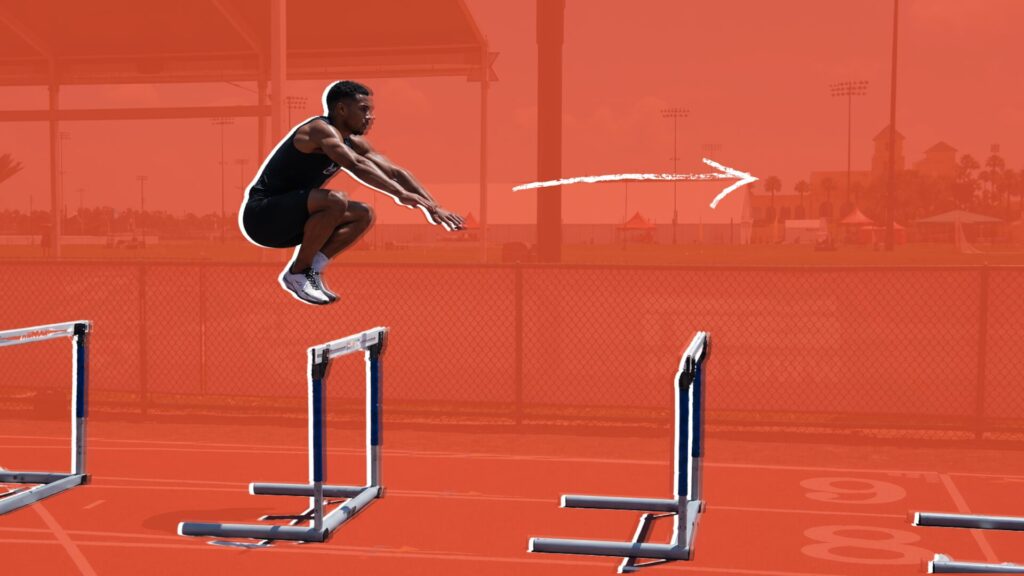
Overall, the results indicate that coaches should probably prioritize horizontal resistance exercises such as the hip thrust over vertical force vector exercises such as the squat and deadlift for athletes aiming to improve short distance sprint ability. For jump / plyometric training, exercises that emphasize horizontal displacement, such as single or repeated broad jumps or bounds should be prioritized over exercises that emphasize vertical displacement, such as squat jumps, countermovement jumps, drop jumps and depth jumps.
Tweet ThisOur meta-analysis revealed an apparent superiority of horizontal training for both resistance and plyometric training
@NicklasJunge
How does that change if we’re looking to improve max velocity sprinting?
Now, this is where things start to get really interesting! Just in case some readers haven’t read the full article (I know most people probably haven’t), we distinguished between sprint distances ≤10 m and sprint distances ≥20 m, in order to provide measures of both the initial acceleration phase and “longer” sprint distances. We did this for two main reasons: different sporting codes and, therefore, athletes differ substantially in typical sprint distances; and because sprinting is a highly velocity specific task in terms of the biomechanics and overall direction (force vector) of ground force application.
In stark contrast to the substantial difference between horizontal and vertical training for sprint distances ≤10 m (4.0% vs. 0.9% improvement and 0.72 SMD), there was virtually no difference between the two training modalities for sprint distances longer than 20m. Horizontal training induced a 2.3% improvement and vertical training a 1.7% improvement, with a near-zero effect size (SMD: 0.03).
One thing to remember here, though, is that longer sprint distances are not independent of shorter sprint distances. If you cover 10m faster, you will also cover 20m or 30m faster, even if the velocity is the same after the 10m mark.
Why is this important to consider?
Even though horizontal training is slightly numerically (though not statistically) favored for longer sprint distances, the combined results of the short and long distance analyses indicate that vertical training is starting to “catch up” to horizontal training. Seeing as most studies in the meta-analysis used 20-30m sprint distances as their max, I would not be surprised if vertical training would have caught up and overtaken horizontal training over distances of 50m or more. This could indicate that horizontal and vertical training have dissimilar effects on the sprint force-velocity profiles.
Nevertheless, speaking somewhat conservatively, the results indicate that horizontal and vertical jump / plyometric training and resistance training are equally effective for sprint distances of 20-30m, and that coaches and athletes should choose based on preference. However, somewhat less conservatively, vertically training may be the better alternative for athletes that frequently sprint very long distances, e.g., the 60m or 100m dash.
If the aim is to improve change of direction speed, what kind of jumping and resistance training activities should coaches look to in relation to the force vector chosen?
The final part of the meta-analysis looked into the concept of change of direction speed (CODS), which can be characterized as a series of shorter sprints interspersed with changes of direction, an ability that is of great importance in almost all intermittent sporting codes.
The data that we collected and analyzed showed a 4.4% improvement after horizontal resistance and jump / plyometric training across the studies, whereas the improvement was only 2.7% after vertically oriented training. This difference amounted to a small effect size (SMD: 0.31) in favor of horizontal training, which fell just shy of the statistical significance threshold (p = 0.06).
In my opinion, this result makes a lot of sense, and yet…
I believe this result makes sense because a substantial component of CODS is sprint capacity over shorter distances, so the bias towards horizontal training is quite logical in light of the result from the short distance sprint section. On the other hand, the difference between horizontal and vertical training for CODS is much less convincing than that for short distance sprint ability. Could this simply be a random pattern? Sure, but it could also indicate that while horizontal training is better at promoting linear sprint ability over short distances, vertical training may be the better alternative for the actual directional changes. This could be due to a greater proficiency for increasing eccentric strength and thus braking performance, or greater knee extensor development, as deceleration is quite a knee dependent task.
If you have to pick between one or the other, horizontal training modalities such as the hip thrust, broad jumps and bounds appear to be superior alternatives to vertical training modalities such as the squat, drop jumps and depth jumps.
However, there are some (slight) indications in our results that seem to indicate that combining the two training modalities would likely result in the greatest overall CODS performance improvement. Perhaps we should delve into this in our next meta-analysis.
Tweet ThisIf you have to pick between one or the other, horizontal training modalities such as the hip thrust, broad jumps appear to be superior
@NicklasJunge