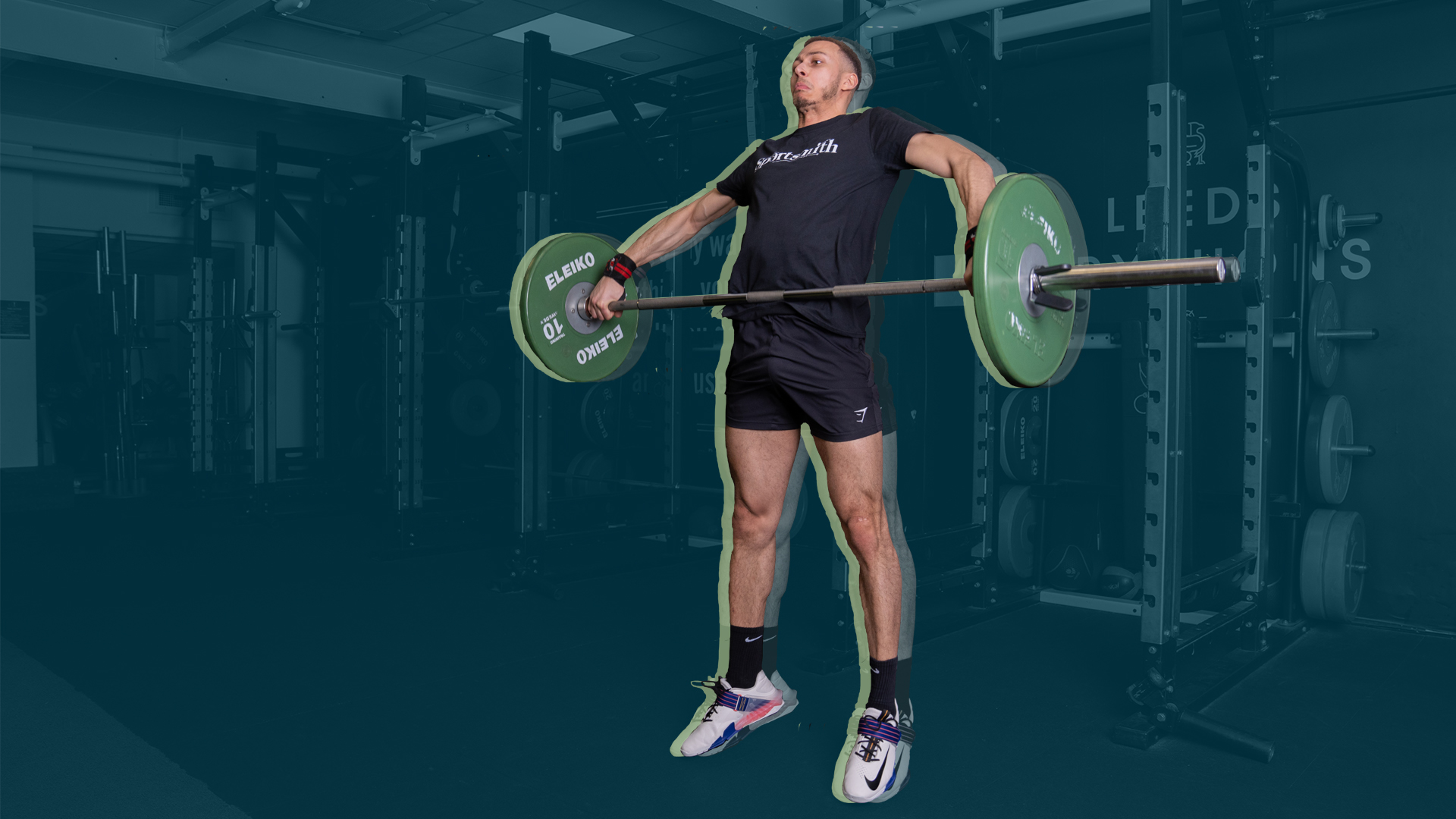

A recurring and often spirited debate within strength & conditioning is the programming of weightlifting movements and their derivatives. These debates are fueled by both evidence and dogma, a blend that has led to one of the longest standing stalemates in the field.
In this article, we intend to settle the score once and for all. Kidding, of course, though we do admire the optimism and intellectual tenacity of authors who have made such attempts. Instead, we set our sights on a slightly less audacious goal, but one over which we have full control: explaining why we do not use weightlifting movements or their derivatives as primary exercises in the programs we write for professional baseball players.
First, let’s head off any knee-jerk dismissals on the grounds of evidence-based practice (EBP). Evidence-based practice is the guiding framework of our training methods.
Much of the controversy around EBP stems from a lack of understanding of its original context – medicine (see Sacket et al [7]) – and how it is then applied to sports performance. We feel for poor Dr. Sackett, who must be dispirited that 26 years and almost 20,000 citations after his seminal paper, people still appear not to know “what it is and what it isn’t.”
In our world, EBP does not mean each training or testing decision should require three supporting citations from leading journals. Evidence-based practice incorporates three areas into the process of training systems and athlete care: the best available scientific evidence, the experience and expertise of the practitioner, and the preferences and values of the athlete(s).
Tweet ThisEvidence based practice does not mean each training or testing decision should require three supporting citations from leading journals
@AustinRDriggers & @DrJohnPWagle
This article will focus on the second component, practitioner experience. Our emphasis does not diminish the relative importance of the other two – it simply contributes the most value possible to readers. The scientific literature (and corresponding dialogue on the Twittersphere) are familiar and readily available to Sportsmith readers, while practitioners can only understand the values and preferences of athletes in their own particular context.
To further preempt the weightlifting crusaders who are already drifting towards that back arrow on their browser, a bit of context regarding our experiences and expertise. Like many practitioners, we both learned and programmed weightlifting movements and derivatives throughout our careers. We’ve had no problems programming and teaching “traditional” lifts for junior, college, pro and masters athletes across sports – including pro baseball. We’ve written “pro-weightlifting” research papers, held weightlifting credentials and are huge fans of these exercises for the favorable training adaptations they drive.
We’re not those “anti-weightlifting guys” you’ve been warned about. In fact, we came into a “weightlifting skeptical” sport intending to illustrate through improved athlete performance what they had been missing
We both entered professional baseball motivated to create opportunities for as many players as possible to learn weightlifting movements. At the very least, we wanted to provide the best training possible to a subset of players. Though there were certainly some situations where we could implement these methods and notched some success stories along the way, overall we discovered that the barriers between pro baseball and textbook weightlifting were a reality that we had to accommodate for the good of our players.
The philosophical perspective we absorbed from our graduate education, training and mentorship as young practitioners instilled (over)confidence that all non-weightlifting-based programming is suboptimal and not aligned with best practices for the physical development of strength-power athletes. To whatever extent that is true in the classroom, textbooks and other sports or baseball at different levels, it was demonstratively untrue in Major League Baseball.
Barrier #1: Major and minor league baseball were not built for S&C
Given that Major League Baseball boasts the second-highest revenue among global pro sports leagues, it is easy to assume our training resources and environments are impeccably optimized for physical development. Unfortunately, this is far from reality at the major or minor league level.
The construction of many major league venues predated S&C’s involvement in the sport. When the Boston Red Sox opened Fenway Park in 1912, weight room square footage was not at the forefront of the architects’ minds. Ditto the Cubs’ Wrigley Field two years later. Wander the bowels of classic venues and don’t be surprised when you find a multimillion dollar pitcher running on a Woodway treadmill in a random hallway because that’s the only available real estate in reasonable proximity to the visiting weight room.
This problem is diminishing with time as the MLB Players’ Association’s collective bargaining agreements raise the minimum standards for training equipment and facilities.
But even with the heroic ingenuity of the historic clubs to fulfill these requirements given the constraints of their facilities, many major league weight rooms are insufficient for weightlifting. Such environments easily disrupt the flow of the training space that must accommodate a full roster of players.
Predictably, things at the minor league level are even more challenging. Though new guidelines recently took effect that will enforce a higher facility standard, the available area is still modest, at best, leaving room for only a couple platforms and racks in most instances.
Strength & conditioning coaches and players work collaboratively to manage the flow of the weight room, but there is only so much they can do. An athlete doing heavy midthigh pulls in the rack or dropping cleans on the floor in this environment could disrupt or endanger the many other players lifting and doing their mobility work in the same tight quarters.
Consequently, new guidelines notwithstanding, minor league teams regularly hold their strength training sessions at local public gyms.
Rack availability in such places is less than certain, while bumpers and platforms are a minor miracle. We suspect every strength coach has suffered the pains of performing these lifts with loose-fitting iron plates. Worse, some US fitness corporations ban dropping weights altogether, with their reasons ranging from disrupting the tenants on lower floors to making other patrons feel self-conscious about being weaker than the jacked dude over there. No, really. Incredulous readers are invited to Google “lunk alarm,” a special system developed by one such corporation to help enforce the would-be shaming of patrons with more delicate biceps and egos.
Facility constraints create situations where athletes with weightlifting in their programs often find themselves bouncing back and forth between “home” and “road” programs.
Even if loaded jumps (see example above) and plyos are suboptimal relative to weightlifting, at what point does the importance of exercise frequency tip the balance? Thinking through the neurological (versus structural) time courses of adaptations to training, is it better for a player to perform a (possibly) suboptimal exercise pairing twice weekly with progressive overload week-to-week, or performing clean pulls every other week? The random and incessant exercise variation in a would-be weightlifting-centric program under these environmental limitations almost certainly limits the potential for adaptation. Athletes can perform loaded jumps and plyometrics almost anywhere with minimal equipment, so training programs built upon them can more closely adhere to best practices in exercise selection, especially regarding variation and training frequency.
Tweet ThisAthletes can perform loaded jumps and plyometrics almost anywhere with minimal equipment, so training programs built upon them can more closely adhere to best practices in exercise selection
@AustinRDriggers & @DrJohnPWagle
Major League Baseball’s training facilities at complexes in Arizona or Florida are generally well-suited for weightlifting. Even so, it is still common to have upwards of 200 players on-site. Given the typical groupings and scheduling constraints of the technical and tactical sessions, we still run into issues with the number of players training versus the space available to train. Hopefully, the continued expansion of these facilities across MLB will reduce these constraints and the trade-offs that limit programming decisions and exercise selection
Barrier #2: Orthopedics and player safety
Weightlifting and its derivatives are “safe.” If we were to say otherwise, the counterarguments would go something like, “The weightlighting literature is clear and compelling that weightlifting and its derivatives are safe and do not excessively stress the shoulder, elbow, or wrist.” Funnily enough, we agree.
On the other hand, playing professional baseball is entirely unsafe for a shoulder and elbow. As our colleague Mike Reinold is fond of saying, “Throwing is bad for you.” Therefore, our players bring with them a host of problems.
In elite sport, a nomothetic reassurance is not enough. We must clear this hurdle ideographically, that is, relating to the particular: is it safe for YOUR athletes in YOUR environment?
Our answer to this question is “no,” and we have seen the orthopedic abnormalities to prove it.
Even among healthy, asymptomatic professional baseball pitchers, MRI studies have found labral tears, tendinopathy, rotator cuff tears, glenohumeral subluxation or remodeling, ulnar collateral ligament tears, bone spurs and other pathologies, several in over 50% of the “healthy” pitchers studied [1-3]. Practitioners should easily understand how an athlete in that population, experiencing that kind of pathological remodeling, will not tolerate high compressive loads on their glenohumeral or elbow joint. This should by no means deter practitioners from training baseball players with overhead movements, but overhead press variations with moderate loads are more appropriate and likely safer.
Prescribing overhead weightlifting derivatives like the snatch or jerk with baseball players induces discomfort during the lift itself (e.g., “That doesn’t feel good on my shoulder”), as well as general apprehension (e.g., “Is this going to hurt my shoulder?”). That violates the “athlete preferences / values” component of evidence-based practice.
We also have to factor intermittent, excessive competition-related shoulder and elbow soreness for many players throughout the season, which often intrudes upon our exercise selection. This has been another common constraint steering us toward loaded jumps and plyometrics that allow our athletes to train at high intensities and develop high levels of lower body power without limitations at the shoulder or elbow interfering with exercise load prescription.
To provide just one example, symptoms of valgus extension overload (VEO) syndrome come and go as they please in the posterior elbows of our players due to the bone-on-bone compressive loads.
By itself, a push jerk or push press rarely causes VEO. Unfortunately, an elbow whose bony structures are already irritated does not take kindly to such rapid elbow extension. Even when prescribing dumbbell push press as an associate exercise, we almost always have to regress it to a light shoulder press or a landmine variation (see above) to accommodate throwing-related soreness, especially among pitchers 24-48 hours post-game. Our willingness to regress as appropriate enables us to accomplish something in the resistance training session to improve the athlete’s physical preparation. Though we may not get the adaptations on global power output that the push press could induce, we are still able to provide a stimulus for general strength or tissue tolerance via the remedial alternatives.
Tweet ThisEven when prescribing dumbbell push press as an associate exercise, we almost always have to regress it to a light shoulder press or a landmine variation to accommodate throwing-related soreness
@AustinRDriggers & @DrJohnPWagle
Strength & conditioning is still relatively new to MLB, so it is not yet part of the culture. Many baseball coaches, front office members and owners still do not accept the value of strength training, so injuries occurring in the weight room are not well tolerated and are likely to pose a threat to the practitioner’s job security. Therefore, if two training methods are comparable, it’s in the practitioners’ best interest to select whatever minimizes the risk of shoulder or elbow complications.
Barrier #3: Baseball does not set conditions conducive to motor learning
Weightlifting movements take a long time to master, which makes sense considering weightlifting is a sport unto itself. The timing of training sessions and skill-oriented nature of baseball both exacerbate the limitation of teaching lifts with a learning curve.
Baseball players allocate an unprecedented share of training hours to skill refinement, and understandably so. Strength training sessions usually occur after on-field sessions in order to not interfere with technical and tactical development. Professional baseball is also unique in that it is one of the only sports in the world to play a game almost every day, and some players opt to complete strength training sessions post-game.
Fatigue interferes with motor learning [4], especially for new or highly technically, skill-based movements. Coaches, therefore, place the most technically demanding exercises early in strength training sessions according to the “priority system.”
Following similar logic, less technically demanding training methods have an advantage in strength training programs for professional baseball players.
Learning weightlifting movements is very technically demanding just to achieve competence, let alone mastery. As with all motor learning, the regulation of attentional focus is paramount to successful skill acquisition [5]. If players begin these sessions at the end of a day that has already demanded hours of skill work and a cognitively demanding game, then the likelihood is high that players may fail to consistently garner the necessary focus for weightlifting movements. Likewise, the players’ motivation to engage in skill-intensive training after hours of skill intensive practice followed by a skill intensive game will probably be low.
Barrier #4: Baseball training age vs. Weightlifting training age
Technical and tactical development demands aside, the use of weightlifting in amateur baseball strength & conditioning is rare. Each variation, then, will be a completely new exercise for the majority of newly minted professional baseball players. The novelty of these lifts forces a lot of trade-offs in the training considerations, which can quickly encroach on the overall value of the lifts themselves. The right conditions for learning new and relatively challenging lifts must be present on a consistent basis over time. In our environment, those conditions are fleeting, and coexist with the other limitations discussed in this article.
Each time an issue or sub-optimal condition is introduced into the training environment, learning diminishes and the development process slows.
Players from smaller college programs without a dedicated baseball S&C coach, for example, likely perform another team’s training program, often football. They may or may not have been coached well even in the context of that other sport. For these players, it is not a matter of learning new lifts, but unlearning poor technique and then learning how to perform these movements properly. This is often more difficult than teaching a new exercise from a blank canvas.
The final point under the umbrella of training status is weakening year over year (thank goodness), but it’s still enough of an issue to warrant a mention in the current landscape.
As with all top professional sports, baseball’s talent pool is global and, for a multitude of reasons, developing countries in Latin America produce professional players at an astonishing rate.
First-year US players come from either major university programs or the amateur showcase circuit. The former means they have at least three years of structured training with certified S&C coaches, while the latter will almost certainly be involved with private training facilities where coaches are paid handsomely to ensure players perform well in combine-type events. In both cases, players are pretty strong and have been training seriously for several years.
For international players, everything is baseball-centric. Rarely will players have so much as lifted a weight prior to their arrival at an MLB team academy in the Dominican Republic. Considering that they may only spend one season at such an academy, they typically get to the US with less than one year of strength training under their belt.
This sets the stage for one of the most shocking experiences first-year S&C coaches have in our environment: watching an 18-year-old middle infielder demonstrate more skilled on-field movement than the best players in the NCAA who are also three years their senior, then come in the weight room and struggle to perform the most basic movement patterns (squat, lunge, hinge) under modest loads. Most pro sport S&Cs are nodding along here.
This further demonstrates the need for a willingness to explore optionality in exercise selection. These younger international players regularly lack the general coordination to execute these movements in a manner that allows them to get the full effects. Maximizing the adaptations they can get from resistance training often devolves into optimizing exercise selection. “Optimizing” in this case usually refers to the exercise that they can execute best, not necessarily what we usually think of as the best exercise.
Given that strength training is new and unfamiliar to them, these players often dislike both the training experience (no skilled athlete likes doing things they aren’t good at) and the after effects (most notably, DOMS). As our colleagues in similar situations can attest (e.g., young free ski or snowboard athletes), it can take time to develop “buy-in” on how what happens in the weight room will help them achieve their goals on the field (or pitch, slope, court…). Creating positive training experiences is important to building positive momentum and a good relationship with physical training.
Complicated programs that overshoot an optimal challenge point can be counterproductive.
Scientific research does not tilt the balance back towards weightlifting
The scientific research underpinning this debate can be saved for a potential sequel to this piece. For now, the best available research evidence does not clearly demonstrate the advantages of weightlifting-based training programs over alternative approaches, including but not limited to plyometrics, loaded jumps, accommodating resistance, and related ballistic methods. To be clear, weightlifting and its derivatives “work,” and appear to work better than “traditional” resistance training (See Berton et al [6]), but the proof that these programs are more effective than programs blending traditional, loaded jumps, ballistic and plyometric training simply does not exist.
Constraints ground S&C coaches in the realities of their sport
“Efficacy” and “effectiveness” are similar concepts in science, but there is a critical distinction between the terms. Olympic weightlifting undoubtedly drives favorable adaptations for strength, power and sports performance. It is clearly efficacious. Unfortunately, efficacy alone is not enough. It has to work in the real world. It has to be effective. For us, in our context of professional baseball, it has not been.
Tweet ThisOlympic weightlifting undoubtedly drives favorable adaptations for strength, power and sports performance. It is clearly efficacious. Unfortunately, efficacy alone is not enough. It has to work in the real world.
@AustinRDriggers & @DrJohnPWagle
Four barriers persist between professional baseball and weightlifting-centered S&C programs. The training facilities and logistics in professional baseball can make weightlifting impossible or unsafe, or force practitioners to violate good exercise prescription principles. Weightlifting is probably as safe as any other method, but the acute soreness and chronic architectural changes in the shoulders and elbows of our athletes are persistently prohibitive. Last, many of our players have limited or counterproductive experience with strength training and might struggle to find sufficient opportunities to properly learn technically demanding lifts. When encountering such barriers, it is up to the practitioner to find ways to elicit similar adaptations to a program that includes weightlifting and its derivatives. Weightlifting’s versatility – there are many derivatives that can be used to target different physical qualities – and economy are difficult to match; and, therefore, any solution is unlikely to possess the same elegance in design. However, it is possible to design a program that leverages the collective benefits of traditional resistance training, loaded jumps, plyometrics and other methods (see table below).
| WL Movement / Derivative | Alternative | Regression |
| Mid-Thigh Pull | HBDL for velocity | Heavy Quarter Squats |
| Pull from Knee | Band-resisted HBDL | MB Chest Pass Hop |
| Clean/Snatch Pull | Squat + DB CMJ Complex | Box-to-Box-to-Mat Land |
| Power Clean | Banded HBDL + AEL Box Jump Complex | MB Toss for Height |
| Power Snatch | Squat + Light MB Hurdle Hop Complex | MB Toss for Height |
| Mid-Thigh Power Clean / Snatch | ½ Back Squat + Hurdle Hop Complex | DB Static Jump |
| Countermovement Power Clean / Snatch | AEL Hurdle Hop with hurdles in sequence OR AEL Depth Jump OR KB Swing + Light DB Squat Jump | Depth Jump OR MB Push Press Toss |
| Push Jerk | Stagger Stance Landmine Push Press | DB Push Press + MB Push Press Toss |
We hope our experiences can dial down the debate by demonstrating that environments exist in which what might be considered “best” under carefully controlled conditions may not be the best approach under certain constraints.
Sports practitioners should examine carefully the relevant constraints in any training environment. This discussion hopefully is thought-provoking regardless of your setting, as we believe that this thought process would be applicable to work around the barriers that arise in any setting.