Roula Kotsifaki recently published a great article in the British Journal of Sports Medicine about the best tests to use to assess knee function post ACL reconstruction. We asked her six questions to dig deeper into this topic.
If we are using hop distance symmetry as a RTS criterion, what are we missing? Why has it stuck around so long?
Hop distance is a poor metric of knee function. Performance in the horizontal hop has almost nothing to do with the knee. The knee contributes only 10-12% – how far you go is determined almost 90% by the hip and ankle.[1-3]
Also, symmetry in hop distance is achieved earlier during rehabilitation than symmetry in knee strength. The opposite almost never happens. Hop distance is associated with fear, but this is more likely because of fear of landing.
The question is, why do we still use distance as a discharge criterion after knee injury?
Many clinicians realize the limitations of using distance as a discharge criterion after ACLR, but it is difficult to abandon. Hop distance is easy to measure – we just need a measuring tape – and there’s a lot of inertia. We’ve been using it for more than 30 years to evaluate rehabilitation interventions, outcomes or even surgical techniques. It has even been used to evaluate strength where appropriate equipment is not available.
Tweet This“Hop distance is a poor metric of knee function. Performance in the horizontal hop has almost nothing to do with the knee”
@RoulaKotsifaki

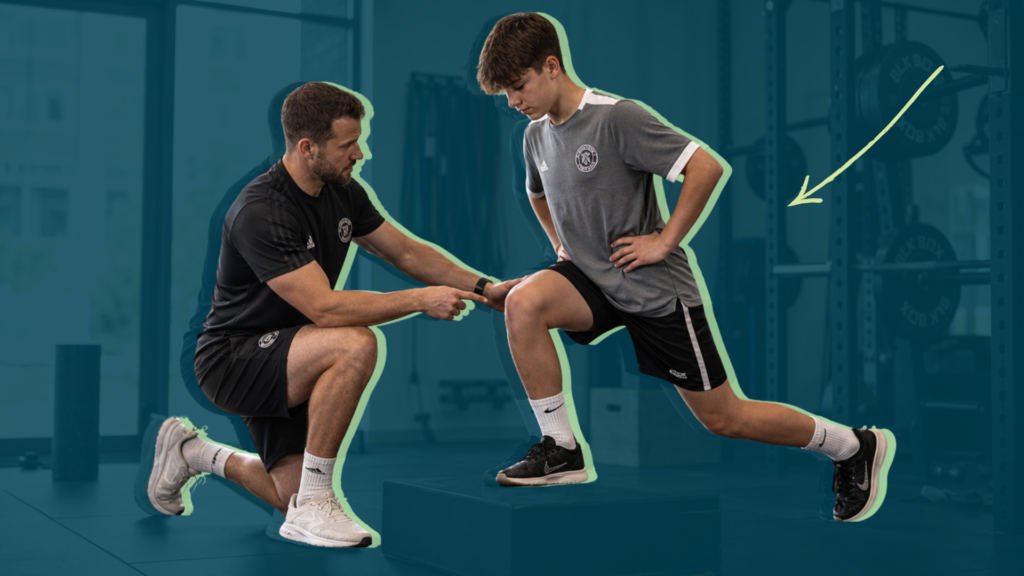
This is where I need to clear things up between the test and the metric of interest. Single hop for distance is one of the best tests to describe the quality of landing and if the knee can absorb power. During the landing of a horizontal hop, the knee contribution is 65%! For that reason, it should be an important part of training and testing after a knee injury – just don’t pay much attention to the distance. Rather, look at the quality of the landing and how well the knee is absorbing the load.
What is it about jump height and RSI that make it a better measure?
Symmetry in vertical jump height is more difficult to achieve after ACLR than symmetry in horizontal hop distance. During the vertical hop, knee contribution is almost 34% of the total work. But during the horizontal hop, the knee joint contribution is merely 13%.
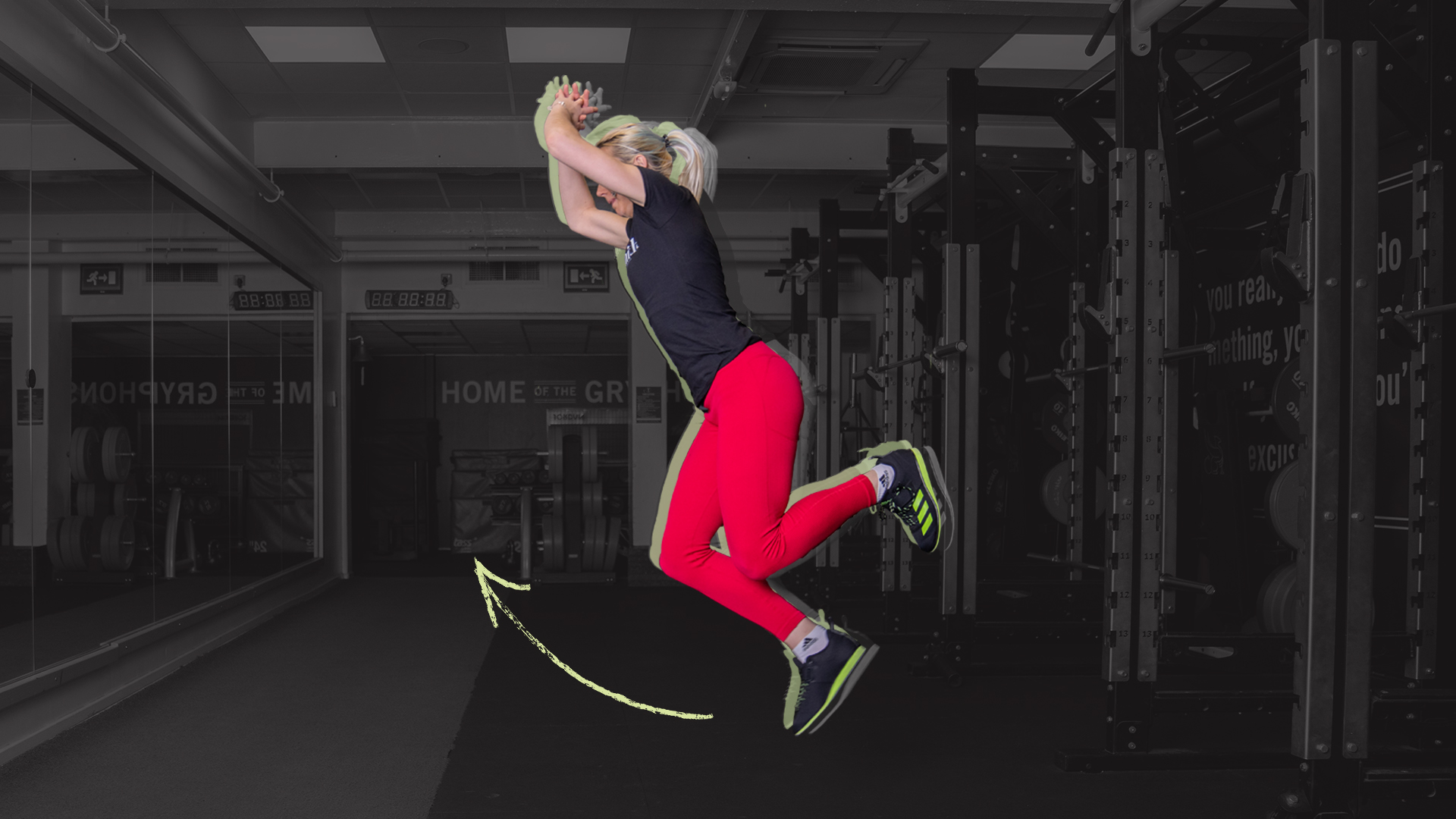
This can explain why performance deficits are more apparent during vertical jumps in people with ACLR. And that’s why, even when athletes have passed all of our normal discharge criteria, they still were asymmetric during the vertical performance metrics.[4] Additionally, using a single leg drop jump allows us to measure the athlete’s reactivity and give us more information on their performance readiness.
So, at the time to return to sport, we suggest testing athletes during a single leg drop jump and use metrics like jump height and RSI, instead of hop distance.
Tweet This“During the vertical hop, knee contribution is almost 34% of the total work. But during the horizontal hop, the knee joint contribution is merely 13%.”
@RoulaKotsifaki

Your EMG modelling showed that soleus contribution was bilaterally lower in the ACLR group compared to controls. What does that mean for clinicians?
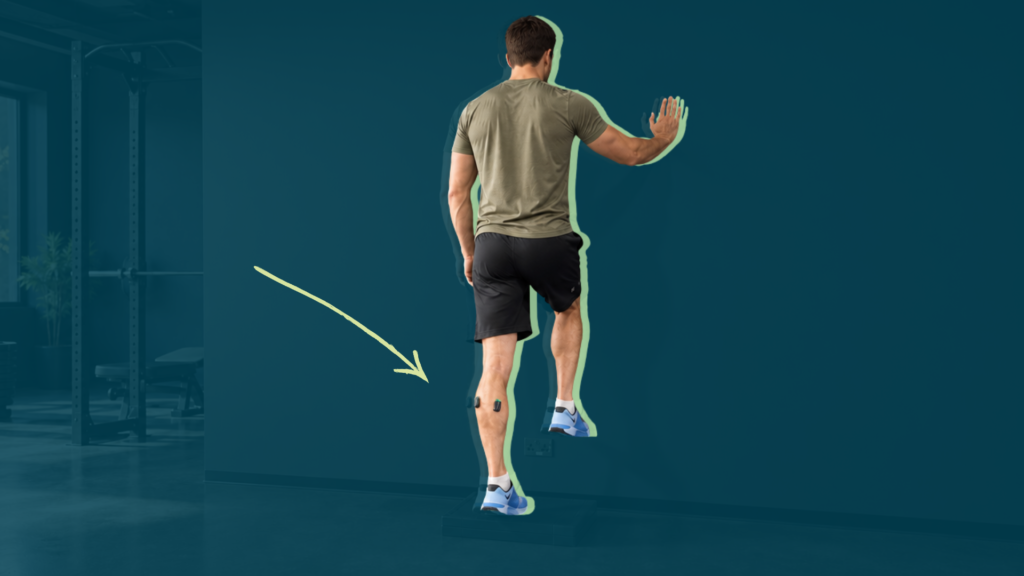
Indeed, during the propulsion of a horizontal hop there is a high contribution of the soleus and also a significant difference between the involved and uninvolved leg compared to the control group. The soleus is a powerful muscle that has a big contribution to performance that is often forgotten and untreated.

Since it doesn’t span the knee joint, sometimes we forget it can offload the ACL. The soleus does this by controlling the tibia’s forward movement during important weightbearing tasks like an unanticipated sidestep.[5] Optimising the soleus’ function should therefore be a high priority in rehabilitative and preventative programs.
However, from a practical standpoint, the function of the soleus may be difficult to isolate from the gastrocnemius, which contributes to an anterior shear reaction force at the knee.
The observed reduction in soleus work during the landing and propulsion phases suggests that rehabilitation strategies to increase soleus activity during landing may be a means of reducing ACL loading.
A common argument against favouring jump height over hop distance is the availability of technology. How can people get around this?
Single hop for distance is the most used functional test after ACL reconstruction mostly because of the ease of use – we just need a measuring tape!
Recent improvements in technology such as low-cost force plates, contact mats, photoelectric cells or even mobile applications allow for valid and reliable alternative methods to measure vertical jump performance.
Three-dimensional biomechanical measures are the gold standard for assessing an athlete’s movement quality and performance after ACLR, and provide significantly more information on physical capacities. These methods, however, are largely unavailable in the clinical setting.
In a clinical setting or in the field, with no access to advanced equipment, we recommend using symmetry in the vertical jump height and RSI as a discharge criterion, instead of hop for distance LSI. The former two better represent the status of the athlete’s knee.
Would you hypothesise that there could be other measures that identify knee function deficits other than – or maybe better than – jump height and RSI?
Rehabilitation after ACLR is multifactorial. These athletes are out of normal training at least 6-9 months. Several aspects need to be restored before we declare them ready to return to the field. The overall goal of the rehabilitation process is to detect and restore all the deficits.

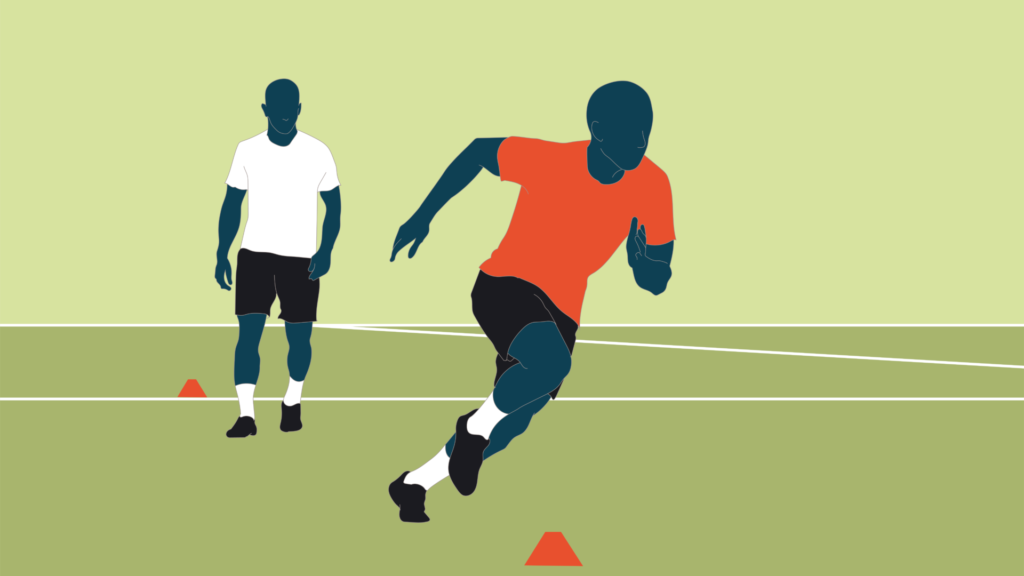
In football, most of the movements involve running and change of direction, so we should include them in the battery of tests at the time to return to sport. Change of direction is the activity that athletes struggle with most at the end phase of rehabilitation. So far, there are no easy performance metrics to clinically detect these movement deficits. and we currently have to rely on advanced biomechanical analyses.[6] We need to find proxies to measure landing ability and movement quality during change of direction.
Simpler criteria of time from surgery, symmetry in quads and three-hop tests are not enough to determine if the athlete is ready to return to sport.
We need to monitor progression in lots of domains so we can tailor the individual’s rehabilitation with whatever valid tools are available, and not keep ourselves and the athletes in the dark.
Tweet This“Simpler criteria of time from surgery, symmetry in quads and three-hop tests are not enough to determine if the athlete is ready to return to sport.”
@RoulaKotsifaki
And one question we ask all practitioners who take the Sportsmith Six. What are the most common mistakes young coaches/clinicians make and what advice would you give them to improve their practice?
Don’t trust your eyes (to measure angles) and your hands (to measure strength)
Jonny King reviewed Roula’s BJSM article in his March Sportsmith research review