

We are all aware of the significance of ACL injury to an athlete in terms of time lost from sport, the duration and challenges of rehabilitation, the time required to return to pre-injury levels of performance along with the potential risk of re-injury and to the long term health of the knee. [3, 21]
Return to play (RTP; be that return to full training or return to competitive participation) is primarily seen as a key landmark for successful outcome after surgery and often the end of the rehabilitation process. However, RTP in isolation may not reflect a successful outcome:
- Athletes may RTP with ongoing knee swelling and symptoms relating to graft donor site, patellofemoral joint or the tibiofemoral joint itself
- Athletes may make a successful RTP only to suffer subsequent soft tissue injury or worse second ACL/knee injury
- Athletes may RTP without subsequent injury but fail to return to the pre-injury levels of sporting performance
Given the importance of all these outcomes to the athlete (RTP, knee pain, re-injury, return to performance), we should consider RTP as a stepping stone on a continuum from initial injury through to not only Return to Performance but as an ongoing journey of athletic development (figure 1). [32] In reality the final leg of the rehabilitation process back to optimal levels of sports specific conditioning and skill often can only be achieved after RTP.

Rehabilitation after ACL reconstruction (ACLR) should have an athlete centred approach with key stakeholders all contributing their expertise to the management and decision making process to achieve the best outcomes. [2] It is important to take a multifactorial approach to the profiling of your athlete to evaluate all the potential components influencing their achievement of a successful outcome (figure 2).

For our part, those of us involved in the rehabilitation and reconditioning of these athletes need to consider what are the key physical attributes to be assessed and targeted during rehabilitation to assist the athlete along this journey; what are the tests and variables that will best evaluate the current standing of these physical attributes and how best can we influence those tests with our exercise selection, coaching and programming. If you were to sit down with your colleagues within your team environment or clinic and write down what a profile of a “fully rehabilitated” athlete looks like after ACLR, how much agreement/inconsistency would there be between you and how much is that inconsistency contributing to potential variable outcomes?
“How many athletes or those involved in their rehabilitation, before surgery or on initial review post ACLR surgery, can write down all the relevant physical qualities, the tests that assess those qualities and the standard they need to achieve to reflect a fully rehabilitated athlete?”
Previous research has shown there is no single test or battery of tests that indicates when an athlete is ready to RTP [43] and many athletes RTP despite not having made a full physical recovery after ACLR. [35] Therefore, to improve the efficacy of our rehabilitation and the consistency of outcomes it is essential, in the words of American author Stephen Covey, to “begin with the end in mind” – to outline the key metrics that reflect the completeness of the rehabilitation process, identify the athletes current status and chart their progression along the rehabilitation pathway.
Tweet ThisPrevious research has shown there is no single test or battery of tests that indicates when an athlete is ready to RTP and many athletes RTP despite not having made a full physical recovery after ACLR
@Enda_King
How can I achieve success if I don’t know where I am and I don’t know where I am going?
As part of your rehabilitation process for any injury but especially for ACLR rehabilitation there are a number of factors you should consider:
- What is a successful outcome from this process? (RTP, pain, re-injury, sporting performance)?
- What are the physical components I need to include in my assessment and rehabilitation to positively influence these outcomes? (figure 3)
- What tests best assess these components, which variables within the tests are most relevant? What testing equipment have I access to/expertise relating to in my current working environment?
- What standard/threshold am I looking to achieve within those tests and variables to achieve the desired outcomes?
- How much asymmetry is acceptable/relevant?
- How do healthy athletes measure?
- What are known physical risk factors for re-injury?
- What are previous pre-injury measures for that athlete/sport or position specific team mates?
- At this stage of rehabilitation which tests in my profile are appropriate to use and at what stage can I introduce the next most challenging test?
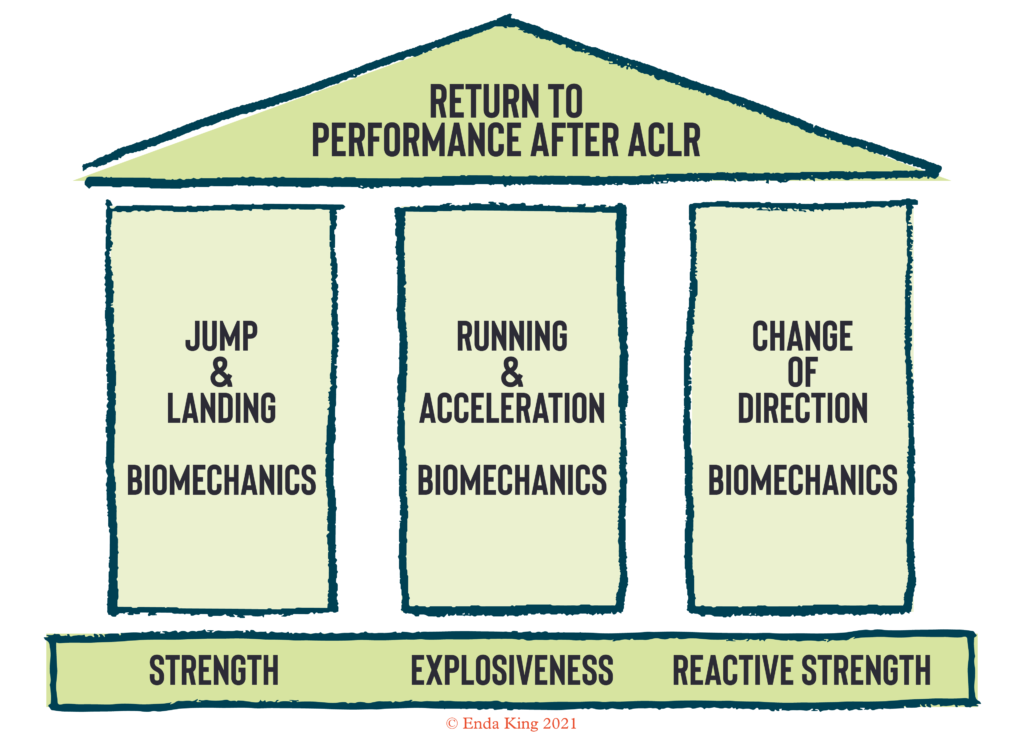
Without “beginning with the end in mind”, developing a comprehensive assessment to periodically profile your athlete throughout the rehabilitation process, having clear desired thresholds for variables within those tests and reviewing/re-assessing progress regularly, it may be easy to lose sight of where the athlete is on their journey and what direction they are heading. This may contribute to inconsistent outcomes such as RTP with pain and swelling, re-injury, and not achieving pre-injury levels of sporting performance. The purpose of this article is to provide a non-exhaustive list of the tests, variables and values you should consider including periodically throughout your rehabilitation of athletes after ACLR and during your decision making relating to RTP when profiling the physical recovery of your athlete (see video 1).
Video 1. SSC ACL Review Pathway
ACLR profile – strength
Overview and considerations
Lower limb strength deficits are the most commonly reported and persistent physical quality deficits post ACLR. (35) Loss of strength occurs at the time of initial injury and is usually magnified after reconstruction. Strength loss is a combination of arthrogenic inhibition post-surgery, muscle atrophy (in particular of the quadriceps muscles) and reduced central and peripheral neural drive, all reflected in substantial strength losses. [27, 41]
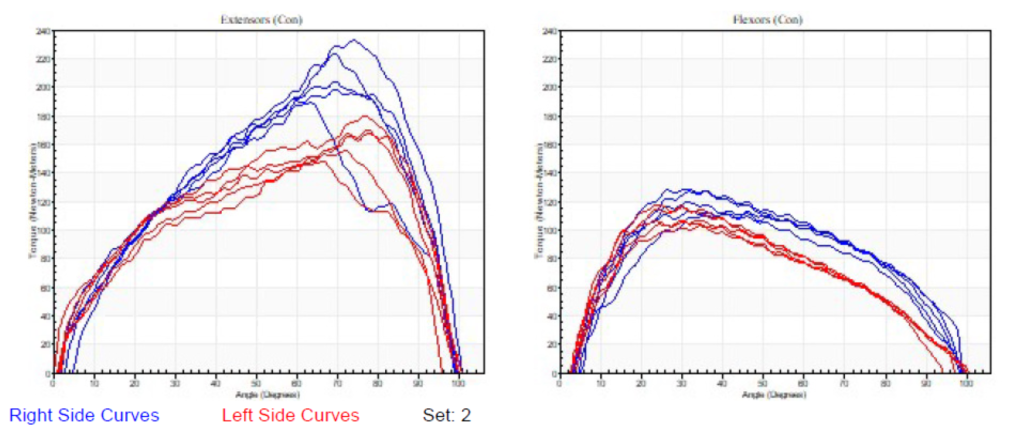
ACL injury has been shown to affect the strength of the non-operated leg as well, potentially reducing its utility as an appropriate comparator/baseline leg. [7, 13] Strength deficits have been shown to be magnified depending on graft selection with greater hamstring strength deficits in those with hamstring graft selection and greater quadriceps strength deficits in those with patellar tendon graft. [48] Graft selection can also influence range specific deficits in strength (figure 4), with those having a hamstring graft (gracilis/semitendinosis) more commonly having inner range knee flexion strength deficits due to the mechanical advantage of the medial hamstrings at that point in range. [4]
Tweet ThisACL injury has been shown to affect the strength of the non-operated leg as well, potentially reducing its utility as an appropriate comparator/baseline leg
@Enda_King
Given these muscle specific deficits, compound movement tests may hide muscle or range specific deficits that have developed [13] and bilateral tests (i.e. back squat) may mask the commonly found unilateral deficits on the operated side. Therefore, a combination of double and single leg compound and muscle specific tests should be included in any assessment. 1RM testing may not be appropriate for the athlete depending on the stage of recovery of the knee and also their training/lifting history, therefore 3-5RM or velocity based testing are viable alternatives.
Any period of protection and reduced loading of the injured or reconstructed knee can also lead to the development of strength deficits throughout the kinetic chain especially at the hip (in particular in the frontal plane) and the calf complex as well.
Example strength tests
Double leg compound movements – squat/deadlift – 3-5RM
Single leg compound movements – leg press/split squat- 3-5RM
Isokinetic dynamometry knee concentric/concentric 60°/sec [42]
Recommendations
Double leg compound
- Squat/deadlift > 1.5 x BW; Comparison to pre-injury performance/normative values for sport or position played
Single leg compound
- Leg press > 1 x BW // Note influence of different angles and seating mechanisms of various leg press machines on weight lifted
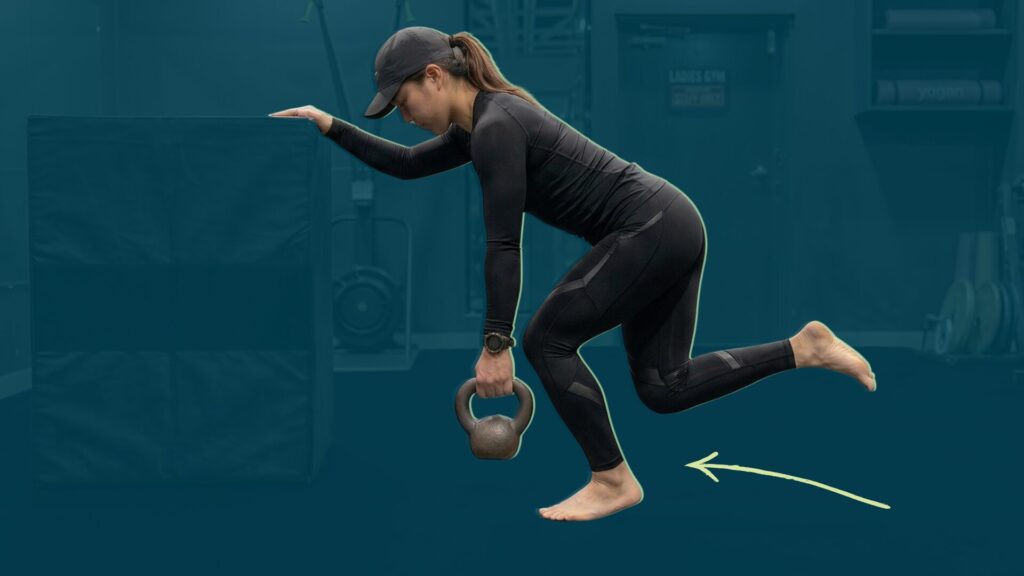
- Split squat > 0.5 BW // Targeting rectus femoris of the trailing limb (figure 5)
Isokinetic testing 60°/sec concentric [39]
- Quadriceps > 260% BW peak torque
- Hamstrings > 170% BW peak torque // Absence of inner range knee flexion strength deficits/asymmetries
- >90% Limb symmetry index peak torque

ACLR profile – explosiveness
Overview and considerations
As strength underpins the ability to produce force at speed (explosiveness) and as there are pronounced changes to the nervous system after ACL injury and reconstruction, [26] there are marked reductions in explosiveness (most commonly measured by jump height) after ACLR. The importance of jump testing is reflected in its widespread use in RTP testing after ACLR. [43] Explosiveness is commonly measured vertically using the countermovement jump (CMJ) or squat jump (to remove influence of stretch shortening cycle) and horizontally using the hop for distance both on double and single leg. However, there can be a disconnect between the performance achieved (jump height/jump length) and the biomechanics used to achieve it.

Recovery of jump performance symmetry after ACLR has been demonstrated despite persistent biomechanical asymmetries. [18, 20] In addition, reduced explosiveness in the non-operated limb also makes it a potentially inappropriate benchmark. [19, 20, 22, 39] Not only is analysis of biomechanics important when identifying ongoing functional deficits but also given the high prevalence of non-contact ACL injury mechanisms relating to movement control especially during landing. [1]
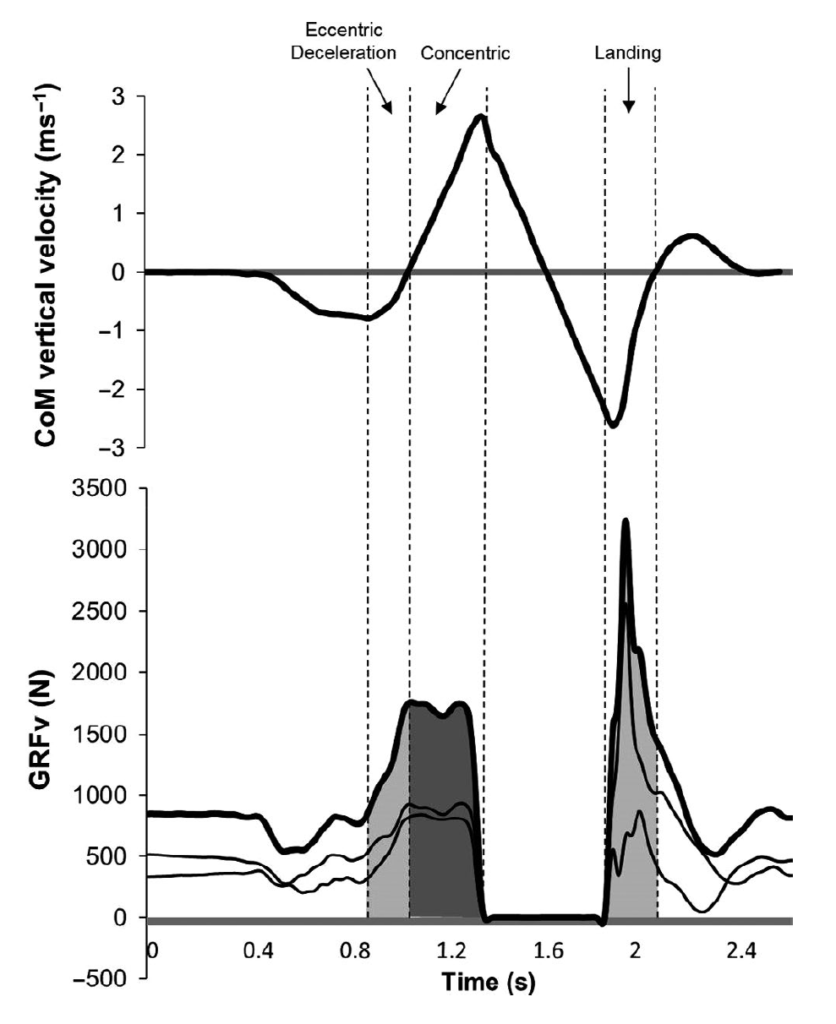
Jump testing often focuses on the concentric component of the test (jump height/length) while not assessing the eccentric component which is key for landing and changing direction on return to sport. Graft specific deficits have been demonstrated in the eccentric, concentric and landing impulses after ACLR (figure 6) with greater impulse asymmetry in patellar tendon grafts with the eccentric deficits slower to recover and unrelated to isokinetic strength measures. [31] Therefore our assessment should include analysis of vertical and horizontal explosiveness, concentric and eccentric impulses and analysis of the biomechanics used to execute the tests, in particular in the sagittal plane.
Example explosive tests
- Double leg & single leg
- Countermovement jump
- Squat jump
- Hop for distance
Recommendations
- Restoration of pre-injury jump height/length or normative values for sport or position played in double and single leg tests [22, 33, 39, 43]
- >90% Limb symmetry index of jump height/length [33, 39, 43]
- Restoration < 10% limb symmetry index for concentric and eccentric GRF impulses [31]
- Restoration of symmetry of joint specific (hip, knee and ankle) power production in the sagittal plane during vertical and horizontal hops [22, 33]
- Restoration of symmetry frontal plane kinetic and kinematic deficits at the trunk, hip, knee and ankle relative to healthy athletes [18, 20]
ACLR profile – reactive strength
Overview and considerations
Drop jump testing, in particular double leg, is one of the most commonly used clinical and research methods of assessment of biomechanics after ACLR. [18, 24] Drop jump testing is a reliable measure of reactive strength (jump height/ground contact time) [29] or the function of stretch shortening cycle post ACLR [18] which is a key contributor to sprint and change of direction performance. [28, 50] Deficits in drop jump performance and symmetry have been demonstrated to be the most persistent and of the highest magnitude of all the jump tests described post ACLR and it are often the last/slowest quality to recover during rehabilitation. [19, 20]
Not only have marked and persistent performance deficits been demonstrated in reactive strength after ACLR, but biomechanical variables during drop jump testing have been shown to be related to second ACL injury. [15, 16] In particular, deficits in relation to sagittal plane control and COM stiffness in the vertical plane have been shown to be different in those that subsequently suffer ipsilateral and contralateral ACL injury (figure 7). [15, 16] Given that ACL injury commonly occurs in the first 40ms post ground contact, the level of pre-activation/stiffness/co-contraction prior to ground contact (reflected in superior reactive strength performance) [10, 25] may be key to protecting the ACL after initial ground contact and controlling anterior tibial translation which is the primary functional constraint of the ACL. [12]
Consistent deficits in frontal plane and sagittal plane control throughout the kinetic chain compared to the non-operated leg and compared to healthy athletes have been demonstrated across drop jump and hop tests, [18, 20] with frontal plane control and in particular knee valgus moments and the position of the COM suggested to be key metrics in predicting ACL injury and commonly pattern evident during injury mechanism (see Video 2). [23]
Video 2. Frontal plane control deficits during drop jump 9 months after ACL reconstruction
Example reactive strength tests [19]
Double leg drop jump (30cm)
Single leg drop jump (20cm)
Recommendations
- Restoration of pre-injury jump height/GCT/RSI or normative values for sport or position played in double and single leg tests (Below are thresholds for ACL re-injury [15, 16]/good performance/excellent performance – note these values are based on field sports with normative values higher for track and field sports/elite sprinters)
- Double leg drop jump
- Jump height 24/30/35 cm
- GCT <0.25/0.2/0.18 sec
- RSI >1/1.25/1.5 m/sec
- Single leg drop jump
- Jump height 13/15.5/22cm
- GCT <0.32/0.28/0.22
- RSI >0.4/0.55/0.75
- Double leg drop jump
- >90% Limb symmetry index of jump height/RSI [20]
- Restoration of symmetry of sagittal plane control at the hip knee and ankle relative to healthy athletes [15, 16, 19, 20]
- Restoration of symmetry of frontal plane control at the hip knee and ankle relative to healthy athletes [15, 16, 19, 20]
ACLR profile – linear running
Analysis of running biomechanics does not receive the same level of attention as jumping and change of direction post ACLR, perhaps because linear running is a very rare mechanism of ACL injury. In addition, there is a great variety of running styles dependent on sport, physical competency and previous coaching with no single ideal style. [44] Despite the fact that return to running is one of the key milestones on the rehabilitation path after ACLR with return commonly based on time from surgery, [36] attention is more frequently directed to total running volume or max speed achieved rather than the biomechanical deficits that remain after ACLR influencing non-ACL injury risk (overuse injuries of the knee and soft tissue lower limb injuries) as well as athletic performance.
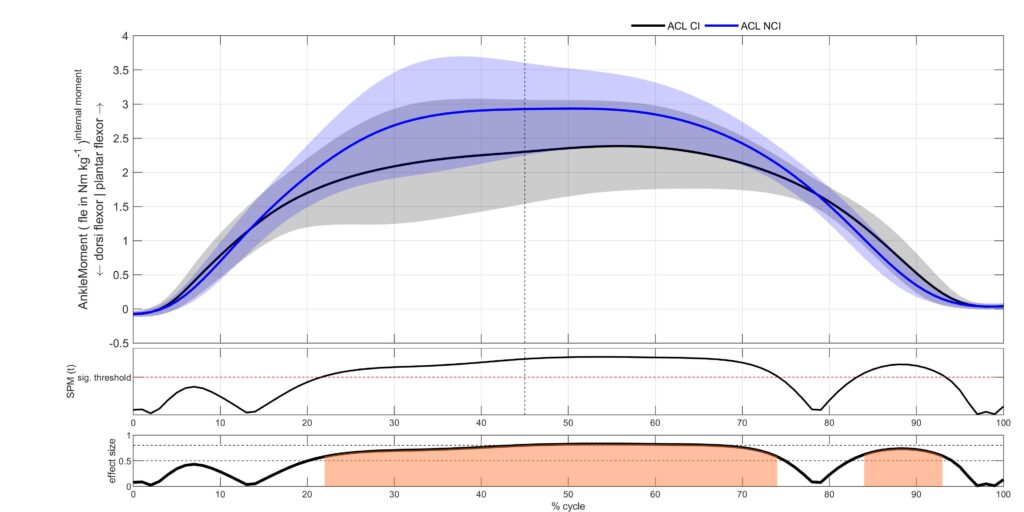
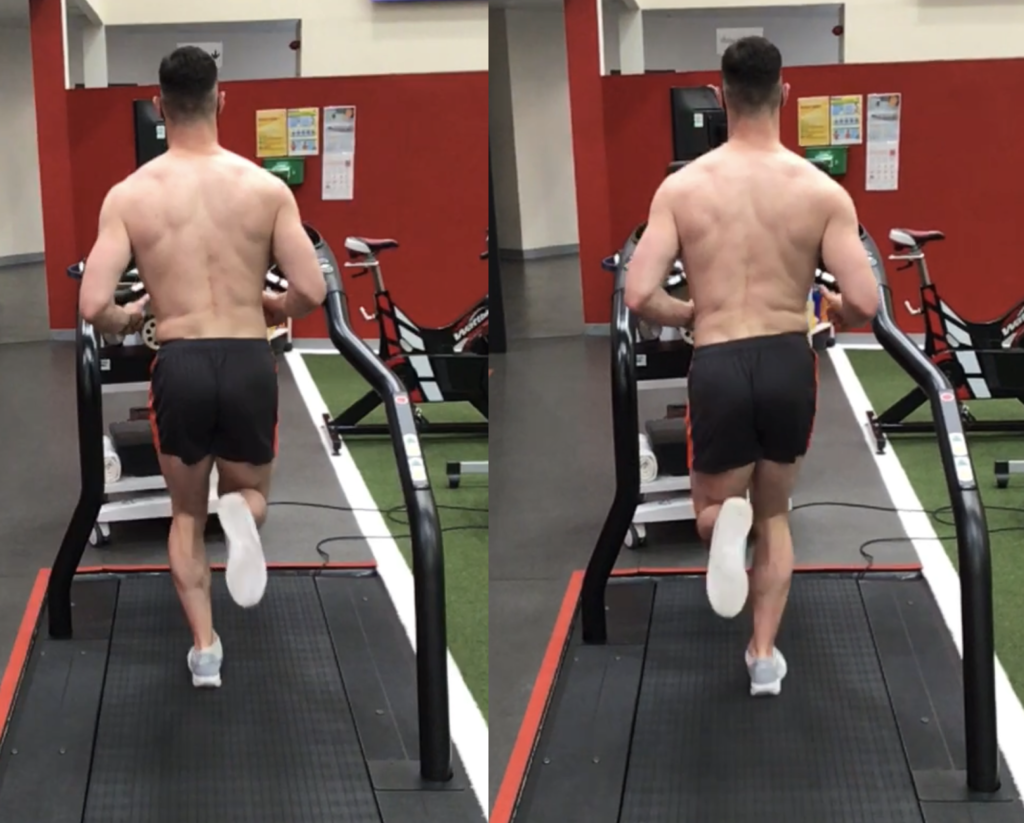
Persistent biomechanical deficits have been reported during running at speeds >3.5m/s – primarily in the sagittal plane with reduced knee flexion during stance, reduced knee extension moments and changes in vertical GRF compared to the non-operated limb and healthy athletes. [34] These deficits are likely driven, in part, by the quadriceps strength and reactive strength deficits highlighted in the sections above. [34] During the return to running phase, frontal plane deficits at the hip and the trunk (increased ipsilateral trunk sway and increased contralateral pelvic drop), which have been described in the jump tests above, are commonly evident which can be a source of a range of lower limb injuries (figure 8). [6] While many of the deficits identified above are evident during steady state treadmill or field running, there may also be deficits in acceleration, both in relation to accelerative speed but also the co-ordination of extension at the hip, knee and ankle as a result of the strength and power deficits post-surgery described in the preceding sections.
Tests
- Continuous running analysis (treadmill or field based) – >13km/hr or >3.5m/s [34]
- Acceleration – 40m sprint [40]
- Max speed – >60m sprint (probably less distance required in field sports athletes) [8]
Recommendations
- Performance – restoration of pre-injury max sprint speed/game speed and acceleration speed or normative values for sport or position played
- Restoration of sagittal plane control with symmetry of peak vertical GRF, knee flexion angles and knee extension moments during mid stance steady state running/sprinting and co-ordination of extension at hip, knee and ankle during push off in acceleration. [34]
- Restoration of frontal plane control during mid stance with neutral trunk, pelvis, hip adduction/knee valgus and foot pronation/eversion. [6]
ACLR profile – change of direction/agility
Change of direction (CoD), sidestepping or pivoting is the most common ACL injury mechanism in field sports. [1] An assessment of CoD is less explicitly defined than say a drop jump, there are a number of points for consideration when assessing CoD performance after ACLR:
- Influence of cutting angle – the cutting angle has an influence on the timed performance of the test, the decelerative requirements during the change of direction and as a result the biomechanical requirements for the athlete, with sidestepping (45°) requiring greater deceleration than larger changes of direction (i.e. 90°). [11, 14] Greater angles such as 180° are even more demanding in relation to knee loading and deceleration potentially highlighting biomechanical deficits on the operated limb but are not reflective of ACL injury mechanism during CoD and have not been researched in athletes post ACLR.
- Influence of approach speed – the higher the approach speed the greater the decelerative demands of the test and the more difficult it is to execute the desired cutting angle. [11, 45] The greater the run in distance to the CoD the higher the approach speeds that will be achievable.
- Planned vs unplanned CoD – unplanned CoD has a greater ecological validity as the athlete will be returning to a chaotic sporting environment and unplanned CoD has higher loads through the knee and in particular the ACL than unplanned CoD. [5, 46] However athletes will likely have greater variability of task execution during unplanned CoD.
- Biomechanics vs performance – recovery of symmetry of timed performance of CoD tasks has been shown to occur in both planned and unplanned CoD tasks despite ongoing biomechanical asymmetries post ACLR at greater levels than seen in healthy athletes. [17, 20] Given the more open nature of CoD tasks than jump tasks there are greater opportunities to compensate to achieve performance, especially on the penultimate step, making recovery of CoD timed performance a less reliable reflection of the restoration of CoD mechanics after ACLR.
- Change of direction performance vs agility – Agility and change of direction performance are independent skills. [49] Change of direction during competition is primarily in response to sports specific stimuli which can be difficult to reproduce in rehabilitation and impossible to reliably reproduce to allow accurate comparison between players or longitudinally over time. However, structured CoD testing will identify biomechanical and performance deficits that may limit agility and influence injury risk and can complement agility training and assessment during end stage rehabilitation.
Ongoing biomechanical deficits have been demonstrated throughout the kinetic chain during both planned and unplanned CoD after ACLR. [17, 20] These deficits are evident in the sagittal plane with reductions ground reaction force, knee flexion angle and knee extension moment. In addition, there are deficits on the ACLR side with greater knee valgus moments, hip abduction angle and ankle eversion.
Apart from the biomechanical deficits identified compared to the non-operated limb and healthy athletes, greater asymmetry in unplanned CoD in frontal plane at the trunk and pelvis has been found in those who re-rupture after ACLR (figure 9). [16] From a performance point of view shorter ground contact times, greater lateral impulse, lower CoM and greater ankle plantarflexion power are all associated with faster CoD times along with less ipsilateral trunk side flexion and rotation [30, 47] which is commonly associated with ACL injury mechanism. [1]

Tests
Planned and unplanned 45° & 90° CoD [9, 15, 17, 20]
Recommendations
- Performance – restoration of pre-injury max sprint speed/game speed and acceleration speed or normative values for sport or position played
- Restoration of frontal plane control at the hip, knee and trunk during planned and unplanned CoD
- Restoration of symmetry of knee flexion angle, knee extension moment and vertical GRF
ACLR profile – sport specific skill and conditioning
The sports specific skills and sports specific conditioning required on return to competition after ACLR is going to be different for Tom Brady (NFL) compared to Zlatan Ibrahimović (Serie A) compared to Nic Naitanui (AFL) compared to Manu Tuilagi (England Rugby Union) compared to Derrick Rose (NBA). While all have had ACL reconstruction, and will share many of the deficits outlined in the sections above, the skill and conditioning demands and risk profiles of their sports are very different and beyond the scope of this article to cover in appropriate detail. This must be taken into account when individualising their fitness and skill profiles towards late stage rehabilitation in order to achieve return to optimal athletic/sporting performance as efficiently as possible. Nevertheless, their function across sports and their injury risk profile is still underpinned by the qualities and tests outlined in the sections above.
Conclusion
The above sections give a non-exhaustive overview of the tests, variables and thresholds you may want to consider when profiling your athlete after ACLR. In addition, there are a number of factors you may also want to consider prior to testing:
- Equipment – what equipment do I have access to in order to profile my athlete. The sections above have outlined the role of performance, kinetic and kinematic variables in analysis after ACLR. How best can you profile your athlete within the constraints of what is available at your facility and how do you account for the variables you are unable to assess?
- Reliability of testing – just because a test has been demonstrated to be reliable in a research paper does not mean that the way we are doing it is reliable! Make sure to have protocols defined for all your tests and carry out pilot assessments to ensure your equipment is appropriately calibrated and your methodology is robust and reproducible.
- Frequency of testing – how frequently do I want to carry out these tests in order to see meaningful change between sessions? When programming for my athlete am I building in sufficient recovery prior to testing to ensure they are fresh and ready for testing so the results are not influenced by fatigue?
- What methods of analysis/interpretation am I going to use? – Comparison to non-operated limb vs comparison to pre-injury measures vs comparison to healthy athletes. Am I going to examine discrete points (i.e. peak knee flexion) or the entire stance phase using continuous wave form analysis [38] or use machine learning algorithms to classify athletes status compared to uninjured athletes or those that went on to suffer second ACL injury? [37]
- Based on my findings what is my priority list in relation to exercise selection and programming for the next rehabilitation block? – Too often ACLR rehabilitation is guided by generic protocols which do not take into account the individual athletes progress to date, strengths and weaknesses and current limiting factors facilitating progression to next stage of rehabilitation. You can have a wide variety of athletes at the same time point post ACLR with different priorities in relation to the programming at this stage of rehabilitation. As a result it is key to continually assess to improve the individualisation of your rehabilitation programming.
- Thresholds – The thresholds outlined above should be considered as the floor and not the ceiling in terms of ongoing athletic development post ACLR. As discussed, the end of rehabilitation is simply a stepping stone on the road to returning to performance and ongoing athletic development. It is always amazing about many athletes performance metrics and biomechanics disimprove on return to play as their focus shifts back to sports specific activities. Whether rehabilitating an athlete back after ACLR, profiling to identify injury risk factors or profiling to identify barriers to improvements in athletic performance the process should be consistent throughout and ongoing testing even after an athletes has returned to competition is essential to ensure long term success.
Comprehensive athlete profiling through the rehabilitation process after ACLR will allow you to “Begin with the End in Mind”, to develop the most efficient and effective rehabilitation programs, to achieve success across outcomes and set your athlete on the path from injury through to longer term athlete development and sporting success. If you are interested in learning more from Enda about the role of biomechanics in other injuries and rehabilitation go to https://www.enda-king.com/courses