
Two athletes complete the same practice session: same drills, same duration, same court. Their external metrics such as total distance, accelerations, decelerations, movement volume, all fall within expected ranges. Following the session, one athlete reports feeling sharp and recovered. The other is dragging: elevated exertion, lingering soreness, dull and fatigued.
The athletes did the same work, but it came at very different costs.
That disparity is telling us to pay attention to internal load, specifically, heart rate and its derivatives.
Internal load connects the athlete to the training
Performance monitoring depends on understanding two complementary constructs.
External load is the work itself, what is on the bar, on the sled, or what happens on the court. In basketball, GPS and tracking systems capture movement, speed, distance, accelerations, decelerations, and jumps. This is mechanical load, which quantifies physical output.
Internal load is how the body experiences that work. It encompasses the physiological, psychological, and perceptual stressors an individual accumulates in response to a training stimulus. Heart rate, training impulse (TRIMP), perceived exertion, recovery status, and wellness measures all reflect attributes of internal load.
Impellizzeri et al., [1] established the theoretical framework underlying this relationship. An exercise bout induces a psychophysiological response. This response, rather than the exercise task itself, provides the stimulus for adaptation.[1] Two athletes can experience the same external stimulus and generate entirely different internal responses due to variations in training status, accumulated fatigue, sleep quality, nutrition, psychological stress, injury history, or environmental conditions.
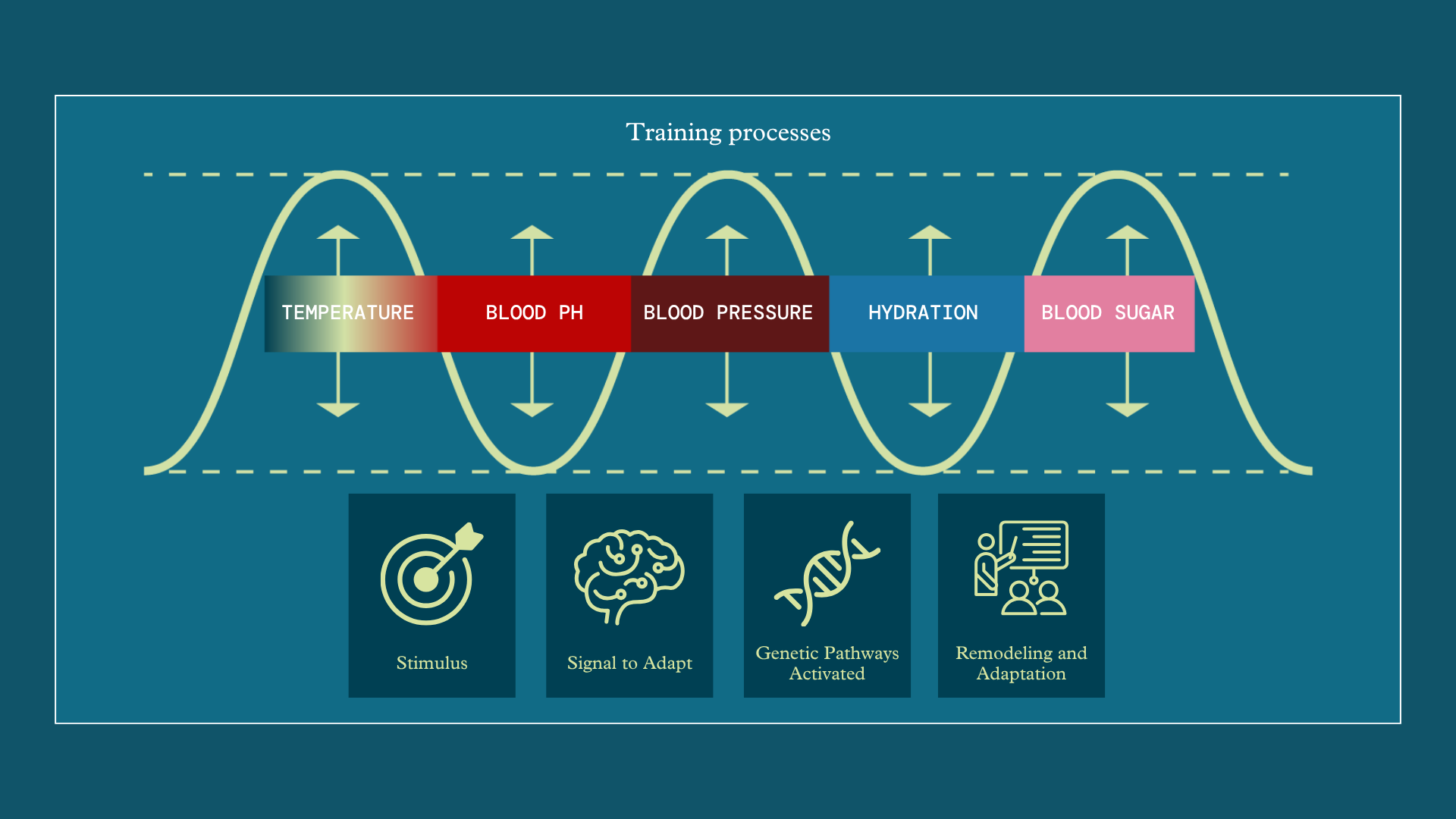

External and internal load work best together in a layered system, where they can inform day-to-day adjustments and long-term periodization.
Tweet ThisTwo athletes can experience the same external stimulus and generate entirely different internal responses due to variations in training status, fatigue, sleep quality, nutrition, psychological stress, injury history, or environmental conditions.
@hoopdiaries
External load excludes the dynamic nature of sport
Field and court sports are not steady-state cardio. The athletes sprint, stop, cut, jump, shuffle, and walk, all in the context of their sport’s tactical and technical requirements. The physiological demands are intermittent and unpredictable, which makes internal monitoring necessary.
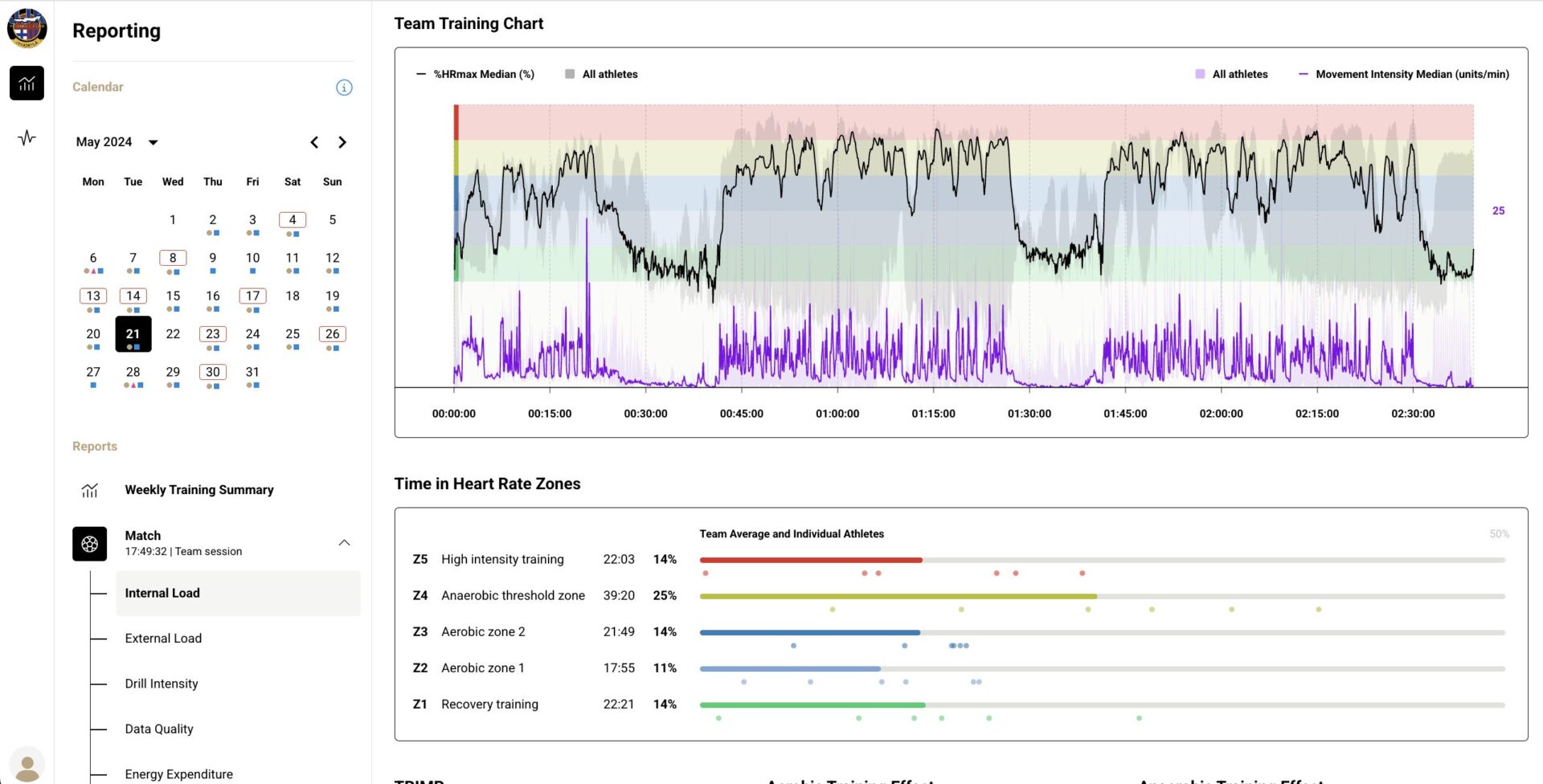
Basketball players are at or above 80% of maximum heart rate for approximately 20% of total game time.[4] From that benchmark, we reverse-engineer what they need: the energy systems, the intensities, the recovery intervals, and accumulated load. Internal load monitoring ensures that training is actually preparing athletes to meet those demands, rather than simply telling us what they’ve done.
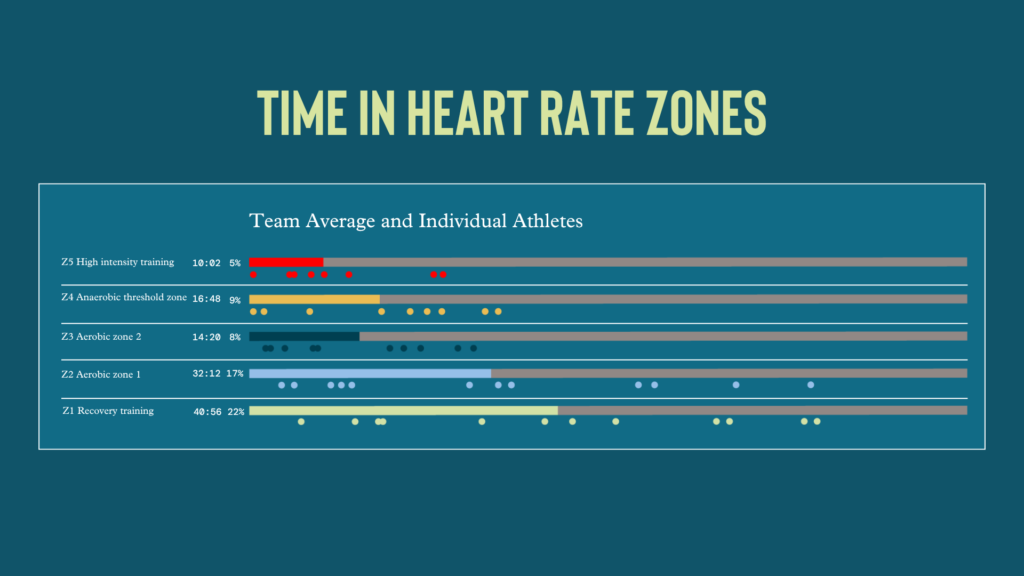
The three relevant energy systems in basketball are the alactic system (maximum effort, typically 10–20 seconds); the lactate system (high-intensity work sustained for 30–90 seconds); and the oxidative system (efficiency and recovery, fueling prolonged submaximal output and enabling repeated high-intensity efforts).
Coaches do not need to memorize the biochemical pathways. They need to understand that different drills tax different systems. Heart rate shows this in real time. A drill that looks moderate on a GPS dashboard can be generating a massive internal response for an individual athlete depending on his specific context and the accumulated load of the week.
The aerobic system supports recovery between high-intensity efforts. Building aerobic capacity intentionally, with internal load data as a guide, is one of the highest leverage investments a practitioner can make.
Fatigue hides force. By protecting the aerobic base, you protect the athlete’s ability to express power when it matters.
Tweet ThisWe reverse-engineer what they need: the energy systems, the intensities, the recovery intervals, and accumulated load. Internal load monitoring ensures that training is actually preparing athletes to meet those demands.
@hoopdiaries
Heart rate and TRIMP are the vital signs of performance
Heart rate is the fundamental metric for performance. It conveys how hard an athlete is actually working and how quickly they recover. That recovery curve is as important as the peak intensity.
Real-time heart rate tracking during training reveals intensity distribution across a session. It also identifies which athletes are working harder than the session design intends, and surfaces early signals of fatigue or incomplete recovery before they become performance problems or injury risks. Tracking heart rate in real-time has three practical applications for sports performance: monitoring exercise intensity, assessing player fatigue status, and quantifying internal training load.[2]
Training impulse (TRIMP) is the primary metric to communicate internal load to staff and players. It considers both the intensity and duration of work, producing a single number that represents the physiological cost of a session or drill.
Over years of monitoring, we have built a catalog of what each drill “costs” in TRIMP. That allows us to design sessions with intent, compare them across the week, and communicate clearly with coaches about what the athletes are absorbing.
| Category | Threshold (70–90 min session) |
| Hard training | TRIMP > 140 |
| Moderate training | TRIMP 70–140 |
| Easy training | TRIMP < 70 |
We also examine TRIMP per minute, which surfaces specific high-cost drills within a session. Effective stress is specific: if the stimulus does not align with the adaptation goal, it is noise.
Tweet ThisTracking heart rate in real-time has three practical applications for sports performance: monitoring exercise intensity, assessing player fatigue status, and quantifying internal training load.
@hoopdiaries
Acute-to-chronic workload: Seeing the bigger picture
Individual sessions only tell part of the story. How sessions accumulate over time, and how that compares to long-term loading history, paints the full picture of risk management.
The acute-to-chronic workload ratio (ACWR) compares short-term load (typically a seven-day TRIMP sum) against a rolling four-week average. It models whether an athlete is absorbing more stress than their body is prepared to handle.[6]
Tweet ThisHeart rate is the fundamental metric for performance. It conveys how hard an athlete is actually working and how quickly they recover. That recovery curve is as important as the peak intensity.
@hoopdiaries
The training–injury prevention paradox holds that athletes accustomed to high training loads actually have fewer injuries than those training at lower workloads, because the body has been prepared to handle the demand.[6] Internal load monitoring is central to making that model work. The ratio of external to internal load, over time, is a meaningful indicator of readiness and risk.
ACWR gives staff a forward-looking view of who is absorbing too much and who has sufficient capacity. That view pays off by preventing injuries during heavy game stretches, travel weeks, and tournament play.
Technology reports, practitioners decide
Over two decades of working with heart rate technology with Polar, HRV4Training, Whoop, Oura, Morpheus, and Firstbeat devices, the tools have evolved dramatically. What has remained constant is the underlying principle: the body is always communicating.
These devices do more than collect heart rate. Key outputs include TRIMP, training effect (a 0–5 rating of how much a session stresses each energy pathway), heart rate variability, and resting heart rate trends.
We use a live display to give players and coaches real-time heart rate data during practice. The effect is immediate: coaches can adjust drill intensity on the fly instead of guessing. Players begin to understand their own physiology. The feedback loop closes faster.
If a player consistently takes longer than teammates to recover between drills, it could be due to deconditioning, accumulated fatigue, incomplete recovery from the previous game, or oncoming illness. Heart rate trends, combined with subjective wellness data, help practitioners more quickly and accurately determine the cause and head off the consequences.
Some players and some practitioners are still of the “always on, always working, the grind doesn’t stop” mindset. Those athletes are as likely to plateau or even regress as they are to get stronger and sharper.
The lesson from internal load monitoring is that the grind makes you tired, while strategic overload makes you better.
The body adapts to a targeted stimulus, not emotional effort. Adaptation is a change in functional capacity, and we cannot chase adaptation without understanding what the stimulus actually costs the athlete.
Tweet ThisWe use a live display to give players and coaches real-time heart rate data during practice. The effect is immediate: coaches can adjust drill intensity on the fly instead of guessing. Players begin to understand their own physiology.
@hoopdiaries
Connecting training load to game readiness
In-season and off-season require fundamentally different orientations. The focus during off-season is provoking adaptation by pushing ceilings, expanding capacity. During the season, we need to protect the athletes’ capabilities so they can express those abilities during games. By managing fatigue, we ensure availability.
Speed and power are the first casualties of chronic fatigue. During a heavy stretch mid-season, our group’s jump numbers were down across the board. They had not lost strength or power in 10 days. They were simply tired. When fatigue accumulates without strategy, it masks adaptation and kills output. For players to play fast, they need to train fresh often enough for the adaptations to emerge.
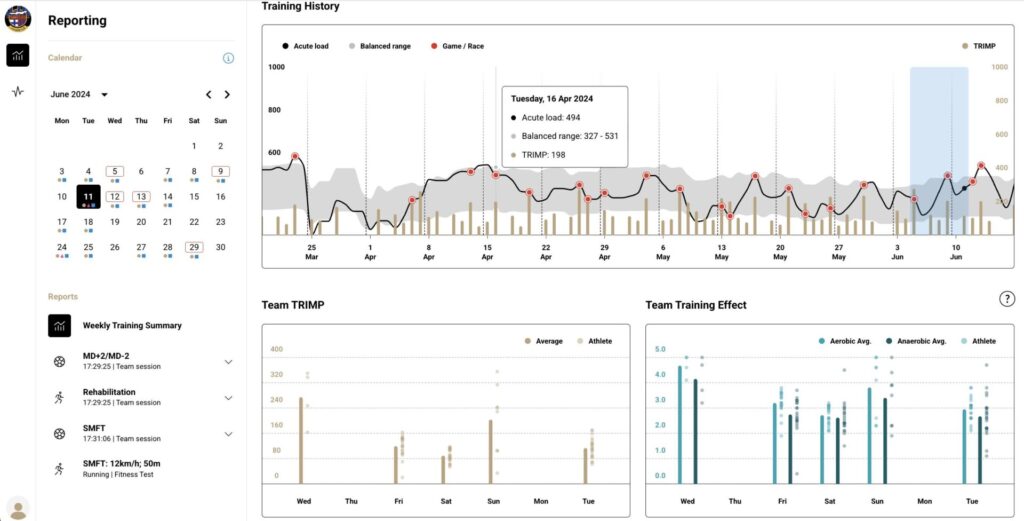
Internal load monitoring tells us whether training is actually getting athletes to the levels that the game demands.
If training is falling short, then we risk exposing them to game intensity without the foundation necessary to sustain it.
Internal load monitoring makes the in-season phase executable. Assessing daily and weekly TRIMP, tracking heart rate response across travel and heavy game schedules, and cross-referencing that with HRV and wellness data removes the guesswork around programming. Once we know what a drill costs in TRIMP and heart rate exposure, we can prescribe it like a dose.
When internal and external load diverge
One of the most useful signals in load monitoring is the divergence between internal and external data. If an athlete’s GPS numbers look normal but their TRIMP is elevated, fatigue is likely lurking. If their heart rate is elevated or suppressed relative to a known physical output, that can indicate either excellent adaptation or imminent overreaching or illness. Neither signal alone is sufficient to draw this conclusion.
Heart rate data over time reveals individual baselines. When a player’s resting HR is elevated, their HRV is suppressed, and their session TRIMP is higher than usual for the same external work, practitioners should take note.
Consistency becomes intensity only when the athletes can recover between sessions. Stacking days only works when the days are actually stackable.
Tracking internal load using heart rate is how practitioners learn to listen. It does not win games but ignoring it leaves outcomes to chance. When paired with external load data, it gives practitioners the clearest picture of what training is doing and what it costs.
Tweet ThisACWR gives staff a forward-looking view of who is absorbing too much and who has sufficient capacity. That view pays off by preventing injuries during heavy game stretches, travel weeks, and tournament play.
@hoopdiaries