
Recruiting the best players can help, but it does not guarantee a successful team. Yet performance in team sports is still often reduced to the sum of individual parts. Ironically, one of the most critical skills of modern coaching—managing the collective—remains one of the least discussed, measured, and supported areas of performance.
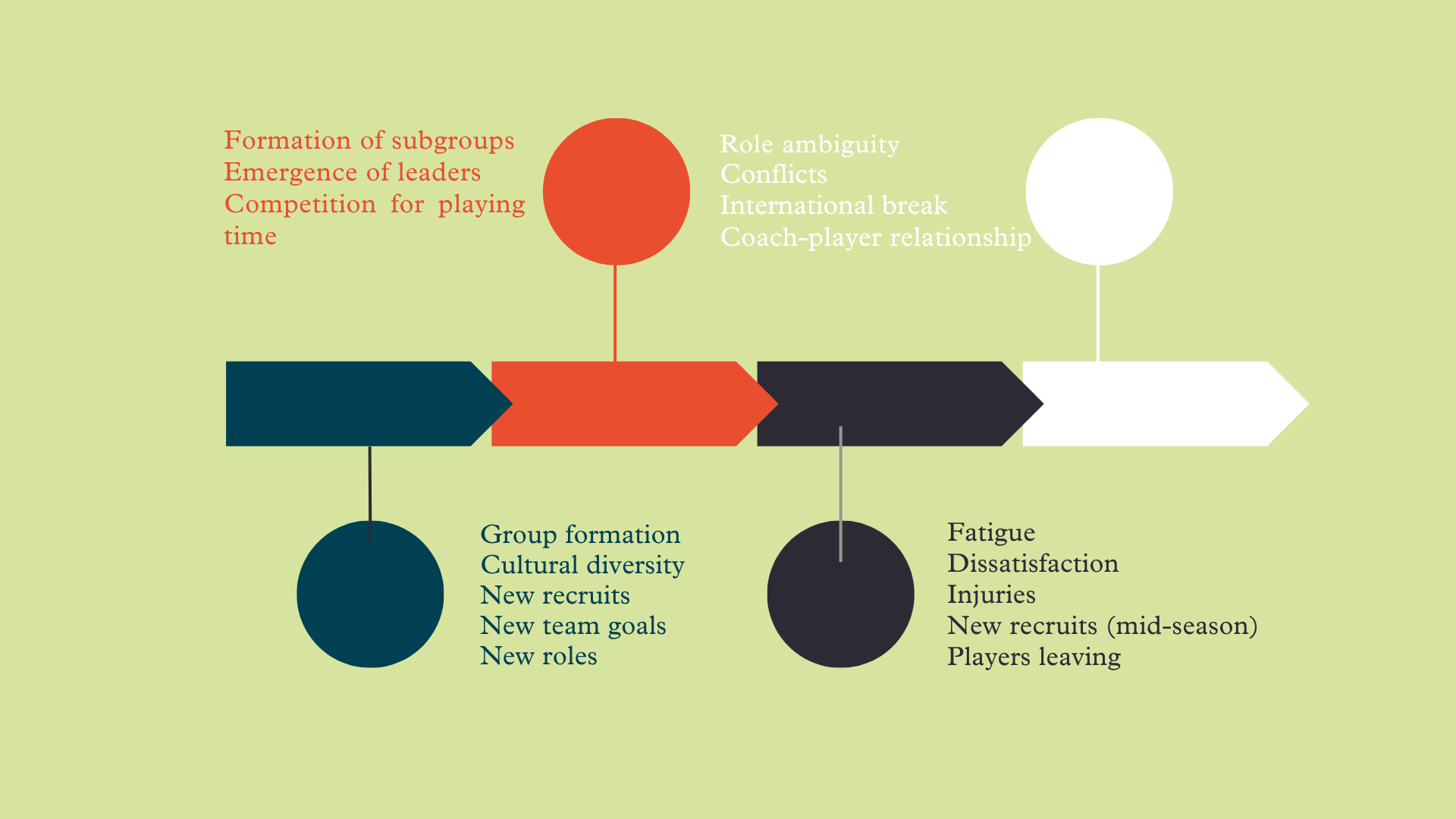
In interdependent team sports, performance depends not only on individual skills like mental strength, but on how individuals collaborate, interact, or coordinate within a complex social system. Team resilience is an example of a group-level attribute. The path from team composition to “performance by collective” emerges from constructs in group dynamics that pertain to a team’s structure (e.g., norms, roles, leadership), its processes (e.g., shared goals, communication, problem solving), and its emergent states (e.g., team cohesion and identity; Figure 1).[1]
Despite a growing consensus regarding the importance of healthy group functioning, a significant gap remains in how group dynamics are practically addressed in professional sport.
For example, while the benefits of team cohesion are well-documented, this concept is often oversimplified in practice. Within sport clubs, cohesion is still typically associated with preseason generic team-building activities designed to foster social integration and camaraderie. Consequently, they risk failing to capture and address the specific, complex, and evolving needs of a competitive season (Figure 1).
We now know more than ever about our players’ GPS loads, sleep cycles, menstrual symptoms, fatigue levels, recovery processes, and so on. But when it comes to how they function together as a team? It is still mostly based on gut feelings such as:
- “They’re singing in the locker room; the group must be doing great.”
- “Nobody is taking responsibility. We don’t have any real leaders in the squad.”
- “At meals, I’ve noticed subgroups forming. I want to avoid that.”
Naturally, a manager’s or staff’s intuition about team atmosphere remains essential. They are the first true experts of their group. But in today’s complexity of professional sport, teams should be equally ready to consider data and a systemic approach to help identify the situations and dynamics they need to manage and exploit.
Tweet This“performance by collective” emerges from constructs in group dynamics that pertain to a team’s structure (e.g., roles, leadership), its processes (e.g., shared goals, communication), and its emergent states (e.g., team cohesion and identity.
Manon Éluère
Group dynamics: Connecting gut feeling to data-driven
Everybody talks about team spirit. Very few monitor it. Yet a solid foundation of tools already exists to measure key indicators of group dynamics and turn them into actionable insights. These range from techniques for coaches and staff to influence on-pitch behaviours and inform team management, to methods for sport psychologists to design more targeted interventions.
Most existing tools are validated sport psychology questionnaires designed to assess dimensions of team functioning: teamwork, leadership, role clarity, communication, proactivity, emotional support, team coping. Other approaches, such as Social Network Analysis (SNA), explore team structures, map relationships between members (e.g., social support, leadership), and track integration patterns over time.
What all these tools have in common is simple but fundamental: they measure team members’ perceptions of their group.
In group dynamics, perceptions are reality. How each player experiences the team shapes how they behave, interact, and engage. This is why individual perceptions of collective functioning, despite their subjective nature, are one of the most reliable lenses to understand a group. Within the same squad, one player may feel fully connected, another isolated. One may perceive clear roles and high support, while another feels lost or unheard.
The yellow lines in Figure 2 represent the team’s average perceptions. For instance, goal clarity stands out as one of this team’s strengths. Clarity and acceptance of action plans to reach those goals appear weaker. The other coloured lines represent individual players’ perceptions. These reveal strong discrepancies, especially in dimensions such as perceived support or clarity of action plans. Such gaps may reflect factors like playing time, fatigue, or integration level.
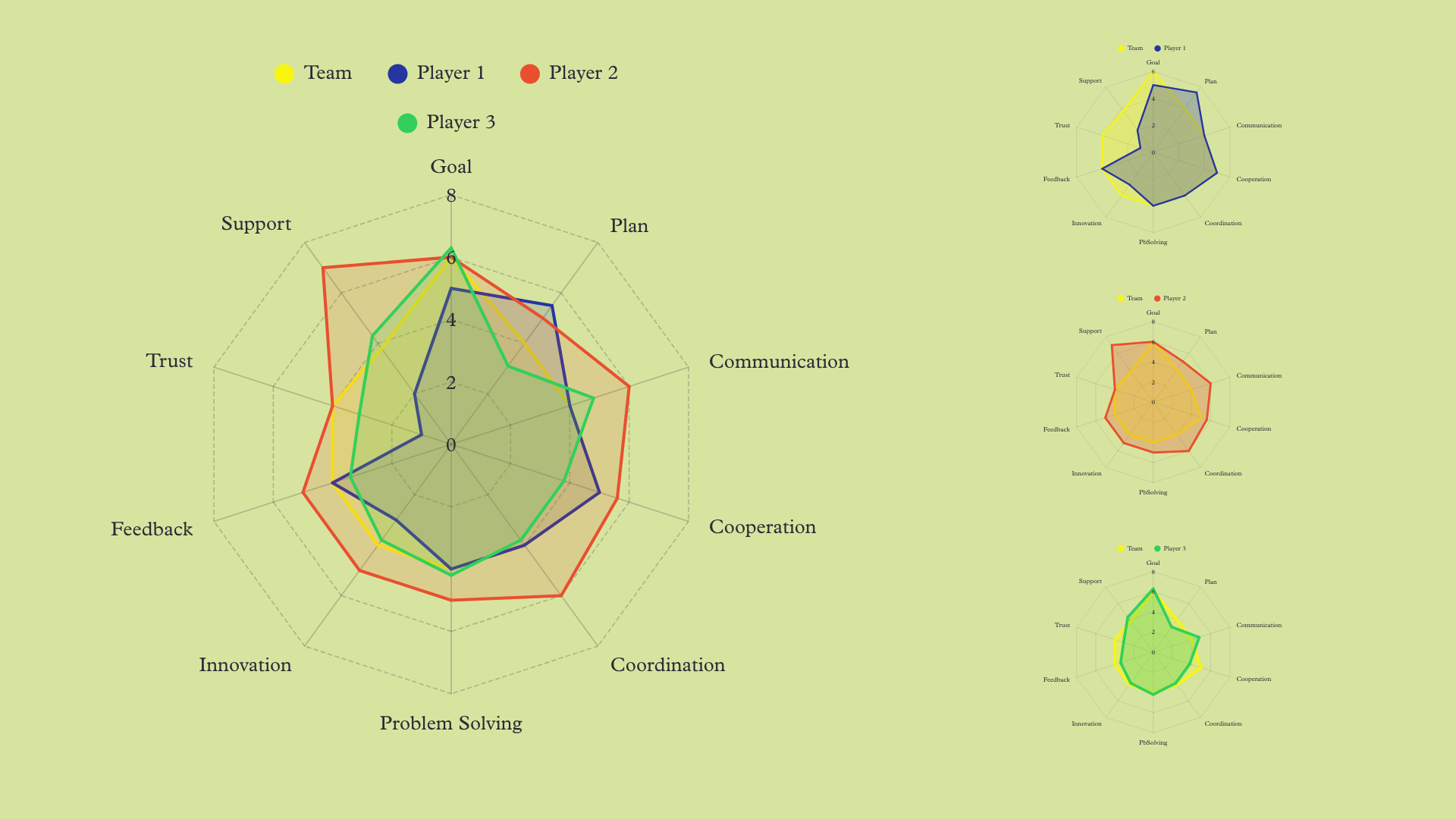
Interpreting these perceptions holistically creates a valuable picture of how the team is functioning at a given moment in the season.
By integrating structured monitoring tools over time, coaches, managers, and leaders can gain actionable insights into how their team functions, ensuring that every player’s contribution is optimised through more intentional and informed group dynamics management.
Tweet ThisIn group dynamics, perceptions are reality. How each player experiences the team shapes how they behave, interact, and engage. This is why individual perceptions of collective functioning are one of the most reliable lenses to understand a group.
Manon Éluère
The four steps to analysing and monitoring group dynamics
Like any other performance-related output in sport, monitoring group dynamics is not a one-time process. It is an ongoing, cyclical approach that evolves with the team’s needs, context, and challenges.
The four steps of group dynamics awareness are a preliminary meeting with managers, player engagement and data collection, data analysis, and specific team diagnosis with practical insights. This process should reoccur throughout the season, particularly the latter three steps. Each iteration maintains a continuous feedback loop that fosters growth and adaptation (Figure 3).
Group Dynamics Awareness (GDAwareness) is integrated throughout the process of Group Dynamics Analysis (GDAnalysis). GDAwareness refers to continuous psycho-education efforts aimed at keeping the team and staff engaged, trained, and aware of the importance of group dynamics.
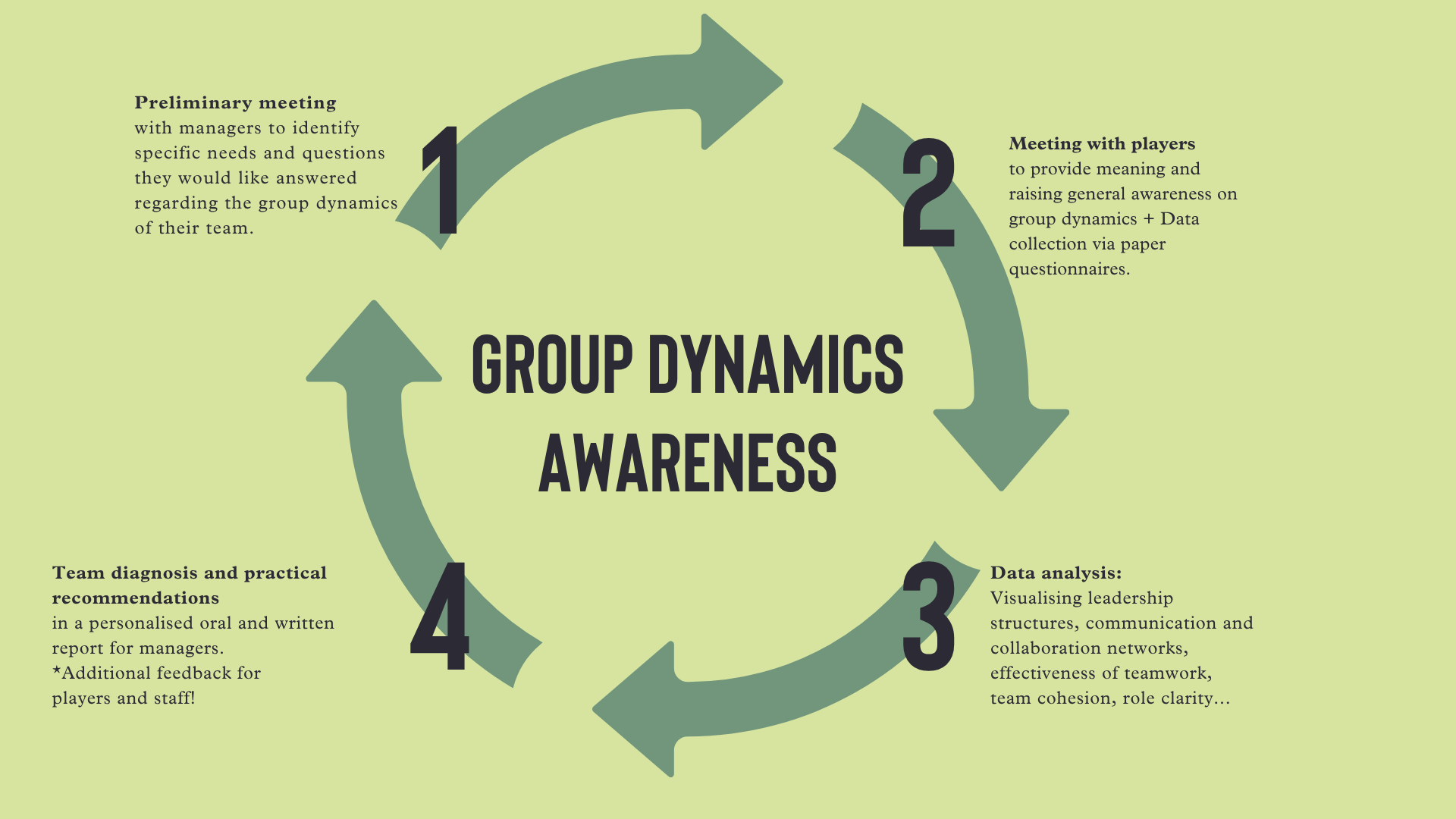
Tweet ThisThe four steps of group dynamics awareness are a preliminary meeting with managers, player engagement and data collection, data analysis, and specific team diagnosis with practical insights.
Manon Éluère
Step one: Start with the managers
The first step involves preliminary meetings with the team’s managers and key stakeholders to establish the foundation of the intervention.
Beyond logistics, this step is deeply strategic. This is the opportunity to customise the intervention so that it is relevant, timely, and fully aligned with the team’s specific context and priorities. It also guides the creation of a tailored diagnostic tool (GDA questionnaire).
This is aimed at identifying specific needs and questions, which prompt the managers to articulate the unique challenges and opportunities their team faces regarding group dynamics.
The observations the managers share during this preliminary phase reflect their own reality of the team, shaped by their expectations, frustrations, or beliefs. These perceptions (of which some common examples are listed below) can differ substantially from those of the players. This does not reduce their value but rather helps orient the monitoring process toward the key concerns, hypotheses, and blind spots of those managing the system.
- “There is no communication on and off the pitch between local and expatriate players. Only one player tries to bridge the gap at the moment.”
- “We have a lot of new young players to integrate this season.”
- “We don’t know how to react as a team as soon as we are one goal behind.”
The diagnostic outcomes (Step 4) often reveal dynamics that complement or potentially differ from managers’ initial assumptions. This zooming out effect is one of the strengths of a data-informed approach. It creates space to challenge beliefs, reframe issues, and identify more relevant and sometimes unexpected levers for action.
Set clear expectations and rules. Clear goals are upstream of aligning the monitoring process with broader team objectives. This process will also define the ethical contract regarding the genuine intention to use this data and information to grow as a team: sharing responsibility between players and staff and not using data to blame players.
The variables of group dynamics are naturally intertwined. Any analysis of group dynamics must recognise this while leveraging the wide range of available tools to implement a data-driven approach. Consistency throughout the monitoring process must be balanced with selecting the right tool for the context.
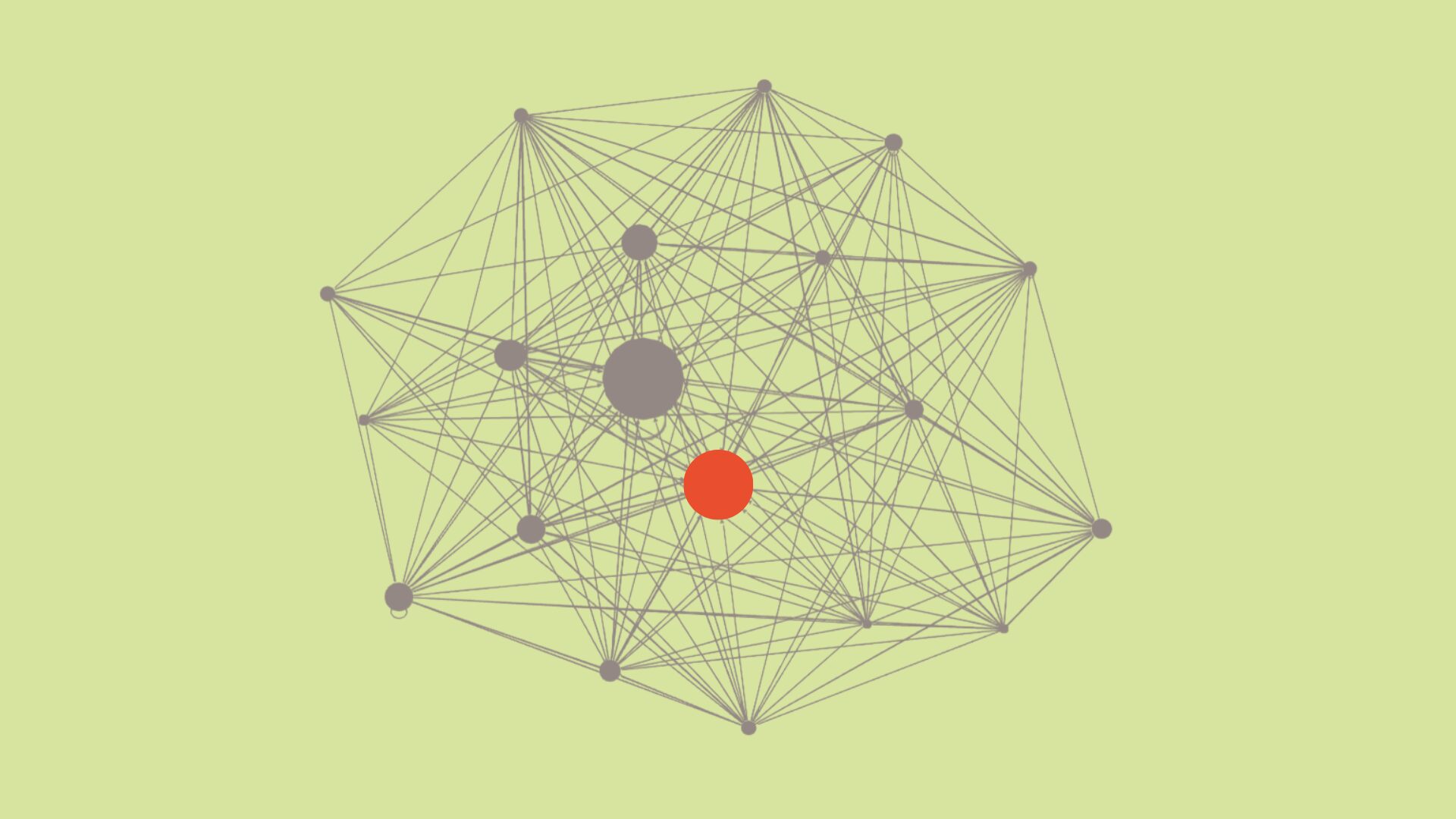
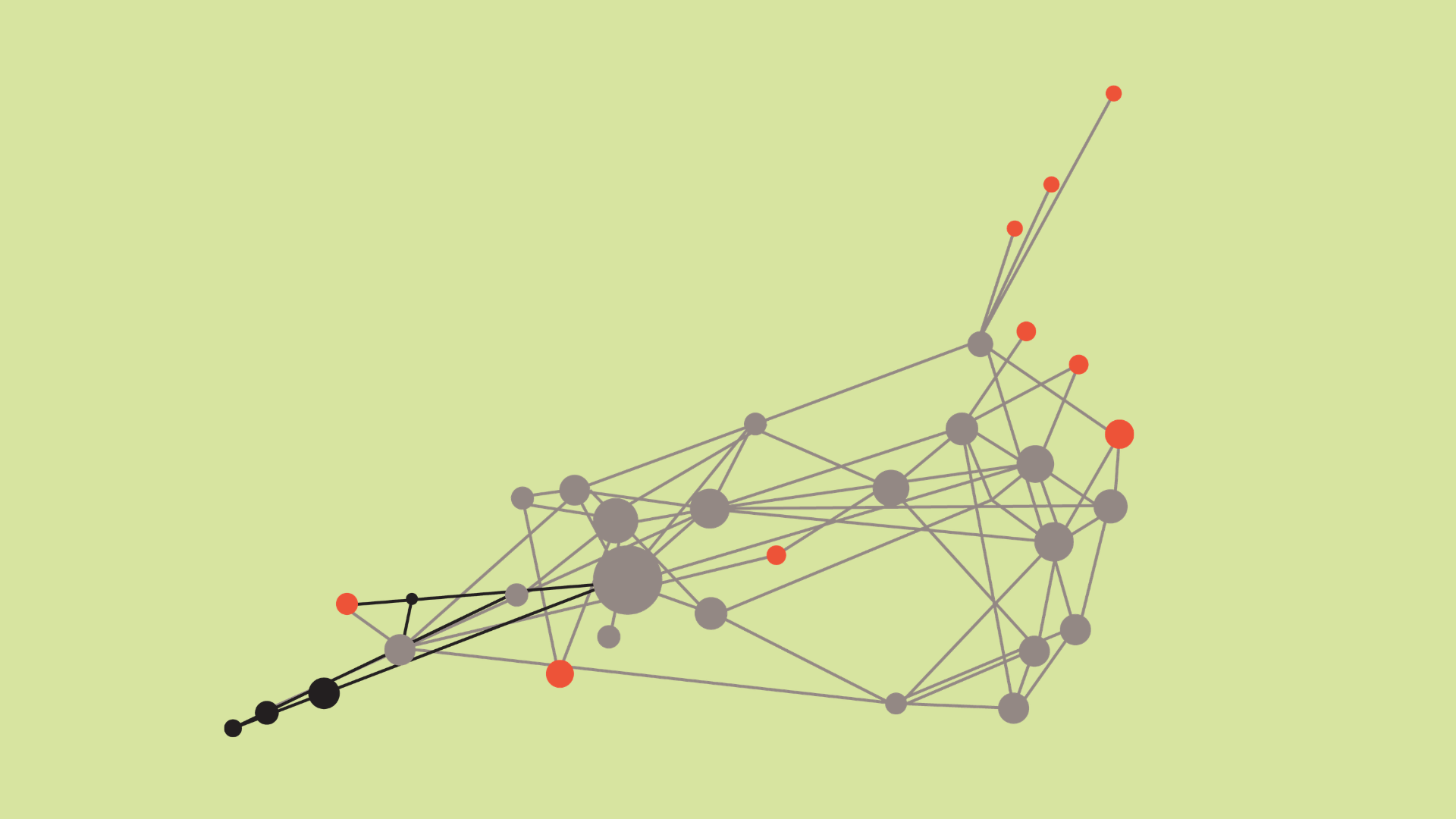
SNA is a good example of how the same tool can serve different purposes and should always be used contextually. In some teams, it helps explore leadership structures, revealing who influences the group, how leadership is distributed, and how cohesive the team is around current leadership figures (Figure 4). In another context, the same tool becomes more relevant for monitoring integration. For example, it can identify whether young or expatriate players are receiving sufficient social support, and who their key resource figures are within the team (Figure 5).
In the figures below, each node corresponds to a team member. The size of the nodes represents the number of incoming ties that it has from other nodes, that is, their popularity or influence.
The position of the nodes within the network depends on their overall connections to other nodes, akin to an attraction or repulsion force.
The thickness of the edges and their ends depend on the intensity and reciprocity of the relationship. In Figure 4, all players are represented in grey, and the captain appears in orange. In Figure 5, young players (first-year pro contract) appear in black, staff members in orange, and every other player in grey.
Step two: Player engagement and data collection
To create meaningful engagement, players are actively involved in the process from the outset. The first encounter should be interactive and thought-provoking.
Players then complete questionnaires on paper or online through a specific and secure GDA interface. Ideally, they will do this on-site at the club to control the conditions of data collection.
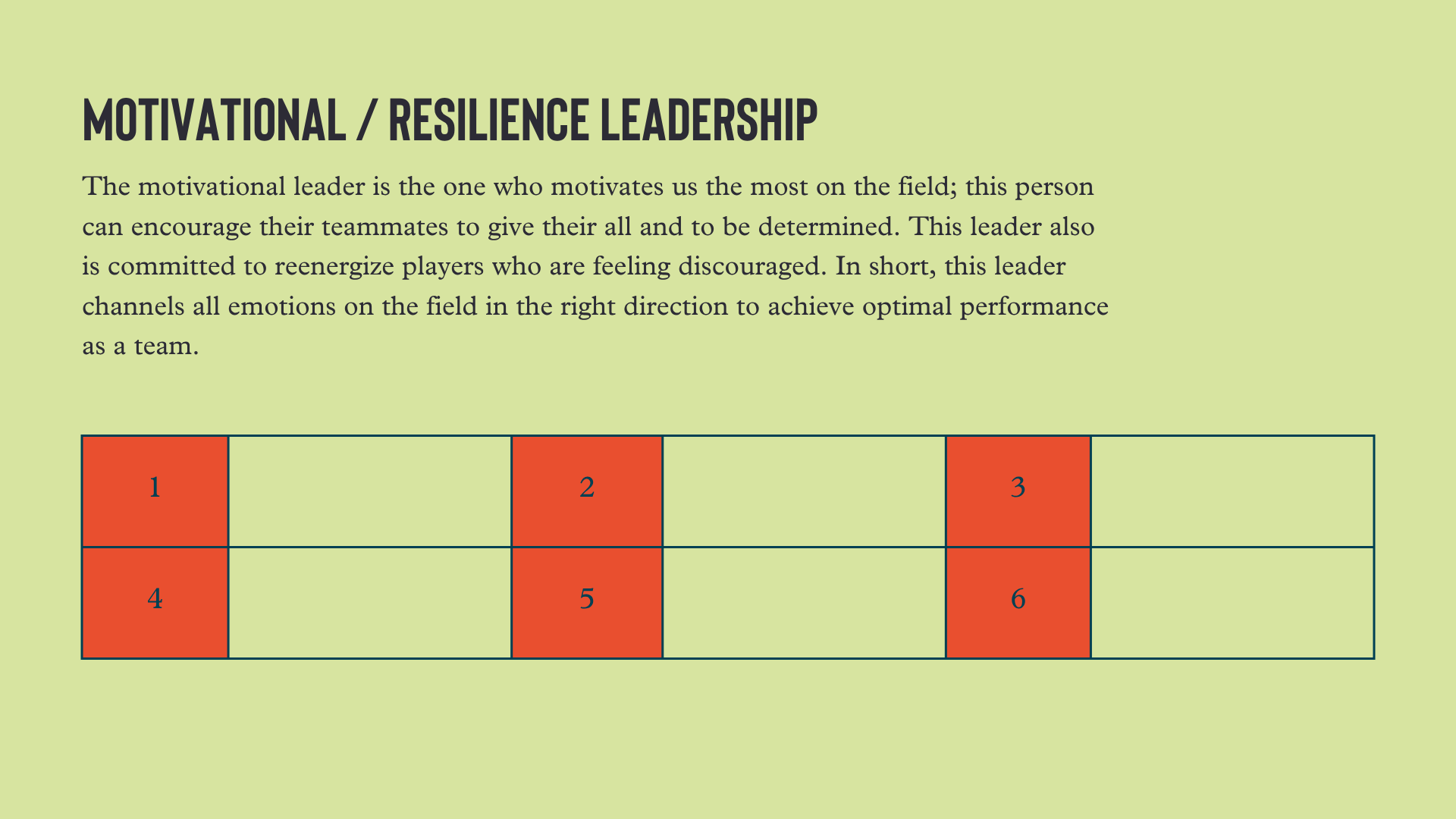
Leadership networks explore leadership influences and structures through players’ nominations or scales. Inspired by Fransen’s work on shared leadership, it does not highlight who the best leaders are, but which team members are perceived to influence the group.[3]
Figure 6 shows how to collect data on motivational leadership using a nominative questionnaire. Players rank in order of importance the member(s) of their team who they believe show the greatest motivational leadership qualities. Another approach, offering a more nuanced view of leadership influence, asks players to rate each of their teammates on a scale from 0 to 5, capturing not only who is seen as a leader, but the intensity of that perception.
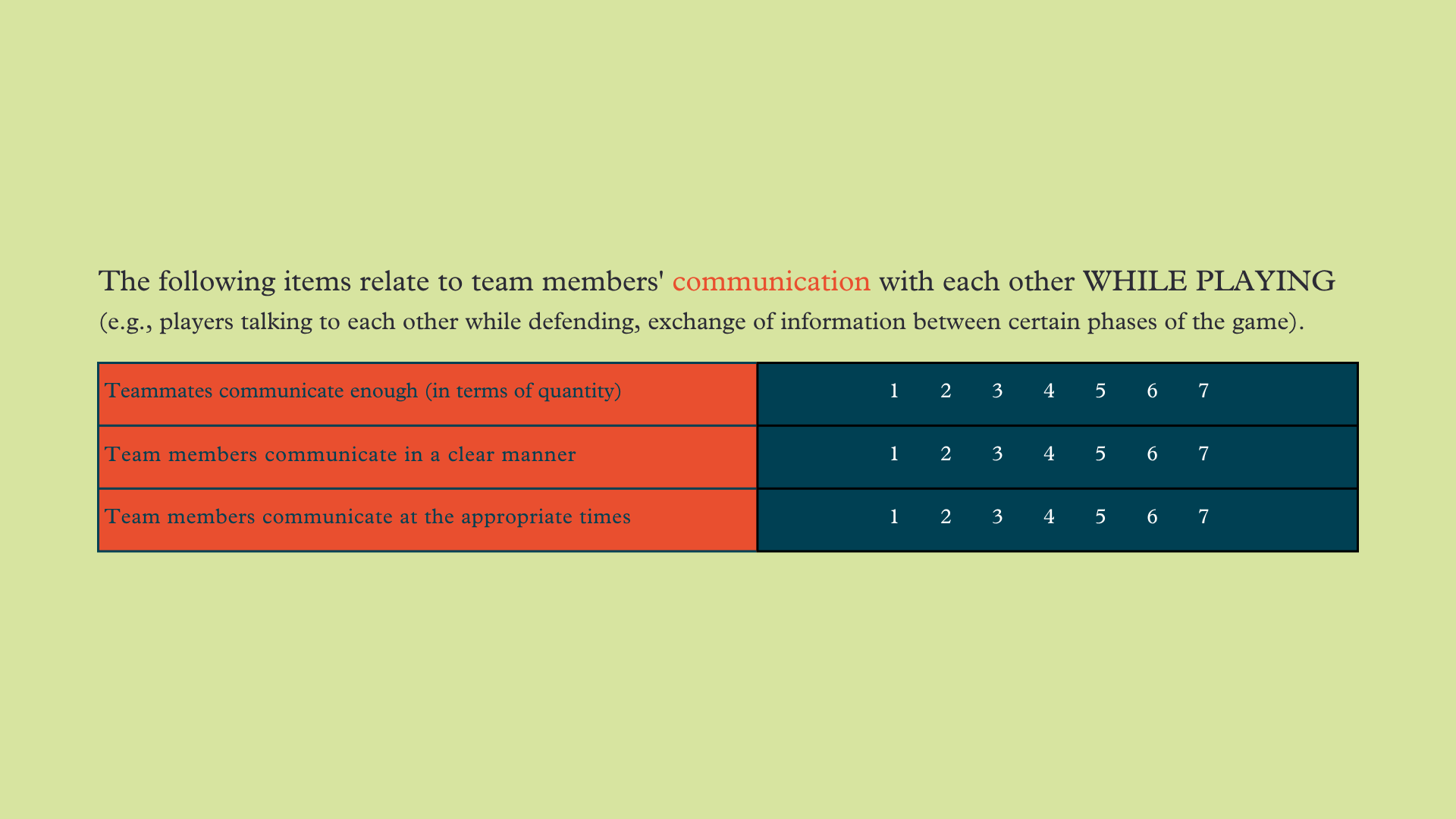
Measuring teamwork incorporates players’ perceptions of essential team processes across different phases of teamwork. These include preparation (clarity of goals, understanding of action plans), execution (communication, coordination), adjustments (problem solving, innovation), and team maintenance (social support, conflict management). These contribute to a functional overview of how the group works together.
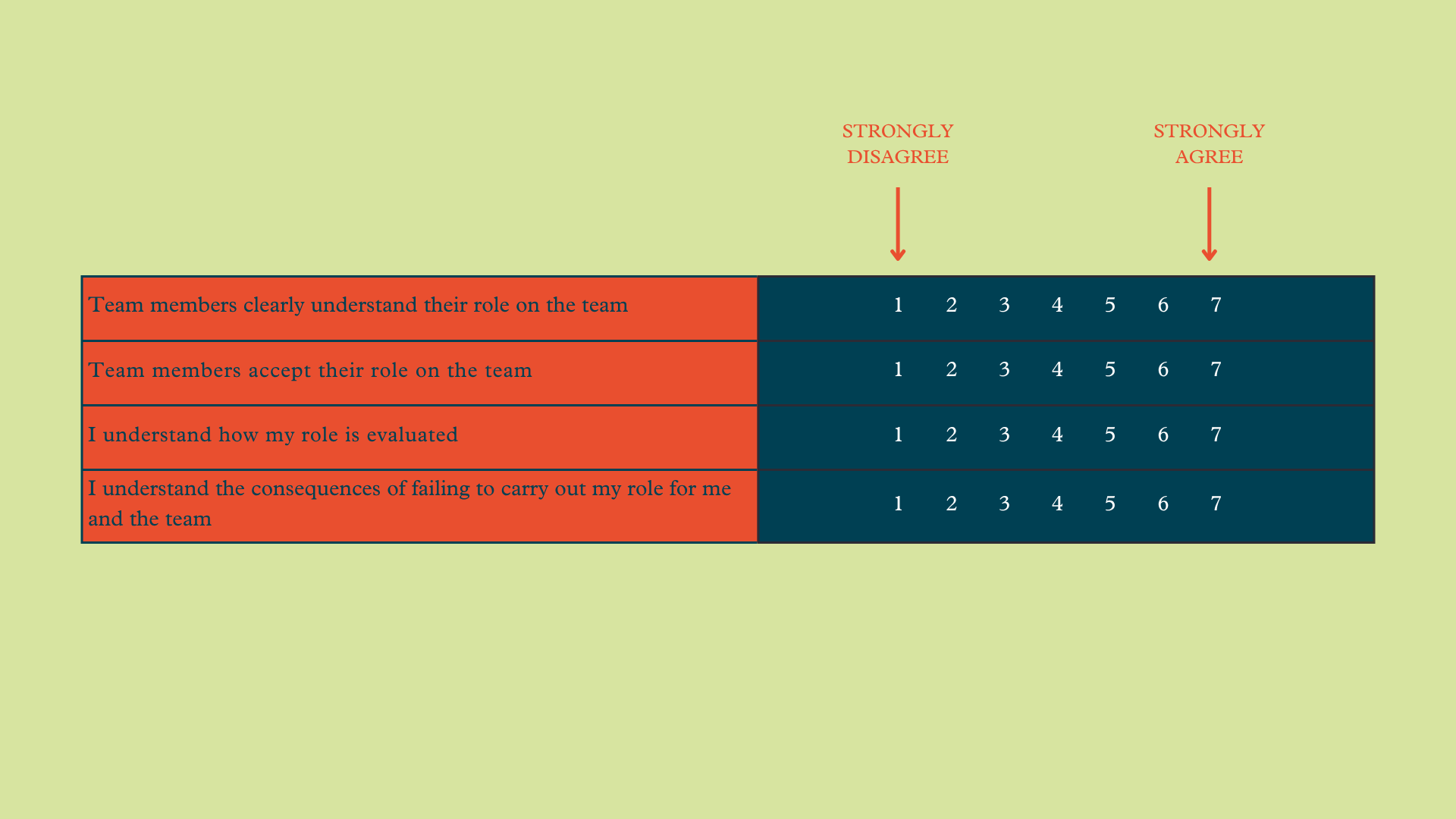
Role clarity explores players’ perception of “how I understand and accept my role” versus “how I perceive my teammates to understand and accept theirs.” It helps assess the overall level of clarity within the team, and identify individuals who may need more support, communication, or consideration.
This is one of the most powerful indicators of player satisfaction, as well as their connection or disconnection to the team and staff’s project.
Role clarity is linked to several psychological variables, including anxiety, satisfaction, and motivation. In some cases, this variable has made it possible to predict the emergence of a conflict between a particular player and the staff.
This step of the GDA methodology can become an opportunity for individual reflection or spontaneous discussion, helping to deepen engagement and provide additional meaning to the process. The goal is not just to collect data, but to begin fostering a shared sense of curiosity and ownership around the team’s internal functioning.
Tweet ThisRole clarity explores players’ perception of “how I understand and accept my role” versus “how I perceive my teammates to understand and accept theirs.” It helps assess the overall level of clarity and identify individuals who may need more support.
Manon Éluère
Step three: Data analysis
This step is conducted remotely within a 10-day window to ensure relevance to the team’s current phase of the season.
The true value lies in tracking how a team evolves over time, not in comparing players or teams to one another. Compiling all raw and processed data into tailored Excel files allows for longitudinal tracking across multiple time points. This enables cross-referencing with key demographic indicators like age, time spent within the club, or local versus expatriate status, offering a richer and more nuanced interpretation of the group’s dynamics over time.
For data processing, I combine classical quantitative / descriptive analysis for variables collected through Likert-type scales (1 = strongly disagree to 7 = strongly agree), with structural analysis of team relationships.
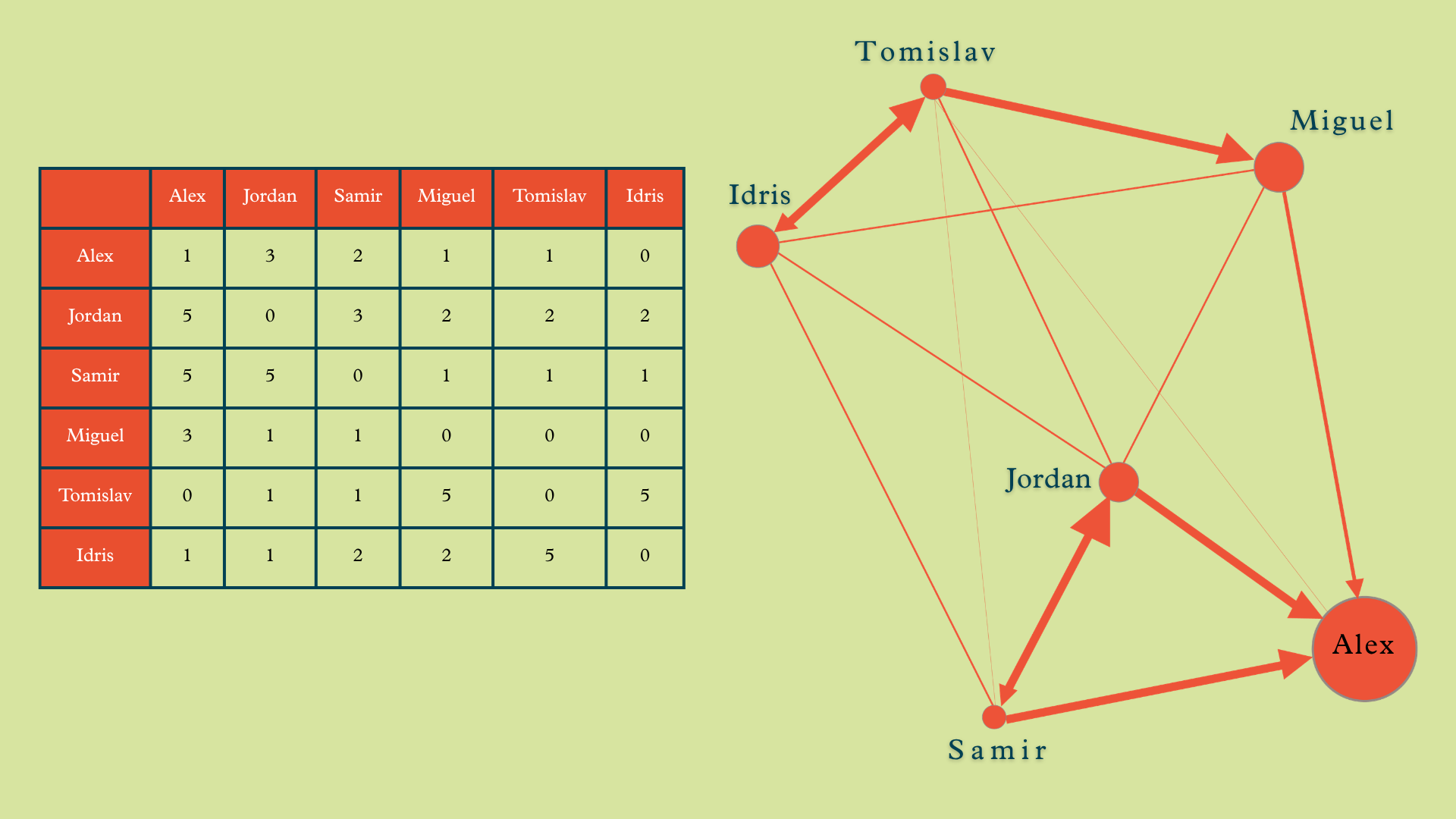
Structural data such as leadership nominations or communication flows are best expressed in matrices, which we can then analyse using SNA software such as SocNetV®, Ucinet®, or Gephi®. This approach produces sociograms – visual representations of the team’s structure at a given moment (Figures 5 and 6). Essentially, it converts a numeric table to a visual representation.
Most importantly, it allows for in-depth analysis of key indicators, such as betweenness: how much a person acts as a bridge between different parts of the group. These metrics help identify hidden leaders, isolated members, or potential fault lines within the team. Figure 9 illustrates the full analysis process, from raw matrix to network graph.
The goal is not just to process numbers, but to make sense of them by cross-analysing variables, identifying patterns, and extracting practical, context-specific interpretations and recommendations.
Tweet ThisStructural data such as leadership nominations or communication flows are best expressed in matrices, which we can then analyse using SNA software such as SocNetV®, Ucinet®, or Gephi®. This approach produces sociograms.
Manon Éluère
Step four: Team diagnosis and practical recommendations
The final step transforms raw data into meaningful insights and concrete actions. It includes several layers of feedback, each tailored to different actors within the system.
The first layer of feedback is an in-depth, confidential debrief with a small, trusted group of managers: head coach, performance director, department leads, sport psychologist. In this protected space they can explore the findings, preserve confidentiality, enrich the neutral analysis, and refine the practical recommendations. Following this debrief meeting, managers receive a comprehensive report detailing the current state of the team’s dynamics and offering practical recommendations.
A broader and more accessible feedback session can then be delivered to the full staff, ensuring collective alignment and inclusion while respecting appropriate levels of confidentiality.
Player feedback sessions deliver a team-level synthesis to the players, reinforcing the purpose of the process and fostering collective awareness. Use this opportunity to align around key questions: Where are we as a team? What are our strengths? What do we need to improve? This encourages ownership, shared knowledge, and team cohesion.
Then follow up and link feedback to action. The goal is not just to inform, but to activate. Each layer of feedback supports decision making and helps the team move forward in a way that is consistent with the diagnosis. This step closes the loop and lays the foundation for the next cycle.
GDA case study: From crisis to clarity
A team was on a run of poor results during a critical phase of the season. The staff felt unable to clearly identify what was going wrong at a collective level, other than a crucial lack of leadership.
“We are a bit lost with what to do. We still have the players involved in the project, but clearly the collective just isn’t clicking, especially on the pitch. But we don’t know why, or at what level, it’s breaking down… We have a group of leaders, we tell them we trust them, and to take responsibility. But nothing changes, and no one reacts when things go wrong.”
The group dynamics data painted a broader and more nuanced picture. Leadership was indeed one dimension of the problem, but it was not the core issue.
The main tensions emerged around players’ trust in one another, cooperation on the pitch, and shared responsibility. Data showed a striking pattern: most players believed they personally understood their role (average = 5.6 / 7) yet simultaneously felt that their teammates did not, scoring very poorly (3.2 / 7). This gap in perceptions may have fueled frustration, explaining in part the low level of measured cooperation and weakened collective confidence.
SNA confirmed that leadership resources were present, but unevenly structured and not perfectly aligned with the staff’s expectations.
For example, the staff dismissed one player’s leadership potential, but the data revealed he was a highly influential figure within the group. That produced a challenging part of the feedback: “No way. That guy’s not a leader. He’s useless!”
However, ignoring this influence might create a disconnect between the coaching discourse and the locker room reality.
Based on these insights, the staff restructured their leadership approach. A broader leadership group was formed, integrating both formal and emerging leaders that the data helped identify. The team started weekly post-match meetings. They linked clear leadership roles and expected behaviours to key issues that the diagnosis surfaced. These included on-field cooperation, reactions to adversity, and collective coping strategies.
Rather than addressing everything at once, the data helped prioritise actions and restore clarity. As cooperation and shared responsibility improved, confidence followed, and performance gradually stabilised.
While this example comes from a team in difficulty, group dynamics should be managed all season long, independent of results. GDA is equally valuable for high-performing teams, helping them monitor their collective, anticipate vulnerabilities, and strengthen what already works.
This case illustrates a successful use of group dynamics data because the right conditions were in place. Crucially, the staff chose to engage with the findings beyond confirmation or reassurance, and the players were progressively involved in translating insights into concrete behaviours.
Available resources also played a key role. One staff member had prior training in group dynamics, which helped bridge the gap between recommendations and daily actions. This is not always the case. The impact of group dynamics data largely depends on how teams prioritise it, the time and expertise available to implement change, and the support structures in place. Having a sport psychologist on the staff to help integrate collective psychological support through targeted workshops often makes the difference.
Data can reveal where to act, but turning insight into sustainable change remains a collective, human process.
The GDA framework offers concrete tools for optimising team functioning. Properly implementing it requires specific expertise in sport psychology and data analysis. Group dynamics data provides a structured way to identify priorities, challenge assumptions, and decide where and how to act.
GDA also reminds us that group dynamics is not a soft variable, but a performance one.
Finally, we must also look beyond the players. With coaching staff sometimes exceeding 30 people, their own communication, leadership, and alignment shape the environment in which athletes evolve. Monitoring and supporting staff dynamics may often be the first step toward creating the conditions for sustainable performance on the pitch.
Tweet ThisBased on these insights, the staff restructured their leadership approach. A broader leadership group was formed, integrating both formal and emerging leaders that the data helped identify.
Manon Éluère