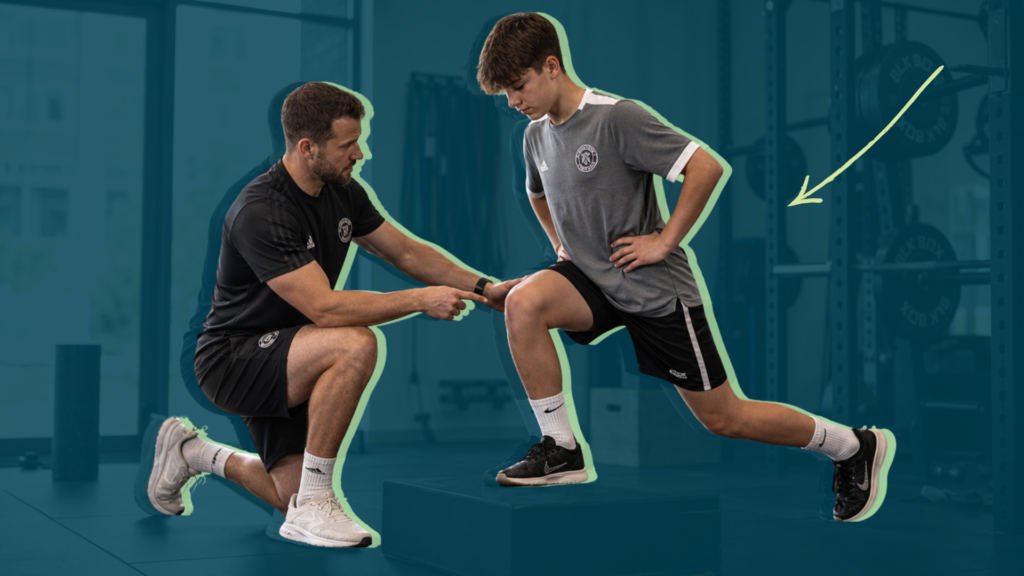
It’s great having long term plans, carefully designed micro- and mesocycles, and Excel spreadsheets that tell us what to do and how intensely to do it. But things are always changing. At the U18 level, games are added to the schedule on short notice, fixtures change sometimes week to week, exams and other commitments impact player availability and intent; and, as with all athletes, injuries and illness impact player training time and readiness.
As youth players progress, their need for training and playing time outweighs the development opportunities available.
Coaches aren’t looking for the finished article at age 18. But we are looking for athletes with skills to develop and utilize, those points of differentiation that signal how we can develop their potential and how they can stretch and grow as athletes and as people. When I hand a player over to the senior team’s performance staff, we can account for the differences in max strength, but we cannot account for an athlete’s inability to move efficiently and consistently.
We all now appreciate where these athletes are in their athletic development, acknowledging the shortcomings as well as their peaks. To take the next step, they must display the necessary capacity to learn and mature.
The truly exceptional players who make the jump straight from school to the first team had already demonstrated the necessary competencies to “cope” with the higher level before their coaches dropped them into that environment. I stress “cope” because they still had to invest significant development time in the subsequent years. Even upon reaching the top level of league play, they were still not at their personal peak level. They were still not that “finished article.”
The other players, by far the majority, take longer to grow and develop the capacity to tolerate the demands of senior training and matches.
The goal for practitioners working with young athletes is to shape a robust, adaptable player with the ability to navigate this environment and progress further in the sport.
Tweet ThisThe goal for practitioners working with young athletes is to shape a robust, adaptable player with the ability to navigate this environment and progress further in the sport
@Minion_Kev1
Train young athletes for abilities, not benchmarks
Outputs like 1RM and time on a change of direction task are downstream of an athlete’s fundamental ability to move and capacity to do so under the task constraints. Coaches working with youth athletes, in particular, need to focus on the upstream concepts that underlie athletic output, and not get locked into chasing the data points.
Physical qualities are not mutually exclusive. Manipulating one has the potential to positively affect other areas. Said another way, when an athlete improves in one, he or she is improving in all.
Movement competency
Movement competency is the ability to perform movement tasks efficiently and consistently, understanding how the body moves in space. The fundamental movements are push, pull, flexion, extension, rotation, anti-rotation, brace, hinge, squat, jump and land.
As we only really start to engage with players at age 14, they come to us with varying levels of development and facility with these movements. Many have played lots of sports but cannot hold the shapes that will assist their physical development, often simply because they haven’t been exposed to them.
Some will have been in schools that offer strength & conditioning support, and these athletes can show both technical and tactical competency in the sport plus the ability to move effectively and consistently.
At Leicester Tigers, we were fortunate enough to work with Kelvin Giles. I have revisited his book, Movement Dynamics, regularly in the last 12 years, and it still underpins our foundational work with the younger groups. His core idea is that athletes with a greater movement vocabulary can adapt to new skills at a quicker rate and with a lower risk of injury.
Movement adaptability
Coaches often talk about earning the right to progress, and movement adaptability helps put that idea into practice.
Movement adaptability is the ability to build on a given movement schema, and manipulate the plane, tempo, load and stability without losing efficiency or consistency of movement.
Coaches must always be mindful of the balance between progressing and regressing. When working with developing athletes, where the goal is instilling the capacity to develop into senior team players, we’re constantly zooming in and out on the time scale. How will an extra few weeks affect a bigger picture that covers years or decades?
This can work both ways. Sometimes, coaches and development teams push senior team models onto Academy players in terms of certain exercises. Other times, the youth coaches have the autonomy to develop athletes on a specific youth-oriented model, aiming more at the capacity and tools rather than specific skills and benchmarks derived from the senior squad.
Robustness
At any level of training or playing, athletes must be able to maintain a high training volume, without injury or illness. They need the capacity to tolerate load for what is to come, building a suit of armour, physical, emotional and psychological. Focusing on the physical aspect, the more we can develop efficient movers, the more we can reduce the number of injuries.
Planning and periodisation
Coaches and athletes alike have to understand training cycles and the importance of balancing game load and match blocks. Loading, recovery and periodization should be part of their vocabulary just as it is ours.
This viewpoint also helps manage stakeholder expectations, especially if form drops. Understanding the bigger picture and where each player is on their individual journey is crucial for all involved.
Given the Academy’s role in supporting player development, the amount of time that the best players all train against and with each other is minimal. You would expect, but not guarantee, that when you put all the best players together in the same environment that the intensity of the work they do will be higher, based on the overall increase in “collective” skill levels and athletic qualities.
Therefore, it is important to support the “best” players with small, intense bouts of extra work, not to fatigue them, but to grow their capacity to tolerate the demands of the game at the next level and beyond. The key factors there are game load, playing time per game, each player’s specific needs (e.g., returning from injury, growth stage) and game intensity, which may require “top up” sessions.
Tweet ThisOutputs like 1RM and time on a change of direction task are downstream of an athlete’s fundamental ability to move and capacity to do so under the task constraints
@Minion_Kev1
Movement-focused training programs for youth athletes
Every session we have at all age levels starts with 10-15 minutes of prep work. This is a way of revisiting previous movement competencies while challenging the athletes’ adaptability through different modalities, tempos and even external loads.
They will always have some kind of:
- Stiffening (single leg or double leg pogos, linear and lateral hops, speed skater)
- Force absorption (step downs, drop landings)
- Reactivity (jumps focusing on RSI)
- Kettlebell swing (high velocity control of an external load)
- Force production (resisted broad jumps, box jumps)
- Total body movement, bracing, triple extension (sandbag lifts and scrum shapes)
- Running prep (ankling, A/B march or skips, switching variations, postural work)
The prep work aims to bridge the gaps between movement competency and adaptability. Having spent time during earlier stages of the program teaching players to move in a coordinated and efficient way, it’s now about extending those movement skills into more complex, dynamic alternatives that lead into the tactical and technical portion of our sessions.
Not all players will be as diligent as you want them to be. It can be hard for them to maintain the necessary high level of intent, and you will be accommodating as things crop up with the group or individual athletes. But that cannot detract from the importance of this work to the bigger picture.
| Playing groups | Monday | Tuesday | Wednesday | Thursday | Friday | Saturday | Sunday |
| Starters | TB weights | Match | TB weights | S&C extras – specific needs / off-feet conditioning | |||
| Non-starters | TB weights Running top-ups MAS | Exposure | TB weights Running top-ups MAS | S&C extras – specific needs / off-feet conditioning |
| Playing groups | Monday | Tuesday | Wednesday | Thursday | Friday | Saturday | Sunday |
| Starters | LB weights – STR | UB weights – STR | TB weights – Contrast | Match | |||
| Non-starters | LB weights – STR | UB weights – STR | TB weights – Contrast | Exposure |
| Playing groups | Monday | Tuesday | Wednesday | Thursday | Friday | Saturday | Sunday |
| Starters | TB weights | Match | Recovery | Match | Recovery | ||
| Non-starters | TB weights Running top-ups – MAS | Exposure | Recovery | Exposure | Recovery |
Stay flexible with your plans for periodization
We break our work down into four-week blocks for the players, which may be part of longer cycles of work. This allows us to be more adaptable with programming to the needs of injured players, and group-wide disruptions like fixture changes.
On paper, a cycle would run for 6-8 weeks with breaks around week 5 to allow the players to unload. In practice, these breaks take care of themselves with schedule changes and all the things that happen in young athletes’ lives. This normally means that players naturally stay aligned to the cycle patterns and rep ranges.
At these age groups, the programs are still pretty generic. This isn’t to oversimplify the process but to ensure consistency and efficiency of movements, and allow the athletes to be challenged along different modalities.
When you may only have the athlete for one session per week at the club and one at school, sometimes it’s essential to do the heavier work when they are with you. This does not always allow for the most “optimal” program, but it is the one that’s most efficient in terms of time and effective dose.
The progression from U18s to Senior Academy comes with major changes. Players go from being schoolboy players to (some, not all) working in a full time athletic environment. This is a massive shift and the coaching staff needs to manage it appropriately. Too often, young players move up and get injured early on due to mismanaged loads across all areas. As an industry, we are refining this process and it improves every year, but there are still shortfalls.
Every young player wants to impress and wants to work hard. We’re here in part to manage their expectations of what they are capable of and protect them from themselves.
Tweet ThisCoaches working with youth athletes, in particular, need to focus on the upstream concepts that underlie athletic output, and not get locked into chasing the data points.
@Minion_Kev1
Foundational lifts are foundational for good reason
The “big” lifts are the core of any of our programs. Within any week we aim for most young players to have two specific lower body sessions. For players with a midweek fixture, they would get this in both sessions; while players with weekend games have a primary session at the start of the week, and a second session around Thursday. The latter session allows for variance within the week. Session 1 varies the focus on reps and strength focus, while session 2 emphasizes dynamic movements and tempo.
Both schedules have their merits and shortfalls. The midweek fixture allows us to lift at a consistently stable load, and challenge this through manipulating rep ranges over the course of the weeks.
The main drawback is that players may self-limit their intent on the strength sessions. The Saturday fixture allows for shorter, more concentrated sessions working on specific areas. You normally see greater returns from these in the short term, but must consider if this is at the expense of long term development.
As younger athletes cannot always be lifting at the higher end of the rep scale, it’s important to give them a range of reps to stress both neural and anatomical structures. Coaches should pay attention to where, when and how they fatigue at high volume, and what does each shape look like when stressed under higher load.
Tweet ThisAthletes with a greater movement vocabulary can adapt to new skills at a quicker rate and with a lower risk of injury
@Minion_Kev1
Squat – We program the front or back squat, based on each player’s technical competency, training age and movement competency. Most of our U16 players would do counterbalance squats or goblet squats to learn the technical competency of the movement.
Many young players struggle to appreciate the “feel” of a squat. Players who come from highly structured sports programs can be “wooden,” and not naturally move in an efficient, controlled manner. If a player can perform the different variations consistently and build up that feel, the education around training the lifts gets much easier.
Trap bar deadlifts – Players with midweek fixtures ideally do both squats and trap bar deadlifts, but they may do just the squat closer to game day.
Players in the Front 3 love this exercise. They can create good shapes, but given the nature of their playing position they may compromise their low back at times to handle large loads. Again, as always, driving technical competency is crucial, as it will transfer to their playing.
In certain scenarios, we will use the trap bar for jump activities, mainly with athletes who do not have sufficient experience with Olympic lifts. This also can be a more efficient use of time if session length is a major constraint on programming.
Our U16 players perform sumo dumbbell deadlifts as a preparatory exercise. The focus there is the bottom position: What does it feel like? How do they generate tension at the bottom in order to feel compact in the movement? Where does the head sit in relation to the rest of the body so not to lead with the back?
Barbell hip thrust – The barbell hip thruster complements all the necessary actions from the above lifts, and overloads the posterior chain element for the young players. We use this throughout the pathway, and players learn to load from bodyweight, plates, dumbbells and barbells.
Movements like the hip thruster illustrate the importance of giving young players a “toolbox” of lifts and not narrow the context too early. It’s important to be able to offer the player variations of similar movements, which allows for adaptability and specialization.
Press-up variations – Players will periodically do the bench press as U18s in preparation for what is to follow, but in the lower age groups we set this up with cycling both dumbbell and weighted press-ups. Having seen young players doing press-ups with 50-70kg on their backs, holding good shape, bracing appropriately, and consistently moving with tempo and efficiency through the full range, it’s an exercise we can’t afford to ignore.
When done well and with little compensation, the exercise elicits many more functional positives, while also challenging the players’ intent.
Pull – The merits of chin-ups are unmissable, and the ability to move body weight plus some loading is a great measure of strength. Some players come into the program a bit heavy, so we need to get them to that point. We want them to produce suitable tempo and control in both phases of the movement to get maximum response. We’re looking for their ability to brace and move without compensating through their hips to generate momentum.
Pull downs with an emphasis on the eccentric phase are a great way to start this process, progressing towards assisted or full chins.
Tweet ThisEvery young player wants to impress and wants to work hard. We’re here in part to manage their expectations of what they are capable of and protect them from themselves
@Minion_Kev1
Long term development requires a long view of development
Training today’s young athlete is less about prescription and more about interactions. Players are entering pathways later, so it’s important to manage them accordingly. We can expect that each player has been exposed to the same opportunity, or that they know what we are talking about. There are also lots of positive things going on away from clubs, and we should recognise that and tap into these resources.
If a player misses a maths or English lesson, they can catch up. If they miss a number of lessons, covering the lost ground becomes harder and the stress increases to get back on target.
This is the same for us in S&C, but if we try to cram more in, we can potentially get less back in return. The full development journey will probably extend beyond our direct involvement, and may even continue at another club. Our job is always to keep the athlete’s long term development at the forefront, even if we won’t be there to see the results up close.