

What lessons do you draw from track and field, and how have you chosen to integrate them into team sports while also maintaining a distinct approach?
One of the key insights I’ve gained, influenced by several outstanding mentors including Fergus Connolly, with whom I co-authored a book series, is the idea that we shouldn’t aim to duplicate an entire discipline, but rather extract valuable principles from it. This is especially relevant when looking at track and field in relation to team sports. The shift towards valuing speed within team sports was a significant realization – a recognition that we couldn’t solely focus on weightlifting; we needed to prioritize speed as well. But it’s important to strike a balance and not disregard other aspects, such as strength training, which remain integral to the bigger picture.
As someone with a pronounced bias towards speed, I acknowledge that we may have swung too far in that direction. It’s like a cycle where a new concept gains immense hype, and people dive in headfirst – it’s seen across various phenomena like the initial fervor around triphasic training. However, these trends often recalibrate to find their rightful place. The same is true for our emphasis on linear speed and track and field concepts. Our enthusiasm for speed led us to study track and field methods, even though these may not be entirely suitable for team sport athletes. Yet, the underlying principles that govern high-speed performance hold great value.
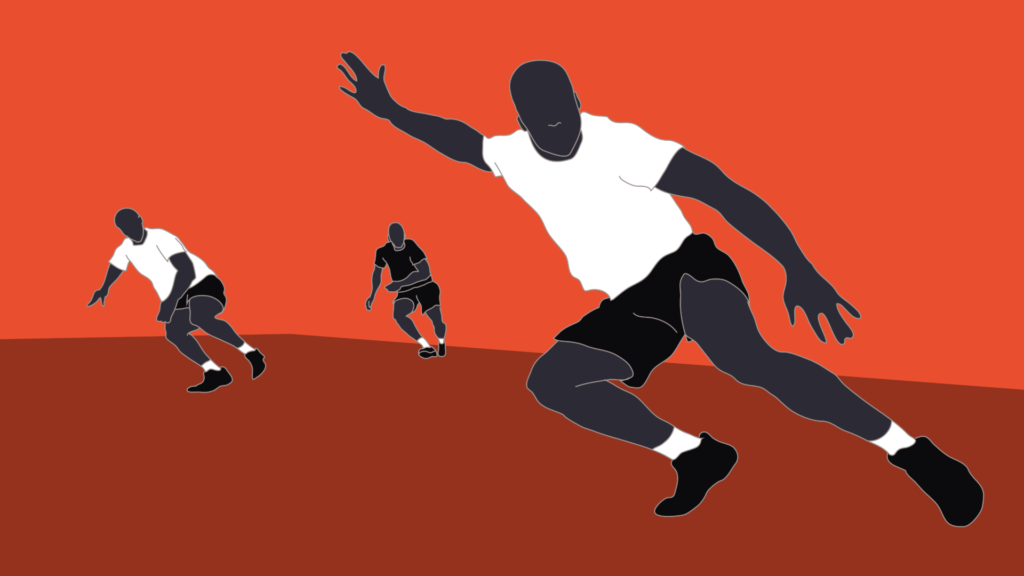
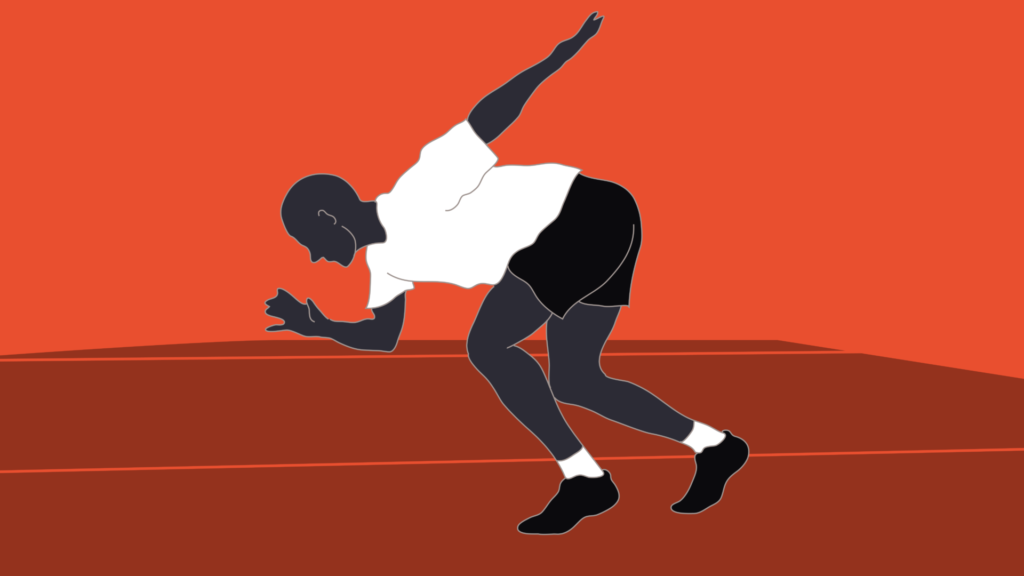
Consider the foundational principles behind shapes, positions, and force transmission patterns associated with acceleration and high-speed running. Some debate whether it’s necessary to refine an athlete’s form for acceleration and high-speed running in their sport-specific context. I, however, lean towards prioritizing biomechanical efficiency and player safety. My aim is to protect athletes by guiding them towards positions that research indicates contribute to both high performance and longevity.
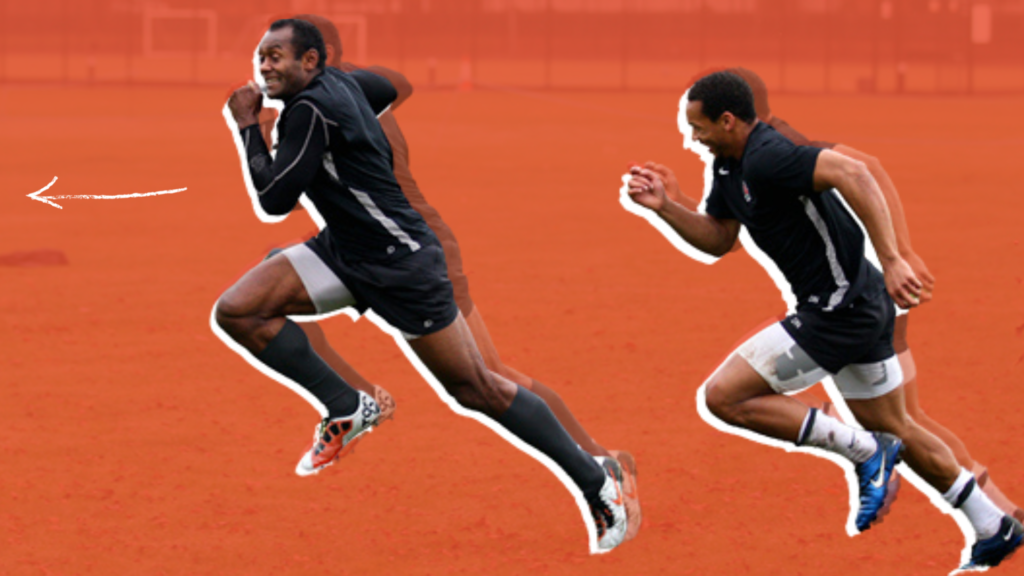
Of course, I acknowledge that an American football player won’t sprint with the same technique or outputs as a track and field sprinter. Nevertheless, I can still incorporate concepts that overlap, such as horizontal force application, acceleration mechanics, and maintaining proper body positions. It’s crucial to convey to players that these are concepts, not rigid positions, and their own physical attributes and abilities will influence their movement authenticity.
Structural differences and current abilities also play a role. Some players might lack the necessary hip flexor strength or core stability to maintain specific positions. Progress may be gradual, helping them improve over time. As Charlie Francis used to say, if it looks right, it probably works well. Intuitively, a visually correct movement often translates to effective performance.

When translating track and field insights to team sports like soccer or football, acknowledging the context is crucial. The demands of controlling a ball with your feet can impact sprint mechanics. Integrating these concepts while understanding the constraints of the sport is essential. It’s not just about mechanics but also how they intersect with different contexts – when players are off the ball, for example, or dealing with reactive situations.
In essence, I advocate for a holistic approach that considers the entirety of the sport. While sprint mechanics are important, they must harmonize with the specific context. My perspective is that we can derive valuable concepts from track and field and adapt them intelligently while respecting the unique demands of team sports.
Tweet ThisWe shouldn’t aim to duplicate an entire discipline, but rather extract valuable principles from it. This is especially relevant when looking at track and field in relation to team sports
@CoachJosse
Why does the middle ground of speed often receive negative criticism?
I believe that the criticism stems from a potential overemphasis on maximal speed-focused training. If we fixate solely on maximal sprinting and similar activities, we might inadvertently overlook the crucial middle ground where athletes frequently operate. ALTIS’ concept of five distinct speed zones is intriguing in this regard. It highlights the necessity of exposing athletes to various intensity levels, each of which holds value within their performance spectrum. This variety becomes especially relevant in sports like American football, where even seemingly non-intensive situations like standing for hours during summer practice can be stress-inducing due to gravitational load and prolonged duration.
To truly understand the relationship between speed and these other stressors, we need to adopt a holistic perspective. I’m a strong advocate for creating an experiential journey for athletes. This involves exposing them to different intensities, allowing them to comprehend and remember how each feels. While the logic behind a high-low approach that avoids the middle ground makes sense – improving aerobic capacity while shying away from entering a lactic state – I believe that experiencing the latter is equally valuable. After all, the sensation of entering a lactic state is inevitable at some point.
Consider American football, which is evolving towards greater speed and offensive aggression. As a defensive player, encountering moments when your legs feel heavy due to rapid offensive play becomes inevitable. Without prior exposure to this feeling, the psychological and physical response could be overwhelming. This underscores the importance of preparing athletes for diverse experiences.
For me, the player experience takes precedence. During my time in the private sector, working closely with NFL and other professional league players, I gained valuable insights into their realities. This knowledge has greatly shaped my approach to programming. While staying informed through scientific literature is essential, it’s equally vital to integrate this knowledge with an understanding of the player’s journey. Empathy plays a significant role in tailoring training to suit individual athletes.
Being overly tethered to scientific texts can inadvertently neglect the player experience. By delving into their challenges, we can enhance our programming’s effectiveness. After all, the player’s journey within a professional sporting environment serves as a guiding compass. This approach may not always align perfectly with established scientific theories, but it strikes a balance that respects both empirical knowledge and the unique demands of the player’s world.
How can we minimize verbal communication while achieving desired outcomes with our athletes?
The tendency to over-communicate cues can often be counterproductive. When cues are incessantly repeated, athletes might begin to tune out, causing the message to lose its impact. This highlights the importance of striking a balance between providing guidance and avoiding overwhelming micromanagement.
An effective development strategy involves guiding athletes rather than dictating their every move. The danger of excessive cueing lies in its potential to shift into a controlling, overbearing approach. It’s notable that research is emerging to emphasize the downsides of over-queuing. While immediate results might be achieved, it risks hindering athletes’ long-term growth. This is where concepts proposed by figures like Les Spellman can come into play – the idea of allowing athletes to explore, learn, and internalize concepts more gradually.
To illustrate, imagine the process of teaching someone to ride a bike. Initially, a parent may provide support, holding the bike steady. Over time, the training wheels come off, and the learner gains confidence until they’re eventually riding independently. Similarly, the goal is to create a learning environment that fosters self-discovery while offering subtle guidance.
I learned a significant lesson about this from a past experience with an athlete preparing for an NFL pro day. By excessively micromanaging his training, I inadvertently led him to depend solely on my cues. When the actual day arrived and I wasn’t present, his performance suffered. This overreliance demonstrated the potential pitfalls of an overly cued approach.
To overcome this, creativity becomes key. The challenge lies in conveying principles without bombarding athletes with cues. It’s about finding ways to direct their movements without overwhelming them. One technique I developed, out of necessity, was the “med ball knee punch run.” To teach proper front side mechanics, I used a med ball placed by their belly button. I asked them to make contact between their thigh and the ball while running. This created an experiential connection that helped athletes grasp the concept without drowning in verbal instructions.
An essential aspect of this approach is acknowledging athletes’ mental loads. With the demands of their sport and its technicalities, overloading them with cues can be counterproductive. Instead, the focus should be on providing cues that are simple yet impactful. This approach aligns with Buddy Morris’ philosophy of giving athletes tasks that can’t be easily mishandled.
In essence, the art lies in subtly guiding athletes toward optimal movement patterns and self-discovery while allowing room for them to own their learning experiences. This not only fosters better movement but also builds athletes’ confidence and understanding of their bodies.
Tweet ThisThe danger of excessive cueing lies in its potential to shift into a controlling, overbearing approach… the goal is to create a learning environment that fosters self-discovery while offering subtle guidance
@CoachJosse
How can coaches maximize the impact of their words when communicating with athletes?
Drawing inspiration from experts like those at ALTIS, Stu McMillan, and Dan Pfaff, I’ve found that using what they refer to as “motoric words” can greatly enhance communication. These cues might not even be traditional words – they could be sounds like “ba” or “pop.” This technique provides a concise and direct way to convey specific movements or actions to athletes.
Consider a scenario where I’m coaching high-speed running drills. To emphasize front side lift and rapid ground contact, I might use a cue like “pop.” This encourages athletes to swiftly lift off the ground, mirroring the explosive quality of a pop. For acceleration, a cue like “punch” could be effective, given its association with a quick, forceful action. It’s crucial to choose cues that encapsulate the desired movement pattern and intensity.
Visual cues also prove valuable. For example, when encouraging optimal ground contact during acceleration, I might tell athletes to envision the ground as if it’s on fire – a metaphor for quick, decisive contact. Similarly, for front side lift, I could describe a gradual ascent up a set of stairs, mirroring the knee lift and forward motion required in high-speed running.
In instances requiring explosive effort, using sound effects can work wonders. Instead of merely instructing an athlete to throw a medicine ball harder, I might encourage them with a “Give it a boom!” sound effect, emphasizing forceful action.
Having firsthand experience with these movements is vital. Personally trying these exercises helps me understand the sensations and challenges involved, making my cues more accurate and effective. This experiential knowledge enables me to convey instructions with precision.
Tailoring cues to the individual athlete’s learning style is essential. Some athletes excel at grasping limb movements in space, while others respond better to cues related to force application into the ground. This personalized approach enhances the athlete’s understanding and execution.
I’ve learned that less is often more when it comes to cueing. Focusing on one highly effective cue can yield better results than inundating athletes with excessive information. Finding the right cue can be an evolving process, requiring patience and experimentation. It’s a constant balance of refining cues based on feedback and athlete responses.
In essence, effective communication hinges on finding cues that resonate with athletes, whether they’re verbal, auditory, or visual. It’s about conveying precise instructions that trigger the desired movements, leading to improved performance and a deeper connection between coach and athlete.
Tweet ThisDrawing inspiration from experts… using what they refer to as ‘motoric words’ can greatly enhance communication. These cues might not even be traditional words – they could be sounds like ‘ba’ or ‘pop’
@CoachJosse
How do you train sprinting when many team sports involve sprints that aren’t started from a stationary position?
A drill that I find highly effective for honing running technique across various speeds is the build-up run. It’s a personal favourite of mine. A slight variation on this involves transitioning from a drop-in start to gradually building up speed. In this drill, I encourage athletes to begin with a slight lower angle and then transition into an upright position as they pick up speed. This helps them practice maintaining mechanics while accelerating.
Another variation I recommend for teaching upright mechanics is what I call a “high knee buildup.” Athletes start with a high knee run in place for the initial few meters or yards, after which they seamlessly transition into a run, maintaining their upright posture and front side lift position. The focus here is on sustaining the upright posture while gradually accelerating. Despite the perception that acceleration becomes limited once upright, there’s still a window for efficient acceleration, possibly up to 20 meters or even more if proper horizontal force application is maintained.
For incorporating sprint experiences relevant to team sports, sprint float sprint drills are valuable. This drill involves an initial 20-meter acceleration, followed by a 20-meter segment of maintaining speed, and then another 20-meter acceleration. The key challenge is to ensure that during the second acceleration phase, athletes don’t alter their body lean or hip position. Instead, they maintain their upright posture and focus on seamless acceleration.
While it’s true that optimal acceleration patterns can stem from a lower start position, the reality of team sports doesn’t always provide such opportunities. To address this limitation, coaches need to diversify their movement toolbox. These drills simulate scenarios where athletes transition from various movement patterns to acceleration, mirroring the demands of team sports. This approach not only cultivates sprinting skills but also equips athletes with the versatility needed for unpredictable game situations.
Do you incorporate jump or non-sprint based profiling to guide your speed training strategies?
We have delved into jump profiling in the past, and it’s true that we’re still in the process of refining how we implement this, particularly with larger groups, to enhance its validity and practicality. As part of my PhD work, when we collaborate with JB on our testing protocols, it offers an opportune time to tap into his expertise. JB is renowned for his expertise in sprint profiling, but he’s also extensively published on jump profiles and various other profiling metrics. So, these aspects are certainly on our radar. We’re keen on understanding the best approach for our context.
From my perspective, the specificity of measurement matters. Understanding an athlete’s horizontal vector or profile necessitates measuring their horizontal performance. While I appreciate attempts to establish correlations between vertical and horizontal metrics, I hold the view that to enhance horizontal performance, measuring it directly is crucial. Likewise, if vertical improvement is the goal, direct vertical measurement is essential.
While we’re still seeking the gold standard for our profiling practices, we’ve explored diverse measurement methods. These include assessing takeoff velocity through force plates and utilizing jump mats for measurements. However, we’re in the process of discerning what will become our definitive approach and deciphering the meaningful insights we gain from these measurements. The crucial question is not just what we measure, but whether the data we gather proves genuinely valuable. If it doesn’t offer actionable insights, then the question arises: is it worth the effort? These considerations guide our ongoing efforts in this area.
Tweet ThisWhile it’s true that optimal acceleration patterns can stem from a lower start position, the reality of team sports doesn’t always provide such opportunities. To address this limitation, coaches need to diversify their movement toolbox
@CoachJosse