Groin injuries and groin pain are pretty common in many team sports but especially in ice hockey due to the mechanics of skating. So what can those who aren’t working in hockey learn from those that are? We spoke to Lassi Laakso, Head of Strength & Conditioning at Hockey Club Lugano in Switzerland who answered six questions on this topic.
Groin injuries and athletic groin pain are a big concern in ice hockey. What screening are you doing with your athletes to understand who is most at risk?
When skating forward, elite skaters display a greater range of motion in hip abduction and hip extension as well as greater lower body rate of force development, resulting in greater hip angular velocity. This results from a lower skating position, i.e., greater ankle dorsiflexion, and greater lower body maximal strength levels.
The different situations that players face on ice repeatedly place high demands on the hip adductors. However, it’s challenging to identify a screening that combines the risk factors of the injury mechanisms and their interaction.
On day one of preseason, we assess mobility and hip strength. Our mobility screening battery includes ankle dorsiflexion, the Thomas test, supine lying hip abduction, and Craig’s test for femoral anteroversion / retroversion. These are pass or fail, except for ankle dorsiflexion, where we measure the angle and the asymmetry. With these tests, plus the injury history that our medical staff collects, our primary goal is to assess the players’ capacity to get into good skating positions.
For our hip strength assessment, players perform two 4-second isometric contractions of hip adduction and abduction in a supine position with hip flexion of 60 degrees. Using peak force values, we look at their strength relative to body mass, asymmetries, and strength ratio between adduction and abduction. We also collect a 0-10 subjective pain rating for hip adduction.
Hip adductor strength is an important factor in mitigating the risk of adductor strains, and bilateral strength testing at 0 degrees of hip abduction gives us useful information. However, recent research by Secomb et al. suggests that measuring adductor strength unilaterally and in abduction angles associated with skating positions could provide valuable information for injury prevention.
Tweet ThisThe primary aim of our screening, plus the injury history that our medical staff collects, is to assess the players’ capacity to get into good skating positions
@Lassi_Laakso
What interventions do you put in place to mitigate the risks you identify in each player?
Generally, our goal is to consistently implement injury mitigation strategies with the whole team. Players also receive an individual needs programme based on their screening results.
The content of the programme depends on the time of the season. Ideally, the player joins us at the start of the off season training phase. Then, without the demands of a dense competition schedule, we can have a more aggressive approach targeting the specific need. During the season, we use more of a microdosing strategy with frequent exposure to various exercises. The goal is to be consistent to avoid excessive soreness at any point.
Overall, at any time, the individualised intervention depends on the group programme in that phase.
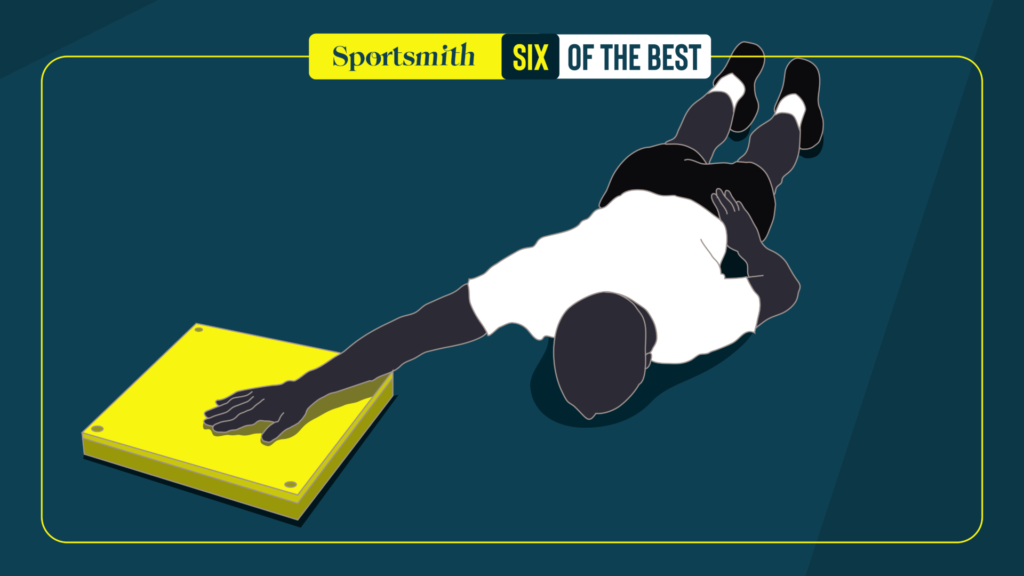
For example, in the case of adductor strength, we implement a high volume strategy for the whole team in the off season, when players train mostly off ice and typically skate twice per week for individual skills focussed sessions. For example, there’s the Copenhagen adduction exercise in Table 1. Players who need to focus on adductor strength might need to progress through different levers with the Copenhagen adduction exercise. They might also have additional sets of exercises, such as standing band resisted adductions or cable resisted concentric and eccentric cable walks, or more aggressive exercises like deficit lateral lunges.
| Week | Sessions x sets x reps | Total reps |
| 1 | 2x2x6 | 24 |
| 2 | 2x2x8 | 32 |
| 3 | 2x2x10 | 40 |
| 4 | 2x3x10 | 60 |
| 5 | 2x3x12 | 72 |
| 6 | 2x3x12 | 72 |
| 7 | 2x3x15 | 90 |
| 8 | 2x3x15 | 90 |
| 9 | 2x3x15 | 90 |
When considering risk factors, asymmetries can be tricky. The main question is: should we try to decrease the asymmetry?
If an experienced elite athlete has adapted to an asymmetry – which might be functional for the sport – and doesn’t show signs of issues linked to the asymmetry, the risk to trigger new problems by addressing the asymmetry is possibly greater than any advantage resulting from a lower asymmetry. This might be particularly the case with differences in mobility and muscle mass. In the specific case of adductor strength, as a general rule, we still aim to have asymmetries below 8-10%.
What part does eccentric training have in your “prevention” programmes?
Robust athletes have a greater ability to sustain high chronic loads of intense training. Therefore, our training programme aims to expose players to a variety of intensive physical stimuli year round. We use eccentric based training all year, with a focus both on performance and on injury prevention. Eccentric based training emphasizes the eccentric phase of a movement, but is not necessarily eccentric only.
Eccentric based training is commonly seen as one type of training, which might also be the reason that some coaches find it difficult to integrate in their training programmes. I divide eccentric based training into four quadrants based on load and velocity: above or below concentric 1RM vs. normal movement velocity or extended duration of the eccentric phase. Each quadrant results in specific neuromuscular adaptations. With low load / high velocity movements, range of motion is an extra variable to accentuate eccentric loading in positions that exceed the range of motion of a skating stride.
Programming eccentric based training depends a lot on the competition phase. In the off season, we can afford higher volumes and the resulting soreness. This is also where we introduce the exercises that will be used in season.
In season, we use a microdosing approach with weekly exposure to exercises like the Copenhagen as well as exercises that mimic and exceed phases or positions of the skating stride with an eccentric emphasis in both the sagittal and frontal plane.
What exercises do you include to focus on this particular area and how do they fit in to your wider S&C programme?
Players skate much less during the off season than in season, reducing the load on the musculature around the hip. With a typical off season training phase lasting 7-13 weeks, strength training is a key target. In the gym, we build adductor strength with compound exercises such as the back squat, the Bulgarian split squat, and the lateral squat, and with targeted exercises such as the Copenhagen adduction exercise, band resisted hip adductions, and isometric medicine ball squeezes.
The skating stride requires high force production at high eccentric velocity from hip flexors and adductors. Maximal hip abduction and extension occur after toe off, at high angular velocity. Therefore, we use jumps and sprints in combination with the above exercises to incorporate the high force – high velocity eccentric-concentric coupling that mimics the demands of skating. With access to ice during the off season, we work on linear speed and change of direction speed each week. On top of that, we still perform off ice sessions with a focus on acceleration and change of direction speed to increase work capacity around the hip. Inspired by speed skating, we also do band resisted exercises such as crossover walks with a focus on local work capacity.
Consistency is key during preseason and in season. The volume of strength training is significantly reduced in season compared to the off season, and exercise selection complements the training on the ice. The goal is to include weekly exercises that combine strength and mobility. Given our competition schedule, these sessions are often on GD-1, highlighting the importance of consistency in the training programme.
Tweet ThisWhen considering risk factors, asymmetries can be tricky. The main question is: should we try to decrease the asymmetry?
@Lassi_Laakso
Do you monitor adduction strength on a regular basis? If so, what benchmarks do you have in place that would trigger an intervention?
We monitor hip adduction and abduction strength weekly, as part of our Monday morning pre-practice routine, following a day off.
Players perform two 4-second isometric contractions and give us a subjective 0-10 pain rating. This is in the same position as our preseason screening, and we monitor the same results but focus mainly on changes in adduction strength and in adduction strength asymmetry.
Relative adductor strength is the first result that we analyse. In a study with players of the Swiss National League, Oliveras et al. found a relative adductor strength of 5.4 N/kg in a similar test position and protocol. Maybe because of our players’ greater familiarity with the test, we now consider over 6 N/kg a green flag, between 5-6 N/kg a yellow flag and below 5 N/kg a red flag.
Hip adductor:abductor strength ratio is an indicator of adductor injury risk, with a 1.02-1.05 ratio for healthy players. A ratio below 0.8 has been associated with 17 times greater risk of adductor muscle strains. Our interpretation of the ratio will depend on the relative adduction strength value, but healthy players typically have values between 1-1.2.
On a weekly basis, we monitor the change in percentage of relative adductor and abductor strength and the change in adductor and abductor strength asymmetry. Australian football players have a 6% decrease in adductor strength the week prior to the onset of groin pain and 12% decrease the week of pain onset (Crow et al.). In general, a 5% decrease from a five week running average triggers a deeper look. An increase in reported pain will also automatically generate a discussion with the player and the medical staff.
We also monitor the countermovement jump on the same day, and interpret the neuromuscular status of the players based on both tests. A slower but steady decrease in adductor strength over more than three weeks will also trigger an intervention.
Tweet ThisHip adductor:abductor strength ratio is an indicator of adductor injury risk, with a 1.02-1.05 ratio for healthy players. A ratio below 0.8 has been associated with 17 times greater risk of adductor muscle strains
@Lassi_Laakso
What are the biggest mistakes you see young practitioners/clinicians make, and what advice would you give them to help?
People like to have answers before they really ask questions. This might be most apparent when practitioners feel they need to show their knowledge or prove their worth in a professional context. This does not mean that they are automatically wrong, but I feel that, in the long term, having the intellectual honesty to acknowledge what we don’t know will lead to better knowledge and decisions.
For example, I believe that athlete testing should eventually lead to applicable interventions. However, especially when dealing with a new problem or a new context, it’s important to use a scientific approach and keep investigating.
In the context of groin injuries, this could mean that you start with evidence based protocols or use normative data to interpret the results of your hip strength tests. At the same time, you keep looking to improve.
Do you get better athlete buy in with a given test position or a given test frequency, and does this improve the reliability of your data? Or can you find tests that are linked to both athletic performance and injury prevention? In ice hockey, this could mean identifying hip adductor and abductor strength thresholds by age group or playing level, how these strength levels correlate to adductor injuries or skating sprint performance, etc. During this process you might not change your testing and monitoring protocols and you might end up where you started, but with an increased confidence in your practice.
Coaches should be careful when categorising themselves as a “(insert specialisation)” coach. I understand that people need to differentiate themselves in a competitive job market, but coaches need to have a wide skillset to be adaptable in their role, and you don’t want to limit the athletes’ development to your personal preferences of training methods. Use what works and have tools and strategies for different situations.