In-Season strength and power development in the NFL
Ben Peterson and Dustin Perry
The fundamental challenge for strength & conditioning coaches is ensuring that each player gets the training he needs on any given day to be in the optimal condition on game day. For performance teams in American football, that challenge encompasses over 75 players, the lightest of whom weighs about 50% of the heaviest, with the technical demands ranging from dozens of high-impact plays on the line of scrimmage to punting 2-6 times per game. Add to that the dimension of time, with the programming year starting with optional workouts in the summer and extending through a 17-game regular season and playoffs.

Conversation starters:
1. Specificity
Biodynamics are the forces, velocities, joint angles and muscles involved in a movement or sport as a whole. Examine the sport’s movements isolation to understand the stances, starts and exit points; the physical demands like speed and decelerations; the nature of the sport (chaotic vs. structured, reactive vs. pre-planned); and ask how the S&C work can incorporate the sport’s tactics and techniques.
The sport’s rhythms and patterns determine the bioenergetics of the sport: how much for how many for how long for how often. The average play in American football is 6 seconds followed by 30 seconds of rest, with about 11 minutes between consecutive offensive or defensive sequences. As S&C training approaches the season, the rhythm of training will approach these work-to-rest ratios.
Accelerating and deceleration are the most common shared physical qualities across all positions in football. These attributes, then, are the biomotor basis of the S&C plan for the team, which filters down to the program for each individual.
2. Overload
If training is strategic overload, these three parameters define the strategy:
– Minimum effective volume: What is the least amount of work the athlete needs to do and still improve?
– Maximum adaptive volume: What amount of training over any given duration yields the greatest adaptation for that time?
– Maximum recoverable volume: What is the most training an athlete can do in a given time and still be able to recover effectively for his next training session or competitive event?
3. Fatigue management
The high-low method of training alternates days above 95% with days below 75% of max intensity (whether that is maximum speed, acceleration, load or any other variable). Football primarily lives in these extreme zones, so training in the middle ground places enough of a demand on the athlete to affect stress and recovery while not being specific enough to optimize them for the sport. The high-low method also enables a 4- or 5-day training week that can cover an entire team.
4. Stimulus + Recovery = Adaptation
You have to recover to improve, so coaches have to program recovery just as diligently as they program the stimuli in order to achieve the adaptation. One way to think about this is the relative amounts of motor unit recruitment, from technical skills (low) through isolated lifts (more), force-based exercises (even more) and tendon and ligament work, which requires the highest neural drive.
5. Variation
The seasonal rhythms of a sport can be a useful schedule for variations. Off-season and preseason workouts are ideal for high variation programs, both to prevent injury and keep the players engaged. As the season approaches, field work will account for more variation while also bringing the athlete closer to game demands. This will cue the S&C coaches to make their programs less variable and more specific.
6. Phase potentiation
How does the current block prepare the athlete for the next block, and the block after that? How does it it prepare the athlete for the games in those blocks? Phase potentiation is linked to the concept of vertical integration. The athlete works all aspects in each block to ensure they don’t have abrupt changes in load and so they always have a baseline level of competency in all.
7. Individual differences
Identify the archetypal movement patterns that every player on your team and in your sport has to perform. Then build out multi-planar variations on those movements. This provides each athlete a menu of options to choose from based on the demands of their position and their condition on any given day (e.g., fatigued with low neural drive, well-rested and highly motivated). Start each training session with “availability circuits” that apply to all, and then allot each player space and options to individualize their session.
Acute:Chronic Load – Where are we now?
Franco Impellizzeri
Over the past, roughly, 5 years, the acute:chronic workload ratio (ACWR) has gained enormous popularity as a tool to measure and manage training load, with the ability to predict which athletes will or will not suffer injury proposed. The acute workload refers to the training undertaken by an athlete in the past microcycle (typically 1 week), with the chronic workload typically representing training performed in the previous 4 weeks. When the acute workload is high, relative to the chronic workload, athletes are proposed to be at greater risk of injury. Conversely when the chronic workload is high, representing a high level of physical preparedness, relative to the acute workload, the athlete is proposed to be at a lower risk of injury. More recent studies have examined the ACWR in greater detail and are questioning these findings.
Conversation starters:
1. Have appropriate scientific methods been applied?
For a predictive tool to be verified, there are a number of research process steps that should be completed. The first stage involves exploratory prognostic studies: describing what happened and looking for an association between a prognostic factor and the outcome of interest. The second step involves confirmatory prognostic studies: confirming causal relationships and externally validating the model with a new population. Once these two steps have been completed, intervention studies can be conducted testing the predictive model. In ACWR research, steps in the scientific research process have been missed, jumping directly from association studies to making predictions and recommending prediction rules.
2. Association is not prediction, and neither is causation
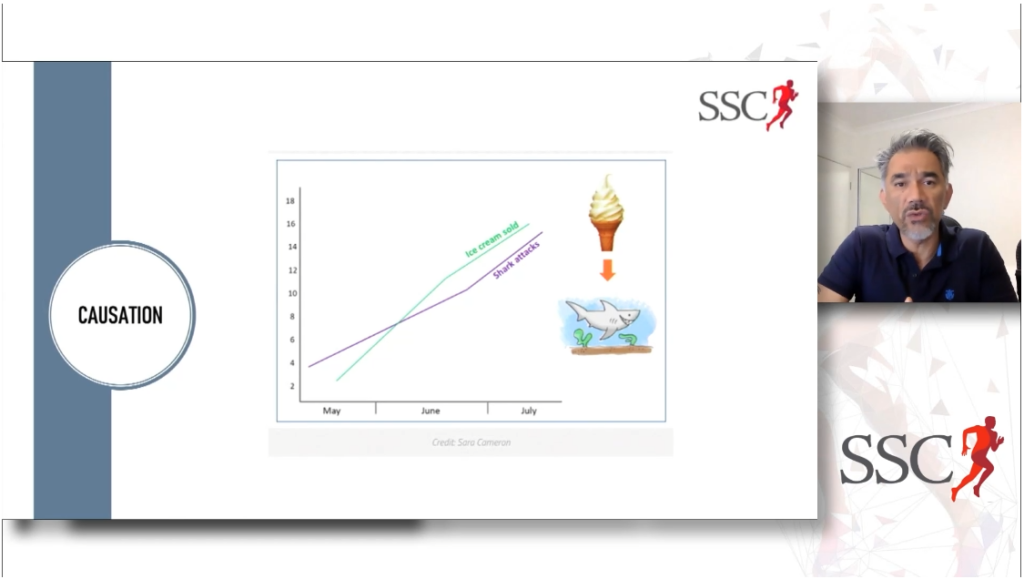
A few early studies published on the topic of the ACWR have pointed out that association is not prediction. What none of the published studies identify is that causation is not prediction. In summer, the number of ice cream sales increase as the number of shark attacks increases. No one would think that ice cream sales cause shark attacks. Rather, there is a confounding variable, seasonality, which determines both the original variables. It is only through knowledge of this confounding variable that we know there is a common cause. In soccer, for example, it has been shown that training schedule is a confounding variable for the relationship between the ACWR and injury. Sometimes we may be ignorant of confounding variables that exist.
3. Bias
A further issue with the ACWR may be the impact of bias. More research studies should employ the registered reports format, whereby authors submit their research protocol prior to conducting the studies so that methodological issues in the design can be addressed earlier. When authors have complete freedom to choose which data variables they consider for analysis, they can fish for interesting or significant findings. There are different ways of applying the ACWR and depending on the method the author chooses to apply they can find a result of interest. For example, in studying the ACWR in dancers, when group data is aggregated, increasing workload is associated with an increase in injury incidence. However, when each subjects training load data is considered individually the opposite trend is found. Leading sports scientists are now recommending against using the ACWR, cautioning practitioners to read all the papers on the topic and attempt to understand the methodological and statistical issues associated with this metric.
Recommended reading:
- Training schedule confounds the relationship between acute: chronic workload ratio and injury
- Modeling training loads and injuries: the dangers of discretization
- What role do chronic workloads play in the acute to chronic workload ratio? Time to dismiss ACWR and its underlying theory
- Injury, illness, and training load in a professional contemporary dance company: a prospective study
- Distinguishing between causal and non-causal associations: implications for sports medicine clinicians
Assessment and development of acceleration after tendon injury
James Wild
An athlete’s whole-body acceleration strategy can give performance practitioners an indication of what “avoidable” injuries they are most susceptible to, allowing the performance team to proactively address those risks before an injury or build a corrective rehabilitation program post-injury.
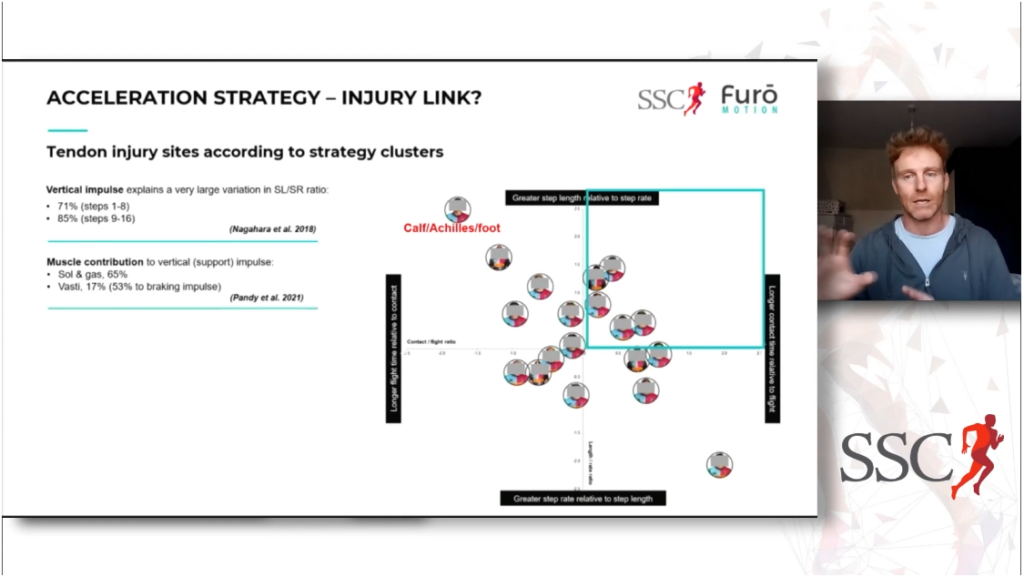
Four variables are sufficient to give coaches a single-measure for understanding how an athlete organizes her movement to accelerate. Stride length, stride rate, contact time and flight time meet three key criteria: they can be obtained promptly; they represent movement outcomes that can be altered via interventions on an underlying technical feature; and they can be reliably obtained for individuals across multiple trials. By plotting the ratio of stride length to stride rate (SL:SR) against the ratio of contact time to flight time (CF:FT) across multiple sessions, coaches can see each athlete’s acceleration “fingerprint”: a stable and unique whole-body movement strategy.
Conversation starters:
1. Tendon injury sites track with strategy clusters
The soleus and the gastrocnemius are the largest contributors to vertical impulse, which largely determines the SL:SR ratio. Athletes with a high SL:SR and low CT:FT ratio have a higher risk of Achilles, calf and foot tendon issues due to the large amounts of elastic energy they are storing and releasing through the Achilles with each step.
As the CT:FT ratio increases, the athlete does not rely as much on elastic storage and return, mitigating the risk to the tendons in or near the foot. However, athletes with high SL:SR and CT:FT ratios place higher deceleration forces on the vasti muscle group. They use their posterior hip and thigh muscles to “pull” themselves through the stance phase, and the shorter flight times are associated with greater knee extension and angular velocity in late swing phase.
Athletes on the lower side of both ratios have more hip-based issues. The higher relative step rate requires greater force production in the anterior hip muscles to decelerate hip extension and prepare the leg for the next drive phase. Athletes with low SL:SR and CT:FT will have some tendon risks as well, given the prolonged time spent in the air and greater elastic return upon landing.
2. Rehabbing after “unavoidable” injuries
Unavoidable injuries are the result of high energy trauma. When reintroducing acceleration work during rehab, practitioners should guide athletes toward a higher step rate than their natural pre-injury step rate. Athletes can lower their stride rate by reducing their range of motion and contact time. The short contact time will help stiffen the Achilles tendon, and the reduced hip ROM will reduce some of the elastic strain on hip tendons. Because this is not maximal sprinting, the athlete will not generate higher forces at the hip, keeping this approach within the boundaries of rehab.
Over time, the athlete will naturally return to their natural, pre-injury strategy unless the practitioner intervenes.
3. Rehabbing to avoid another “avoidable” injury
Avoidable injuries result from chronic causes, including movement patterns such as those in accelerations. Rehab should begin with increasing the stride rate above pre-injury levels, as with the unavoidable injuries. From there, though, practitioners should adapt the athlete’s movement strategy to shift the stresses involved in acceleration.
Practitioners should do exploratory work with the athlete to help them figure out the best way to conceptualize the new movements: what cues will work best, what intentions should they set, how will they recognize progress towards the new strategy.
Over time, coaches can track the changes in the athlete’s movement strategy via the SL:SR vs. CT:FT graph. The “90% ellipse” that covers the athlete’s predominant movement expressions pre- and post-injury should provide visual, quantitative evidence that the athlete has not only learned but self-organized a new – hopefully healthier – way to accelerate.
Load monitoring and management in the NFL
Jo Clubb
Think of a sport that you know very little about. Now imagine your first day on the job in that sport. Most practitioners will never find themselves in that position. But that kind of thought experiment can help us set the context of the familiar sports we work with everyday, in order to build programs with a more practical, empirical and relevant basis.
Zooming in and out between the big picture and intimate detail is a vital skill for building a load monitoring and management program in any sport. This means being equally comfortable with the rhythms of a team’s annual calendar as with the expected chronic loads and range of extreme possibilities the sport may present to an individual player.
Conversation starters:
1. Quantifying and tracking positional demands
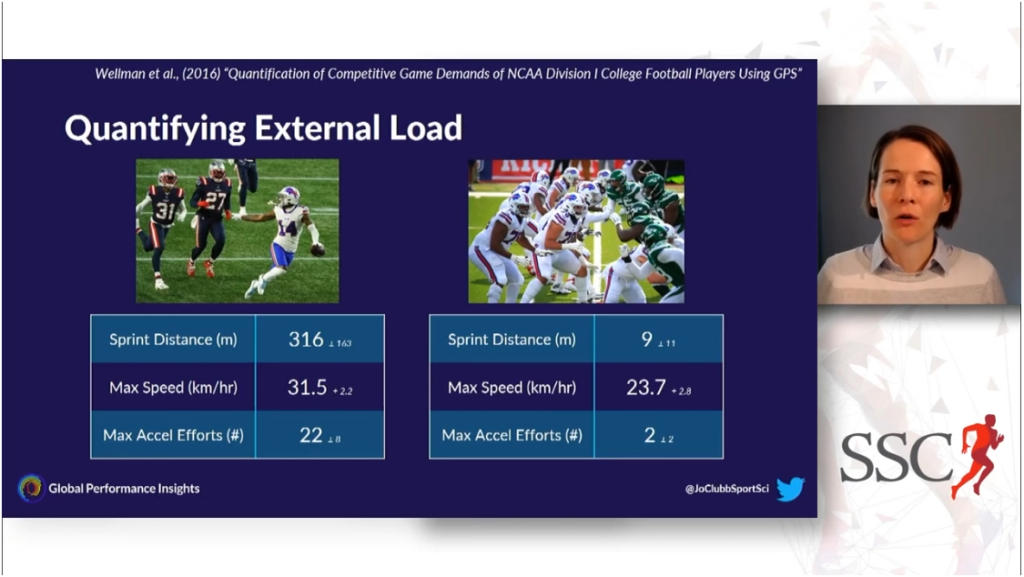
American football is a sport of extremes. Over the course of a year, there will long periods where the sports performance staff has no visibility on player activity. The players have a variation in body composition, technical skills, tactical demands and – as a result – physical and kinetic parameters that few others sports come close to having. Even after you divide the team into position groups, players in those groups may be closer in body comp or physical output to a teammate in a different position. Making our job even harder, we can not obtain during games most of the metrics we track in training.
How applicable are the traditional time-motion analysis metrics, and what value do they provide in assessing and comparing players? Are we choosing metrics relevant to the player and position, or simply those that are available to us?
Measures of external load go beyond time-motion. The main role of a quarterback in American football is to throw the ball. Is the number of throws a useful measure of external load for a quarterback, then, as it is for a pitcher in baseball? How does injury epidemiology affect our assessment of what matters?
2. Preparing for edge cases
At the simplest level, American football is about the offense having four opportunities to move the ball at least 10 yards downfield. If they are successful, they get another four opportunities to move the ball another 10 yards (or more) downfield, all with the hope of scoring a touchdown or field goal.
Within that context of trying to achieve a minimum of 10 yards over four plays, the offense will obviously try to do much more. Just because you have to cover two yards on the next play doesn’t mean you won’t attempt to cover 40 yards to score. Players on both sides of the ball have to be ready for “a game of inches” with high-impact running through the line of scrimmage and the 80-yard pass play.
And then there are special teams. An attempt by the offense to score a record-setting 68-yard field goal kick resulted in a player on defense running the ball 109 yards for a touchdown. How were any of the players prepared for two situations so outside the norm that ended up converging on the same play?
3. Creating load monitoring systems
Now zoom out, all the way out, beyond any one sport and into the full breadth of sport science. Load monitoring still comes down to load, load capacity and response. One thing we should be able to see already is that transplant systems don’t work. Sports are too different, and even within the same sport the cultures, traditions and individuals that make up a team or league will also influence the load monitoring inputs. For whatever environment we are in, we need to uncover what is useful to our key stakeholders and then apply research, practice and our own experience to develop a useful, practical and achievable load monitoring program.
Loading and nutrition to minimize injury and accelerate RTP
Keith Baar
Anyone who has engaged in regular training for sport themselves, or through coaching athletes, will know that avoiding all injuries is not a realistic aim. Meta-analysis of the available research (Lauersen et al 2014) demonstrates that heavy strength training is by far the most successful intervention in preventing sports injuries. The once universally applied R.I.C.E. approach to managing injuries has been called into question in recent years with new movement focused rehabilitation proposed and promising nutritional interventions identified. In elite sport, where a balance must be struck between the health of the athlete and the demands of the team and the competition calendar, returning players to the field as quickly as (is safely) possible, requires staying abreast of the latest rehabilitation and nutritional interventions.
Conversation starters:
1. Early loading is superior
Historically, common injury management protocols began with a period of rest or immobilization to protect the affected limb. More recent research highlights that many injuries respond better to early loading. In elite sport, player availability is hugely important and safely minimizing time loss due to injuries is invaluable. Subjects who were exposed to load 2 days after injury, as opposed to when loading was delayed by one week, had their rehabilitation times significantly reduced.
2. Don’t be a jerk!
As part of this strategy to return players to performance earlier after injury, the nature of the loading is important and not just the timing of load being applied. In the acute stage it is important to minimize jerk. But what is jerk? If rate of change of velocity is acceleration, then jerk is defined as the rate of change of acceleration. By following a protocol whereby the development of force is carefully controlled, an injured limb or muscle can be loaded early in the rehabilitation process. Begin by pressing the weight slowly, building up force over 3-5 seconds, hold the contraction isometrically for up to 30s and slowly lower the force over a further 3-5s.
3. Exercise duration and frequency
Research indicates that there is a threshold required to stimulate adaptation and recovery of acute muscle injuries. 15 minutes appears to be sufficient and extending the duration beyond this appear to confer no greater benefit. Repeated exposures throughout the day separated by 6 hours provides the optimal stimulus.
4. Nutritional interventions to augment recovery
It is commonly understood that protein is an important building block for repair of muscle tissue. However, in the presence of an acute muscle injury the type of protein is important. A protein source high in leucine, such as is found in dairy food sources, is required for the repair of the muscle cells themselves. However, whilst milk proteins are leucine rich, they are glycine poor. To aid the repair of the collagen comprising the connective tissue (which helps attach the muscle to the tendon) a gelatin supplement is also recommended.
Recommended reading:
- Early versus delayed rehabilitation after acute muscle injury
- The effectiveness of exercise interventions to prevent sports injuries: a systematic review and meta-analysis of randomised controlled trials
- Optimizing an intermittent stretch paradigm using ERK1/2 phosphorylation results in increased collagen synthesis in engineered ligaments
Load monitoring and management in elite football
Martin Buchheit
In the current climate of sports science there is an enormous wealth of technology and monitoring tools available to practitioners. However, just because there are a lot of tools available and many things we can measure, does not mean that every type of available measurement is of interest. More important than having an extensive list of everything you can possibly measure is having a framework to understand what tools and measures are important in your environment and what you are using them to assess. When it comes to measuring training load and player’s response to the load, we know each player will have an individual response and so it is important we track internal and external measures of load and responses to that load.
Conversation starters:
1. Barriers to tracking data and implementing technology
Practitioners can get caught up in worrying which brand or system is most reliable for a given metric. In 2021, most available GPS systems have a high level of reliability. What is of greater importance are the practical aspects of implementing technology and monitoring data. How quickly can you get the data to facilitate conversations with coaches and impact the training process? How much man power is required? How do you ensure buy-in from the coach? These considerations are likely of greater importance than the specific equipment.
2. If you could only have 3 metrics to monitor external load, what would they be?
Simple is often best. “Sexier” metrics may suffer in terms of reliability. A strong picture of the overall training load experienced by the athlete can be drawn from total distance covered as a gross overall metric of load, a high speed running measure, and utilizing mechanical work as a combined measure of accelerations and decelerations. These 3 variables, in addition to the heart rate also commonly available, would give a pretty comprehensive picture of training load.
3. Real world challenges
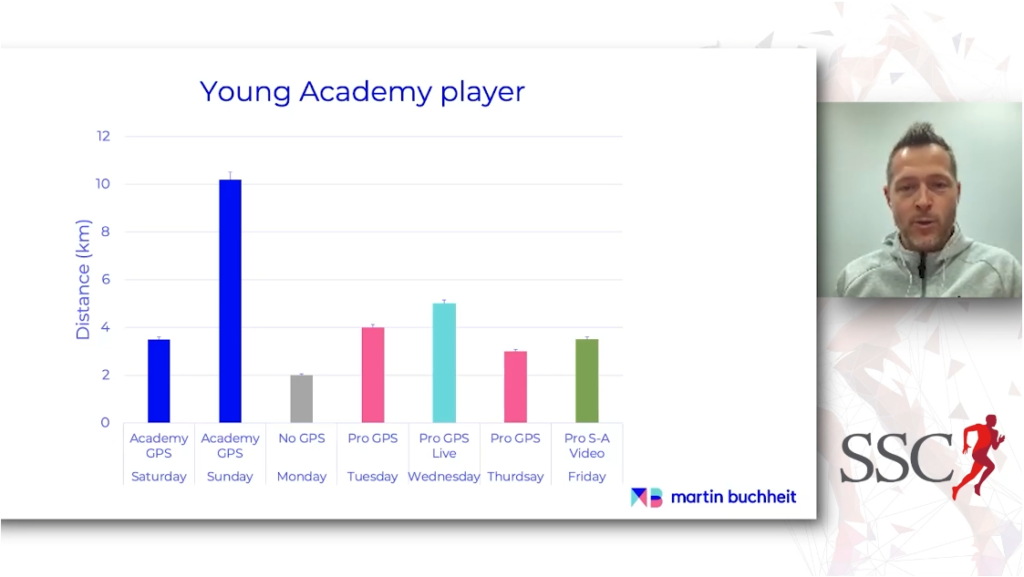
A common issue that is often not appropriately addressed in an applied setting is integrating multiple systems. Consider the example of a youth player appearing for multiple teams, who may be tracked by different systems throughout the week: GPS one day, a different GPS system the following day. A camera tracking system another day when playing with the pros. You cannot take data from one system and just mix with another. Yet in practice people do use such data interchangeably. Calibration equations to integrate multiple systems or extrapolate for missing data are required.
4. Simple techniques employed well can provide all you need for measuring training load and monitoring player response
HR monitors can be used as a systemic measure of load and cardiovascular intensity, but also for cardiopulmonary fitness and autonomic status. GPS accelerometers measure locomotor activity/work done, but can also be used in standardized test to measure neuromuscular status and running economy.
Questionnaires can be used as a global marker of intensity and a combined measure of load (through RPE) but also as a perception of overall health and fatigue (wellness monitoring).
Just 3 tools can provide a pretty comprehensive overview of the training load and to monitor player’s responses to that load.
Recommended reading:
- Player-tracking technology: half-full or half-empty glass?
- Using submaximal exercise heart rate for monitoring cardiorespiratory fitness changes in professional soccer players: a replication study
The role of sleep in injury and performance
Meeta Singh
You spend around one third of your life asleep, so intuitively everyone understands that sleep and recovery are absolutely essential to human performance. However, sometimes sleep can perhaps go undervalued as we promote the grind mindset. There are numerous variables that influence human performance including the player’s: innate cognitive and physical abilities; diet, hydration and training; mental preparation and experience; and coaching. Sleep and your circadian rhythms affect every single one of these.
Conversation starters:
1. Why sleep is important for the athlete
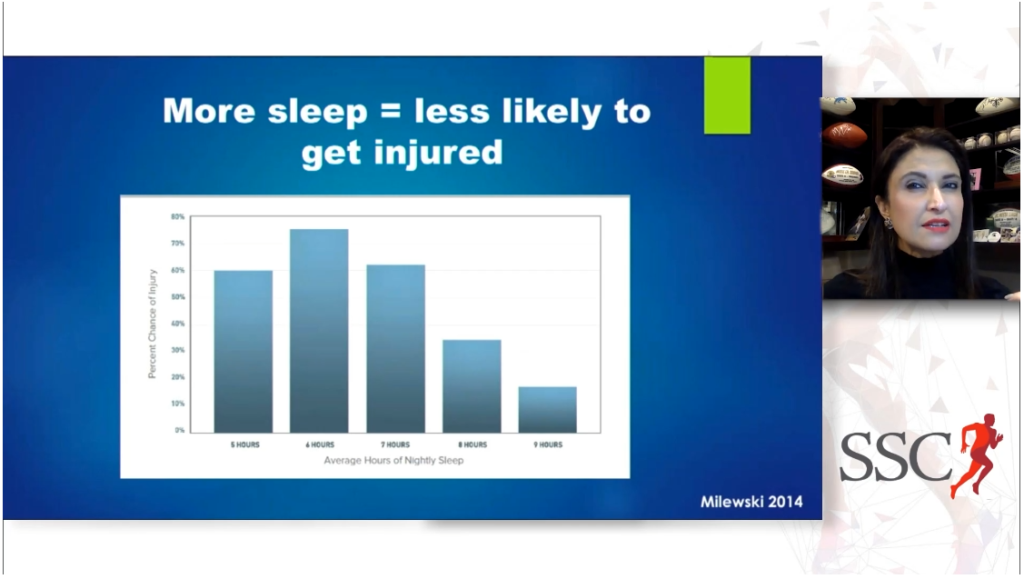
When you get around 8 hours of sleep each night, your reaction time is around a quarter of a second. Instead, if you don’t get enough sleep, managing only around 6 hours, your reaction time is tripled. If you have insufficient sleep over a number of consecutive days, these deficits are cumulative and non-recoverable. Reaction time and accuracy deficits as a result of sleep deprivation occur in a dose dependent manner; the less sleep you get, the worse the impact is. Unfortunately, self-reported measures do not follow this same pattern. Athletes get used to their “new normal” of insufficient sleep and lack the self-awareness to detect the deficits to performance. When you get insufficient sleep there is one area of the brain that gets less blood supply, the prefrontal cortex, reducing decision making ability. Furthermore, the emotional brain lights up, meaning decisions are made when you are more emotional.
2. How much sleep do we need to win
A famous study on Stanford Men’s basketball team demonstrated the benefits of sleep extension. Whereas the average adult needs around 7-9 hours of sleep per night, dependent on age, athletes should perhaps aim for 9-10 hours for peak performance. Athletes in this basketball study, spending 9-10 hours in bed, benefitted from improved mood scores and performance reporting less fatigue and depression, increasing success in free throws and being faster. Similar results have been demonstrated with sleep extension in major league baseball.
3. Banking sleep
Understanding that sleep deprivation impairs mental and physical performance, whereas sleep extension can have positive effects on mood, cognitive processes and expressions of athleticism, it must be acknowledged that most people walk around with some degree of sleep debt. For athletes, there may be periods where a certain amount of sleep deprivation is expected. Considering training and competition schedules, the impact of travel, fatigue and jetlag associated with competition and the stress athletes feel in relation to their sport and every day life, strategies are required to mitigate these negative effects. Banking sleep prior to situations where sleep deprivation is likely to occur can help maintain performance levels. In the days leading up to such scenarios athletes can spend more time in bed to gain the benefits of sleep extensions and mitigate the ensuing negative impact of any future sleep deprivation.
Recommended reading:
- Benefits of sleep extension on sustained attention and sleep pressure before and during total sleep deprivation and recovery
- The effects of sleep extension on the athletic performance of collegiate basketball players
- Chronic lack of sleep is associated with increased sports injuries in adolescent athletes
- The cumulative cost of additional wakefulness: dose-response effects on neurobehavioral functions and sleep physiology from chronic sleep restriction and total sleep deprivation
- Decreased Sleep Is an Independent Predictor of In-Season Injury in Male Collegiate Basketball Players
Bone loading during running – Assessment and management
Richard Willy
(Almost) Everything we thought we knew about bone loads during running turns out to be wrong? Is it time to start questioning the accepted wisdom and models? We know that bone is constantly remodeling. When bone experiences microdamage, for example in response to exercise, it will remodel. If the remodeling is sufficient the bone will become stronger. If bone remodeling is not able to keep up with the microdamage, then bone stress injuries can result.
Conversation starters:
1. At risk athletes
Certain physical characteristics and behaviors can increase an individual’s risk of a bone stress injury. No history of strength training, low BMI (≤19), high running volumes (training > 12 hours per week), restricted energy diets, sports specialization and menstrual disruption all elevate an athlete’s risk of injury. Having incurred a prior bone stress injury can increase the risk of suffering a further injury by as much as 600%!
2. What we thought we knew is wrong? Questioning accepted wisdom?
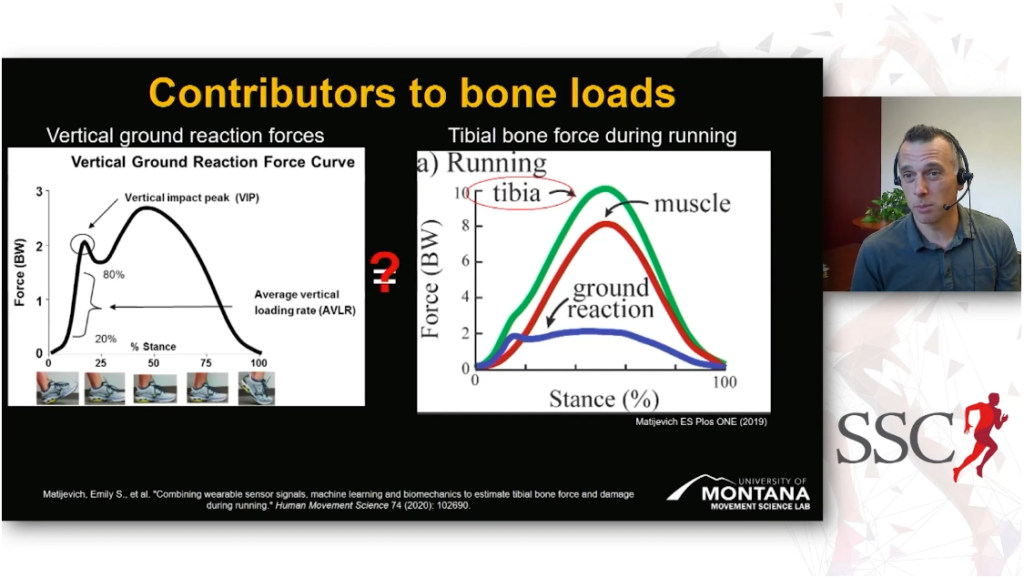
Historically, research has focused on the link between external forces and bone injury. Higher vertical ground reaction force has been linked to tibial bone stress injuries associated with running. The rise in wearable technologies has allowed the measurement of tibial shock as the foot strikes the ground, which has been proposed as a surrogate for the vertical loading rate. However, more contemporary research has demonstrated that muscle forces account for about a 3-4 times greater contribution to bone loads during running than this ground reaction force. The plantar flexors, and in particular the soleus, are the greatest contributor to tibial bone loads.
3. How to integrate this new knowledge?
Whilst uphill running has perhaps been considered a safer option in rehabilitation due to the reduced ground reaction forces, this will not really affect the tibial bending forces applied by the muscles. Understanding this updated model of bone loads in running illustrates that plantflexor forces will be reduced with downhill running. With the acknowledged limitation of available technologies to capture all of the important data, providing an incomplete picture of bone stresses incurred during training, practitioners need appropriate guidelines to deliver rehabilitation protocols:
- Load magnitude is more important than volume. Add volume before intensity.
- Understand bending moments. Rocker bottom shoes may be preferred.
- Pay attention to at risk athletes with prior risk of stress fracture, low BMI, and females with delayed menarche.
Recommended reading:
- Internal tibial forces and moments during draded running
- Modeling overuse injuries in sport as a mechanical fatigue phenomenon
- Epidemiology of National Collegiate Athletic Association men’s and women’s cross-country injuries
- Peak and per-step tibial bone stress during walking and running in female and male recreational runners
- Influence of sports participation on bone health in the young athlete: a review of the literature
Rehabilitation of Tendon Injuries in the NBA
Stefania Rizzo
Achilles tendon ruptures are career-ending injuries for about one-third of the professional athletes who suffer them. For those who are able to return to play and continue their careers, nearly all do so with a significant reduction in on-court or on-field performance, as measured by their sport’s respective (and accepted) efficiency or output ratings.
Treatment protocols for post-Achilles rupture return-to-play provide little actionable guidance to sports practitioners. Most do not differentiate between operative and non-operative progressions. Most of the research supporting return-to-play protocols come from the general population or recreationally active adults, not high-performing athletes. Those few studies that do come from sports do not provide a basis to either generalize across sports nor apply their findings to the specifics of any one sport or athlete.

Conversation starters:
1. Achilles tendon ruptures in basketball often have the same mechanism of injury. The rupture occurs just before toe-off, as the player begins to push off from a stop with the ankle in dorsiflexion, knee in slight flexion and hip in extension. The movement is so common in basketball it has its own name: a step-back.
This compounds the task of protecting the athlete against re-injury. Instead of preparing an athlete to be able to handle an unusual or freak occurrence, one they may never encounter again, as is the case with most injuries, returning athletes will recreate the action and positions of injury repeatedly in every game.
2. The natures of the injury and the sport open the possibility of the player making a modified “return-to-basketball” well before they can return-to-play. Players can shoot and dribble while seated or standing on one leg with the other in a single-leg mobility scooter. This can improve their mood and motivation by keeping them connected with the sport and their teammates. It also reduces the amount of time the player will need to refine his basic game skills upon returning to weight-bearing activity.
3. Pre-injury baselines are a valuable tool for setting the RTP targets. However, they risk pushing the rehab team towards a dissociated, reductionist approach.
Basketball players have very idiosyncratic movements. Many have “their” moves, a little flick, shuffle or pivot that is recognizable to coaches, teammates and even hard-core fans.
Returning the athlete to performance means they can do their moves, play their game, their way. For the rehab team, this means studying pre-injury video as well as pre-injury data; then monitoring the quality of movements (in real-time and through video analysis) towards the pre-injured state. This approach presents another opportunity for the rehab team to engage with the athlete. Ask the player how he views those movements, the conscious and unconscious control and decisions to perform those moves, and how confident he feels in his readiness to perform them at different stages of the rehab progression. This will give him an added level of personal buy-in to the process along with an internal marker of when he is ready to return. Regaining that pre-injury confidence in a signature movement will be very important in him continuing his career. And, if he is experiencing difficulty with it even after he checks all the quantitative boxes for his RTP, you have a good foundation for the team psychologist and skills coach to help him learn ways of dealing with it and developing a “replacement” skill.
Rehabilitation and return to play following knee injuries in elite football
Alicia Tang
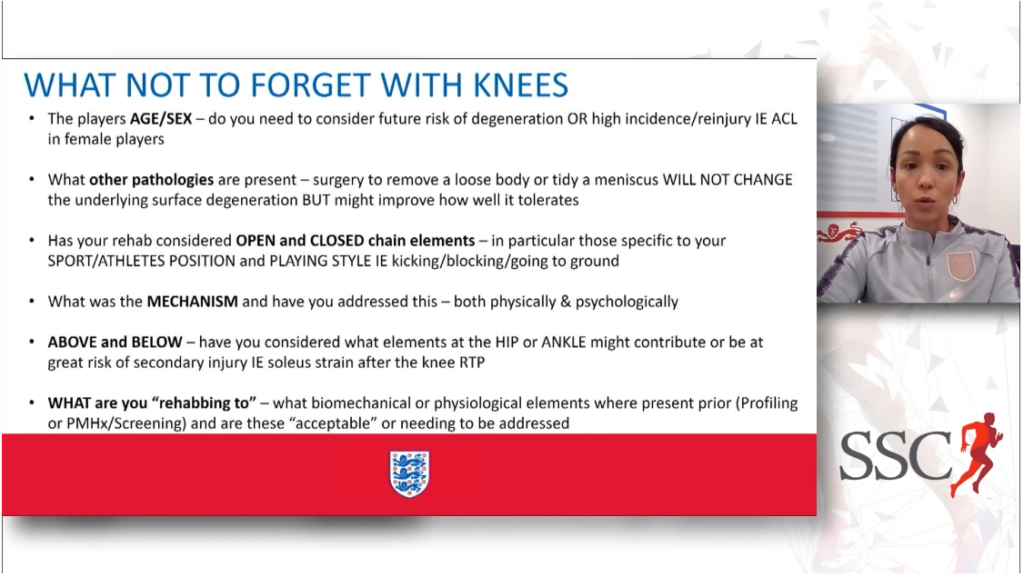
Knee injuries pervade all sports. Within each sport and, as you progress into the elite levels, within each sport’s positions certain injuries become more common. On a professional football team, a full back and a centre forward can be spending time together in the rehab room with knee injuries. But they might be doing very different rehab programmes, even if the diagnoses are nominally the same. Each player brought her own movement patterns into the moment of injury, each have different capabilities and demands she must return to and each have a unique set of psycho-social factors affecting their recovery and return-to-play.
Conversation starters:
1. Treat the patient, not the pathology
Rehab teams absolutely need their flowcharts, checkpoints, organizational diagrams and evidence-based practices. But those are just the starting points. From there, they need to apply their creativity and judgment to a bespoke rehab plan for the individual in front of them.
The rehab team has to understand what are the necessary components, and what are the flexible details. For example, someone has to lead the rehab team. It doesn’t have to be the lead physio or the Head of Rehab Performance. The team lead has to be the person best suited to oversee this process for this player: whether that’s because of their temperament, experience with this kind of injury or relationship with the injured player. Likewise, the rehab process needs to have a timeline, but it has to be based on markers and milestones – not actually time, and certainly not the time cited in a textbook.
2. Connect the pre-injured state to the post-injury state
Rehabilitation is about restoration, so the practitioners have to know what the athlete “was” before the injury. Did the athlete have asymmetries pre-injury that predisposed her to the injury? Does the rehab process need to address them, or will they be a distraction from the goal? Is the rehab process returning the athlete to a general “match ready” state, or a state where she can play her matches for her team in her way?
3. RTP = Rehab to Perform
Rehab practitioners have to understand the context to which the athlete will return. The club psychologist has a seat at the table along with the physios, S&C coaches and sport scientists.
Athletes need the confidence to return fully to the game. This means the ability and willingness to execute the full range of movements in any context the game may present. Players have to be willing to replicate the movements that preceded their injury, and they have to be ready to do it at the ground where the injury occurred and against the opposing player who was involved in the injury. They have to be ready to come back into the side during a knock-out round or relegation scrap, during a contract negotiation, as a new parent or any other situation football or life throws at them.
Sports are more than just physical tests in a gym. Rehab has to be the same.
Tendon structure changes during injury and rehabilitation
Jess Snedeker
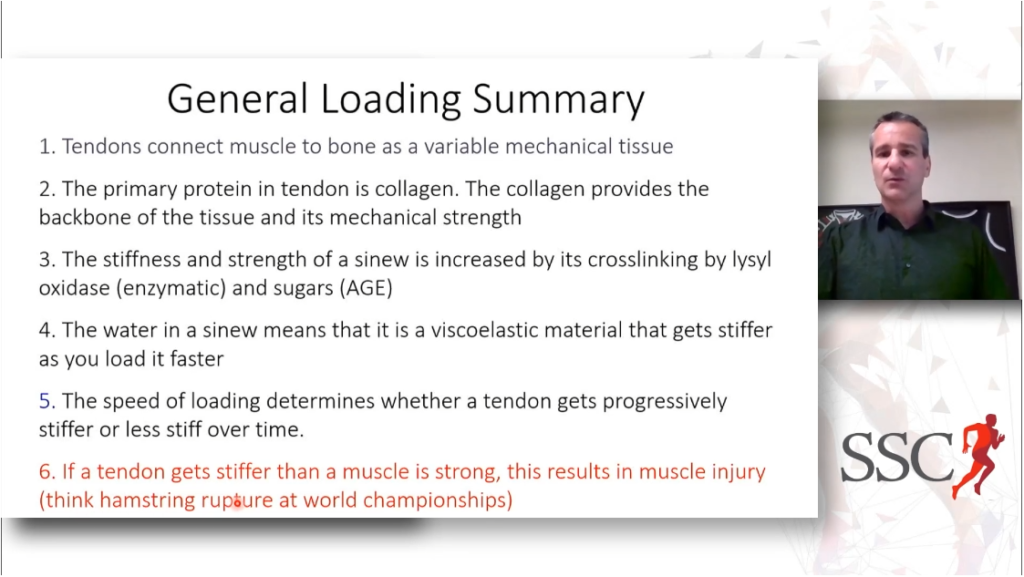
Tendons convey force through a cross-sectional area far smaller than the muscles and bones they connect. To withstand, let alone transmit, forces that can reach 12x body weight, tendons have a highly organized, dense structure that is about 80% Type I collagen fibers.
Injury disrupts the structure and capability of a tendon. The body’s response inhibits tendon restoration. The initial trauma stimulates the body’s generalized wound response. That results in vascularization of the tendon, which displaces the collagen fibers that give the tendon its strength. The new blood vessels are associated with nerve ingrowth, which causes pain. And the repair process lays down cells that run in all dimensions, instead of the tight “2.5 dimensional” alignment of a healthy structure’s collagen matrix.

Conversation starters:
1. Tensional homeostasis
Not much is known about how mechanical forces keep tendons in homeostasis after they mature, nor is much known about the role of mechanical forces in disease or injury. We know the tendon hypertrophies in response to exercise, expanding its cross-sectional area and laying down crosslinks between collagen fibers to maintain the structure’s overall mechanical properties.
But under non-pathological conditions, does the tendon’s core – the dense collagen matrix – block blood vessels and nerves from extending in from the external sheath? Or is it simply a lack of demand signal that keeps these detrimental responses from compromising the healthy tendon? And once the tendon is degraded from either trauma or disease, how does mechanical loading shape the tendon’s return to something approaching its original function?
2. Roadblocks to recovery
Once the body’s wound response reaches the tendon’s core, the tissue is in a feedback loop of dysfunction.
As blood vessels grow through the tendon, the tendon loses its structure, organization and – therefore – its ability to hold tension. In the absence of regular loading, the collagen matrix begins remodeling. The metabolic cost of this process plus that of laying down new blood vessels makes the tissue hypoxic, which causes even more vascularity and inflammation. Each stage of the cycle causes pain to go up and function to go down, which provides momentum to the next trip through the cycle.
3. How can physiotherapy overcome these roadblocks to halt and reverse the pathological processes?
In vitro studies show that constrained point-to-point growth facilitates organized parallel collagen fibers, while unconstrained growth leads to a 3-dimensional mess. Mechanical loading is the most potent regulator for tendon health. Physiotherapists must load the injured tendon in a way that will allow the tendon to heal as a tendon, rather than under the control of the body’s generalized wound response. Over time, the collagen fibers will align and strengthen, and the blood vessels will withdraw. However, whether the tendon can ever return to its pre-injury structure and function is currently unknown, as are the ideal “prescriptions” for rehabilitative loading.