Sports performance practitioners often refer to themselves as “the team behind the team.” With a growing number of strength & conditioning coaches working privately with professional athletes, performance specialists are becoming each athlete’s “team away from the team.”
Pick up any strength & conditioning text book and open it to the first page. What does it say is the most important thing, the most fundamental principle of S&C? Individuality or specificity. Every S&C textbook says that one of those two concepts is the most important, and the other is the second-most important.
That makes it all the more surprising that the top levels of team sport often have so little of either in their strength & conditioning programmes. And that’s assuming they have S&C programmes – or anything resembling one – at all.
Professional athletes are starting to recognize what they are missing. More experienced athletes are leading the demand. They’ve been around long enough to encounter a variety of training philosophies across clubs and coaches, and they are at the age where they start asking how they can extend their careers past the usual age of decline.
However, the shift to each individual athlete having his personal “performance entourage” is being driven most strongly by the supply side: the sports performance practitioners who are leaving clubs and federations to work one-on-one with a portfolio of top athletes.
“Traditionally, it was commonplace for a Premier League player to have a private masseuse or therapist on the side,” said one of those practitioners, strength & conditioning coach John Noonan. “But now, they are reaching into having a nutritionist, an S&C coach, a personal health, medical and recovery team. These are high net worth individuals thinking about longevity and not just impact. They are probably out learning about sports science and thinking about how they need to invest in more than what they are getting.”
Noonan spent 13 years moving through football (Premier League and Championships), rugby (Championship and Super League) and winter sports (at the federation level) before going into business for himself with Noonan Performance in 2019.
Like the other coaches we talked to for this article, it’s not that Noonan didn’t like working in those set-ups. He just wanted to do his work on his terms, something that is all but impossible at a club or federation.

Schedule constraints: teams make time for what matters to them
“It’s a bit derogatory to say, but strength & conditioning in a pro football setting is a bit like firefighting at times. They’re playing 2-3 times per week so the work is focused on recovery and getting the players as close to baseline as possible. Traditional S&C, sport science and the development aspects are not present, which I found surprising but understandable,” said Tom King.
King was at Liverpool Football Club from 2016-2021, “a brilliant, unbelievable organization and culture. One hundred people at one club focused on one goal for years and years. It’s amazing to be around.”
But the club’s ambitions and level of performance set tight constraints on the performance staff’s ambitions and performance.
“Even at the top of football, it’s about time and manpower. You have 20, 30, 40 athletes, and at Liverpool we had five fitness coaches, which was a lot. Some clubs have one, most have two or three,” King said. “Training is at 11am, so they report at 10am, some are out the door at 1 or 2. Four hours max is your time available.”
James Ralph is less accepting of the fixture and training schedule as an excuse. Having worked in pro rugby and football before setting up shop as Athletes Edge, Ralph says “Even if they are playing Saturdays and Tuesdays, you can still get 1-2 S&C sessions in. They’re clever enough to realize that if they were to microdose some of these things, they’d be able to recover faster and fit full sessions into the schedule.”
Strength & conditioning is a low priority in some sports and sport cultures
Instead of the day-to-day hindrances to strength & conditioning work, Ralph puts more of the blame on the attitudes of head coaches and other authorities at the club, which filter down to the attitudes and outlooks of the players themselves.
“In football, notoriously, S&C coaches can’t really do what they want to do because it’s run by head coaches, the head physio, etc. The decision-makers aren’t qualified in S&C, but they still have authority for that part of the team. They wrap cotton around the players. They don’t expose them to any stress. S&C work at a couple top London clubs has been optional – genuinely optional! The players become allergic to being sore. You end up with 25 guys on a team, and maybe 3-4 show an interest in S&C. And that’s average over all levels. Within the first-team, it’s even fewer than that.”
Tweet ThisClubs wrap cotton around the players. They don’t expose them to any stress. The players become allergic to being sore. You end up with 25 guys on a team, and maybe 3-4 show an interest in strength and conditioning.
James Ralph
Ralph knows that these mentalities and cultures are matters of choice because he’s seen the complete opposite. After completing internships with Wasps rugby, West Ham and Queens Park Rangers, he went across the pond for an internship at Harvard University.
Harvard is in the top division of American college sports, but it’s still Harvard. People don’t go there for the athletics, and they certainly don’t plan on making sports their careers.
And even with those caveats, “Everything was so much more professional: not just the physical environment but how seriously everyone takes it. Coaches and players have this dedication. They are there at 6am, five days a week, never late. The coaches can get 100 athletes to do what they want at the same time, and the athletes have that mentality where they all will. Here, you can’t get 20 guys to do the same thing, and half of them will have something unprintable to say about it.
“That’s what really opened my eyes to ‘Wow, we are light years behind in the UK.’”
Of course, that’s not to say that the US is the promised land of S&C. “They’re good at drilling and shouting. They’re not as good at the coaching side, the actual science and the softer side. It’s so heavily strength and power based in the States, and movement and technique often seems overlooked. You find yourself watching and thinking ‘Is that an injury waiting to happen?’”
King’s experience at Liverpool also shows how S&C is a matter of choice. Like anything else, teams and individuals make time for what they care about – even if it’s not as much time as the specialists would prefer.
“On a day-to-day we were lucky. We had a really good group of players: of 20 on the pitch, we’d have 19-20 in the gym before training for 30 minutes of prehab and prep work. I don’t think that’s too common in football. But within that setting, you do have people almost queuing up, waiting around for their individual instructions / guidance.
“They see what’s supposed to happen – the individualization – but the environment they are in is not conducive to the best possible way of providing that.”
Tweet ThisPlayers see what’s supposed to happen – the individualization – but the environment they are in is not conducive to the best possible way of providing that
@tomjsking_
What strength & conditioning coaches give up when they leave the team setting
In order to work in such an environment and provide individualized sport science and strength & conditioning to their athletes, these practitioners had to create it themselves. First step: walking away from everything the club life has to offer.
“The first six weeks were unbelievable. I started while I was a Ph.D. student, and on my first day I’m getting on a private jet to the USA, staying in amazing hotels, travelling to and from training with police escorts. Flashing lights,” is how King remembers his earliest days in the job.
Sam Pepys went from Luton Town’s development team to Crystal Palace’s development team, before joining Palace’s first team staff. “You see these players on TV, then you get in on Day One and it’s a ‘pinch me’ moment. It’s the prestige of a Premier League club.”
Some people are more willing to admit it than others, but that moment where you’re on the sidelines – maybe even in view of the cameras – for a professional sports team is a childhood wish fulfilled as much as it’s a professional ambition satisfied. Even before you understand the road you’ll have to travel to get there, you think to yourself: “I want to be there some day,” especially if your coaching plans came about after your playing days concluded earlier than you had hoped. “Made it. I f**king made it,” is completely natural and understandable. And motivating.
“Sometimes you’re chasing the badge. When you’re under 30 and you’re thinking about your needs and your drives, you want the biggest and best gigs going,” Noonan says.
Once the novelty wears off, you get down to work. “Day Two, Day Three, you’re there to develop athletes so you crack on and do it,” Pepys recalls.
Even from a strictly professional perspective, it’s still a bit of a dream. You have some of the best players in the world and what feels like unlimited resources. “When you’re in a club you’re so fortunate to have these different pieces of kit shiny, expensive and since everyone has them you think they’re the best thing,” Tom King said.
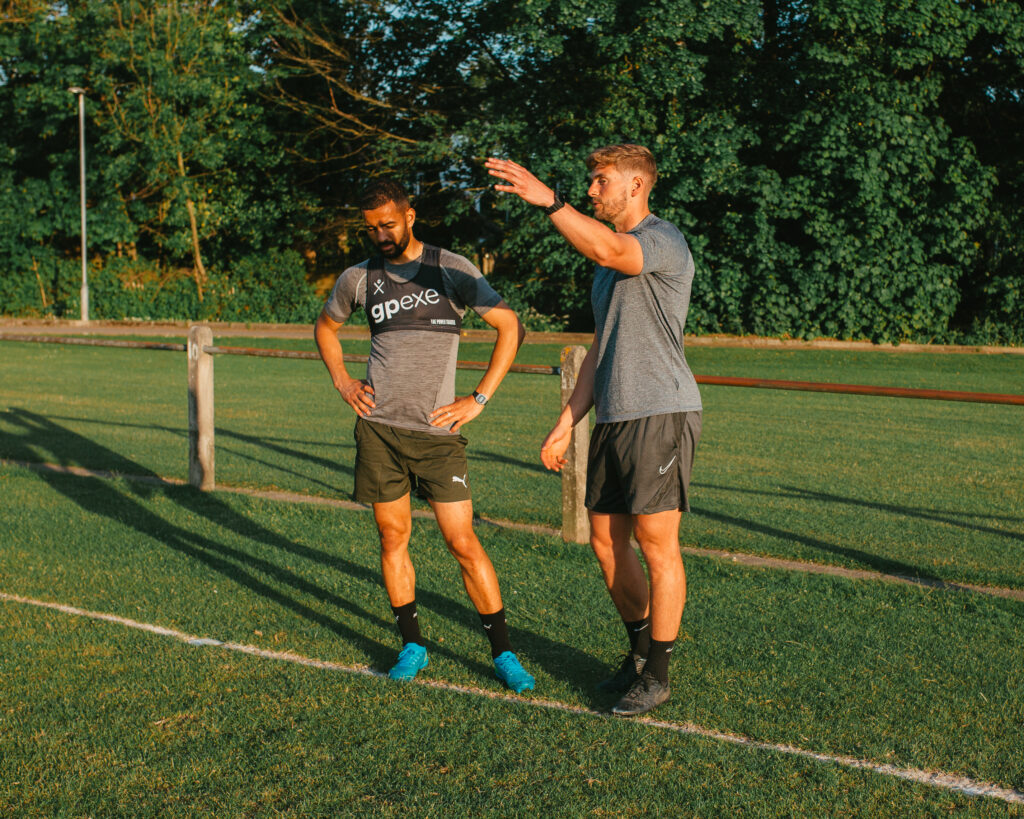
But that wears off, too. What’s the point of having two of the newest everything if you don’t have a chance to use them in your 30 minutes a day with the players?
“After 2-3 months I’m asking myself: as a sport scientist, am I actually achieving much? A bit naïve at the time to think I should be doing more, as the youngest one there. I probably had a lot to learn, and I went back and forth with a few colleagues and had a few disagreements with the head of fitness. I ended up dropping down to Liverpool’s Academy, which was good because I could do more, develop more, work more with the kids on the pitch.”
For James Ralph, it was “bright and shiny, seeing these Premier League players everyday. But I was doing probably 40-50 hours a week, and maybe only for eight of them was I doing what I wanted to do: actually coaching.”
Not bigger, just better: what S&C coaches gain by going into private practice
That’s what Ralph gets to do now: actually coach. “I started off working with Championship and League One players. Over the first few years that went from maybe 2% to 20% of what I do. The rest was boring stuff. But it spiraled from there. Now I’m working regularly with a handful of Premier League first team players.”
Ralph is no longer surprised by something that would definitely shock most outsiders, including athlete performance specialists from other sports and cultures: how little these household-name professional athletes know about basic S&C movements. “Some are at a level I can’t even test them because they can’t demonstrate what I want them to demonstrate. They’ve never done a front squat. They don’t know what to do with a trap bar because they’ve never used one.” But how could you expect them to? “At some of these clubs, trap bar deadlifts were banned. I don’t know why some clubs have S&C departments because I can’t figure out what they do there!”
Tweet ThisSome of the pro players I work with have never done a front squat. At some of these clubs, trap bar deadlifts were banned. I don’t know why some clubs have whole departments because I can’t figure out what they do there!”
James Ralph
On the upside, the experience of teaching an elite athlete a new movement opens an incredible insight to what makes these athletes so truly special.
“I don’t even need to expose them to the lift, demonstrate it or do a progression. I just tell them they’re going to do it and they go do it!” he jokes. “Then the next time they do it, they add 50 kg.” Ralph’s exaggerating, but not by much. “These early gains aren’t strength-related. They’re just so amazing as athletes they learn and adapt so quickly.”
Tom King is finding similar satisfaction by being able to teach and learn the full spread of sport science.
“As a person and professional, I found myself going down a refined route in one part of sport science when there was a much bigger area present. From the moment I decided I wanted to work in sports science and S&C, I wanted to work into that full range. I fell into Liverpool and it was the most amazing thing ever, but I wanted to develop my skills a bit more and it wasn’t going to happen there. I knew I wanted to do a diversity of things. I may still come back to the original goal of being first team Head of Fitness, but at this stage I wanted something completely different.”
King is also able to pursue his interests in developing sports technology, something he was contractually prohibited from doing while at the club.
Leaving behind the institutions to open Noonan Performance lets John Noonan stay focused on his 3 F’s: family, fulfillment and finance.
“What do I want the next 10 years to look like? Family first. How much time will I get to see them? Working at clubs, not very much. Flexibility is also extremely limited. Next is fulfillment. I’m very passionate and ambitious. If I’m in an environment, it has to align with my internal drivers. When you’re more experienced you have more choice.
“And if we’re talking ambitions, I wanted a lot more than I was earning because that was my value. I couldn’t fetch the salary I earn today if not for the experience I accrued over a decade plus at the clubs. But when you have the experience, evidence, results and network, you have to convert them. The industry right now is coach rich, academically strong and poor when it comes to pay. I’m in a position to flip those terms.”
Tweet ThisThe industry right now is coach rich, academically strong and poor when it comes to pay. I’m in a position now to flip those terms.
@JohnnoonanCoach
What should elite athletes look for in a personal S&C coach?
As Noonan acknowledges, he’s only able to make it as an independent coach because he amassed a portfolio and a network doing the rounds of pro football, rugby, auto racing and Olympic winter sport. “I would be remiss to say to a post-grad, ‘Employment stuff is broken, go self-employed.’ It’ll take 5+ years to command a respectable wage unless you’ve got a group model, but that’s basically another variation of the system that we’re talking about getting out of here.”
Building a client base is like applying for one job after another. Every prospective client is going to want to see proof of what you’ve done, test what you know, ask around about you, assess whether you’re a good fit for them and decide whether you’re worth entrusting with their time, money and professional success. Like when applying for a regular job, having a network that makes the referrals and offers the references on your behalf is all but essential.
“Quite a few players I worked with at the clubs followed me when I went into private practice,” Sam Pepys said. “While I was there I got closer to some than others. If they get on with you, it makes it easier for you because they know they can trust you, they know how you work and they know you have their interests at heart.” Pepys adds that over 80% of his clients come through social media, including athletes he works with remotely.
James Ralph had to change his social media habits as a matter of branding and business development. “I used to take the piss all the time out of football S&C on social media. Business-wise it was great! If players saw it they would see what they weren’t getting at their clubs and they would come to me. But I gradually I began building a social media presence, made the switch to a work account for social media and built from there. Probably got lucky with the first few players.”
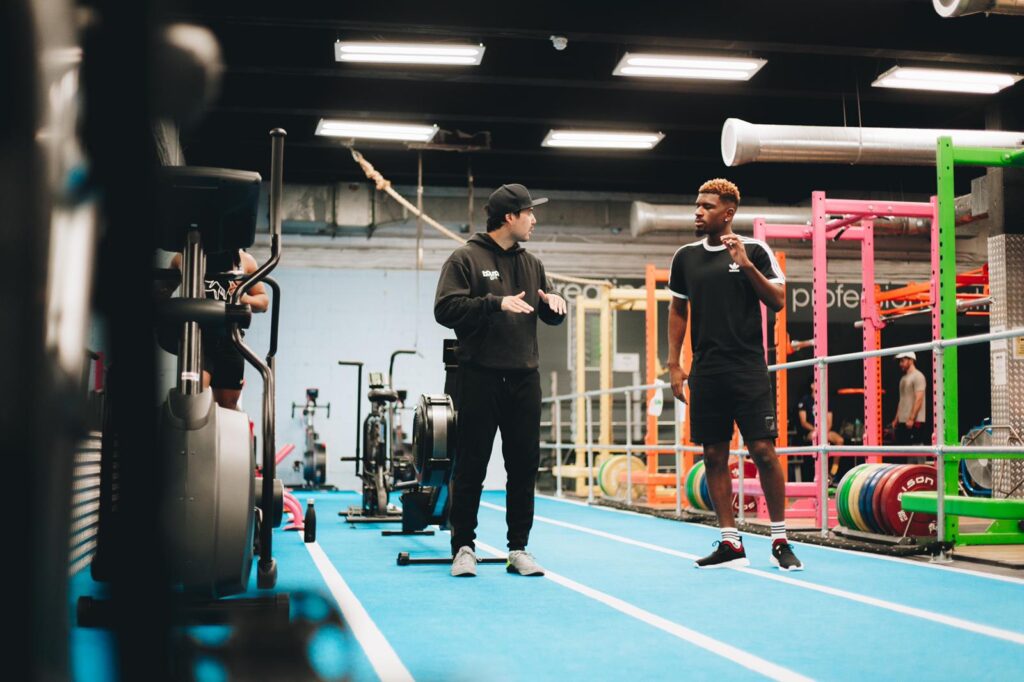
Ralph focuses his first interactions with athletes, whether on social media or in person, on educating them. He explains why he believes they need him and how they will benefit, showing his openness and establishing the first few layers of trust.
Because S&C is a novel stimulus for many of these players, Ralph is able to point to early results as proof of what his work – his profession, when done right – can accomplish.
“The first thing they normally say after 1-2 months is that they feel sharp, quick off the mark. They say their acceleration is more springy. After the season, it’s about the decrease in injuries. I worked with a player who had his first injury-free season in 10 years, going back to when he was 15. No shock to know that, over the course of the season, he doubled his strength after coming out of a particularly nasty injury.”
Having worked with various Premier League players, he’s no longer awed by the celebrity. “Most private coaches I know of get so excited when they get someone in the door they give them 500 exercises and make them sore. Obviously, I know that I’m going to see them throughout the next year, so I have time. I can just do 2 sets of 3 if I want and give them loads of rest, microdose a bunch of plyos and then we’re done. It builds up their tolerance, I keep in touch with them and we stay in line with what they can handle.”
Private S&C coaches do not replace the team, they complement it
The sports performance industry is full of egos and turf wars. Trust, transparency and quantitative results ensure that athletes and private coaches do not attract the ire of the club’s staff.
“I’m trying to brand it as being as transparent as possible. I work with Athlete A to make Athlete A a better player, which ultimately will make the team better” is how King views his place in relation to the club.
King has to hope that the person in his old job understands this better than he would have a few years ago. “Had a player told me he was working with a private coach, I’d have said, no, no chance, that’s ridiculous. If anything, it would hinder more than help! Funny to say that now.”
John Noonan’s younger self would have reacted similarly adversely. “If you’d ask me within the first 5-6 years of my career… How dare you? Am I not good enough?? In later stages, you think they’ve decided to invest in themselves. They want more time than we can provide, different experiences, more tools. Rather than treat that individual as an outcast and try to brainwash him, it’s about engaging him and understanding how we can internally support them as best we can. If he’s doing things on the outside that we like and that are aligned with our goals, then it’s a win-win.”
Noonan cautions, though, that “there are stories about cowboys out there.” Those coaches contribute to the negative reputation that Sam Pepys thinks outside coaches still have. But he feels it’s based on a misunderstanding that comes from drawing wide conclusions from those negative examples. “It’s complementary. I’m not treading on the S&C coach’s toes because I’m an S&C coach, too.”
How would he handle it if he was on the club side? “In-season, I’d want to know absolutely everything. Obviously, I know how to prepare an athlete for a game on the weekend, but even now I wouldn’t want to do it on the outside because the club controls all those variables to a T. Going into the off-season, though, we have so much flexibility.”
Private strength & conditioning coaches and team staff have to learn to coexist
One of James Ralph’s athletes asked him how much he would have to be offered to go back to working in a club. “An obscene amount of money and being told I would be the decision-maker. But even that wouldn’t be enough, because I wouldn’t trust such a guarantee. I’m happier doing what I want, when I want. The players trust me more than they would a club coach, and because they commit to something they have to seek out and pay for, I know they value it.”
So is this the beginning of the end for strength & conditioning staffs at professional sports teams? Instead of being the pinnacle of the profession, will pro teams be an early career box to check before living the dream in private practice?
“I sincerely hope it doesn’t come to that. The work they do in a team environment is key. But there will always be someone who’s not getting an individualized approach or not getting good buy-in, and they will venture elsewhere.”
Tom King agrees that while teams may not do what he wanted to do in sport science and S&C, they are the best at what they do actually do.
“Teams are brilliant at having these dozens of factors in front of them and making the best of the situation for the team for the week, the month, the season. At decision-making moments in the club, I’m the second pair of ears for the athletes to ensure that something is best for them as an individual, but what I do supports what the athlete at the club has to achieve.”
John Noonan sees the role of team S&C staffs evolving to accommodate and optimize for private coaches. “Clubs should look into a model similar to the loan manager. Loan managers are less commonplace than before, but they would be a member of the coaching staff who monitored, stayed in contact with and all around kept up with the players who were out on loan, primarily young players. That’s something teams could have within the S&C staff: someone who is in regular contact with the private coaches, connecting the work those coaches are doing with the work and the needs of the club, with all the information sharing necessary for that to happen.”